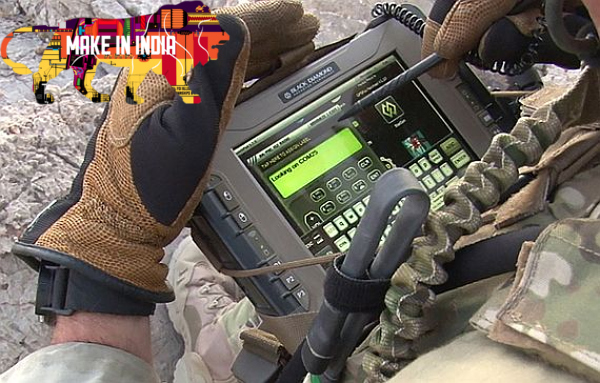
Bharat Electronics Limited (BEL) has signed a Memorandum of Understanding with RADIX CIPL to jointly advance tactical cellular communication technologies, marking another step in India’s effort to build secure, resilient and increasingly indigenous battlefield communication networks.
The agreement was signed on August 21, 2026, in Bengaluru and focuses on strengthening collaboration in tactical cellular solutions. BEL said the partnership will promote development, technology exchange and knowledge sharing while enabling both companies to jointly work on advanced and reliable cellular communication systems suited to emerging operational requirements.
Under the MoU, BEL and RADIX CIPL will combine their respective technical capabilities and resources to explore new opportunities in tactical cellular communications. The collaboration is expected to support the development of systems capable of maintaining reliable connectivity in demanding operational environments where conventional civilian communication infrastructure may be unavailable, damaged or unsuitable for military use.
Tactical cellular networks can provide military formations with rapidly deployable local communication coverage based on cellular architecture rather than depending entirely on fixed public telecom networks. Such systems can potentially support secure voice, data and network services across forward positions, command posts and mobile formations while giving military operators greater control over network access and coverage.
BEL already has considerable experience in this field. Its existing Mobile Cellular Communication System is designed to meet secure voice and data requirements at strategic locations and uses a cellular architecture incorporating mobile and static base-station elements. The system can provide configurable coverage and incorporates secure mobile handsets and encrypted high-speed data connectivity.
The company’s wider military communications portfolio also includes Software Defined Radios, combat-net radios, satellite communication equipment, tactical switching systems, radio relays, encryption products and network-centric communication systems. Tactical cellular technology therefore fits naturally within BEL’s broader effort to provide integrated battlefield communication networks rather than isolated radio systems.
The new partnership also comes as the Indian Armed Forces move toward higher-bandwidth, network-centric battlefield architectures capable of carrying voice, data, imagery and situational-awareness information between dispersed units. Modern operations increasingly require commanders, sensors, weapons and individual formations to remain digitally connected even while forces are moving or operating in contested electromagnetic environments.
BEL has already been developing the Tactical Communication System for the Indian Army. In late 2025, the company highlighted prototypes of the system and described it as an indigenous communication architecture intended to provide high-speed 5G-based information links to Army strike formations. The programme reflects the broader transition toward mobile, IP-based and high-capacity battlefield networks.
From an operational perspective, military cellular networks can provide an additional layer of communications alongside conventional tactical radios, satellite links and line-of-sight data networks. A deployable cellular system can create a local network around a formation, allowing authorised users and connected equipment to exchange information without depending on commercial telecom infrastructure.
Such architectures are becoming increasingly relevant as armed forces deploy more unmanned systems, battlefield sensors, digital command posts and networked weapons. These platforms generate growing volumes of information that must be distributed rapidly across the battlefield. Tactical cellular networks can potentially provide the bandwidth required for these data-intensive applications while complementing traditional narrowband military radio communications.
Security will remain one of the most important requirements. Unlike ordinary commercial cellular networks, battlefield systems must be designed around military-grade authentication, encryption, network management and resilience. They may also have to operate despite interference, electronic attack, infrastructure disruption or attempts by an adversary to penetrate the network.
The partnership is therefore significant because it focuses not only on manufacturing but also on development, technology exchange and knowledge sharing. Building the underlying expertise within India can provide the Armed Forces with greater control over future upgrades, software changes and network architecture while reducing dependence on foreign suppliers for sensitive communication technologies.
BEL’s existing portfolio already demonstrates the strategic importance placed on indigenous secure communications. The company manufactures equipment ranging from secure tactical radios and Software Defined Radios to tactical access switches, encrypted networking equipment and mobile communication systems. Its expansion into newer cellular architectures can help bridge traditional military radio networks with emerging high-speed digital battlefield requirements.
The BEL–RADIX CIPL MoU is consequently best viewed as part of a broader transformation of India’s military communications ecosystem. Rather than relying on a single form of connectivity, future Indian battlefield networks are likely to combine tactical radio, satellite communications, cellular technologies, high-capacity radio relays and encrypted IP networks into a common communications architecture.
By bringing together BEL’s experience in military communications and large-scale system integration with RADIX CIPL’s capabilities in cellular technologies, the partnership could contribute to the development of more flexible and deployable communication networks for future Indian defence requirements.
Bharat Electronics Limited (BEL) — Official announcement on the MoU with RADIX CIPL for Tactical Cellular Solutions, August 2026. BEL states that the partnership is intended to strengthen collaboration in tactical cellular solutions through joint development, technology exchange and knowledge sharing in cellular technologies, while developing advanced and reliable systems for emerging requirements.
Reference
Bharat Electronics Limited — Official LinkedIn Announcement
BEL Official Website — Mobile Cellular Communication System (MCCS):
BEL’s existing MCCS is a CDMA-based tactical communication system designed for secure voice and data communications at strategic locations, with mobile and static base stations, secure handsets and encrypted high-speed data capability.
BEL Mobile Cellular Communication System (MCCS)
You may also like
-
Bengaluru Startup Paar Autonomy Develops AI-Powered Drone Systems for GPS-Denied Environments
-
Sigma Advanced Systems Secures Fresh ₹973 Crore NATO Artillery Ammunition Order
-
India Advances Indigenous Defence and Space Technologies Through Naval Innovation, Drones and Advanced Electronics
-
Thales Seeks Indian Partnerships for Next-Generation Missiles, Radars and Electronic Warfare Systems
-
Indian and Australian Armies Conduct Jungle and Coastal Warfare Drills in AUSTRAHIND 2026
