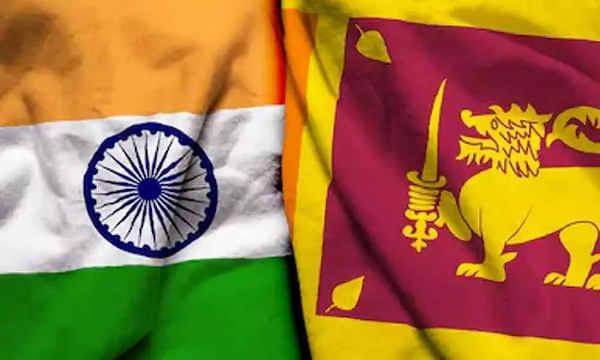
India has announced a grant of LKR 600 million to provide advanced medical equipment to the Base Hospital at Deniyaya in Sri Lanka, strengthening healthcare services in an area affected by Cyclone Ditwah. The initiative forms part of India’s wider support for Sri Lanka’s recovery and reconstruction and places climate-resilient public healthcare at the centre of the bilateral development partnership.
A Memorandum of Understanding for the project was signed on July 13, 2026, by Indian High Commissioner to Sri Lanka Santosh Jha and Dr Anil Jasinghe, Secretary to Sri Lanka’s Ministry of Health and Mass Media. Sri Lankan Minister of Health and Mass Media Dr Nalinda Jayatissa attended the signing ceremony.
Under the agreement, India will supply state-of-the-art equipment for critical departments at the Deniyaya Base Hospital. The assistance will support the hospital’s Emergency Unit, operating theatres, High Dependency Unit and Special Care Baby Unit. It will also contribute to the relocation of the hospital to a safer site designed to withstand future climate-related disasters.
Building a Disaster-Resilient Hospital
The project combines immediate healthcare assistance with long-term disaster preparedness. Cyclones, floods and landslides can damage hospitals at the precise moment when communities require emergency medical care. Strengthening the Deniyaya facility will help Sri Lankan health authorities maintain essential services during extreme weather events and other emergencies.
The proposed relocation of the hospital represents an important part of the initiative. A safer location, supported by modern equipment and resilient infrastructure, can reduce service interruptions while improving emergency care for communities across the surrounding region.
Deniyaya lies in Sri Lanka’s Southern Province, close to mountainous and high-rainfall areas that can face floods, landslides and disrupted transport links during severe weather. A well-equipped regional hospital can therefore serve as both a regular healthcare institution and an emergency-response centre.
The new medical equipment is expected to improve trauma care, surgical capacity, intensive monitoring and neonatal treatment. Strengthening these departments will benefit patients requiring urgent intervention as well as mothers, newborn children and people with serious medical conditions.
Part of India’s USD 450 Million Recovery Package
The healthcare grant forms part of India’s USD 450 million rehabilitation package for Sri Lanka following Cyclone Ditwah. The package supports reconstruction in sectors affected by the disaster and reflects India’s emphasis on rapid assistance followed by long-term rebuilding.
India’s response began through Operation Sagar Bandhu, which mobilised relief supplies, rescue teams, aircraft, medical assistance and engineering support. Indian personnel helped rescue stranded residents, distribute essential materials, restore connectivity and provide emergency healthcare.
India supplied medicines and medical equipment and deployed BHISHM Arogya Maitri mobile medical facilities to assist affected communities. Indian Air Force helicopters supported rescue and relief operations, while National Disaster Response Force teams participated in ground operations.
India also transported Bailey Bridge components and deployed Indian Army engineers to restore damaged road links. Such measures helped reconnect communities and enabled the movement of emergency personnel, medical supplies and essential goods.
The Deniyaya hospital project represents the next phase of this response. Emergency relief addresses the immediate effects of a disaster, while resilient hospitals and infrastructure strengthen a country’s ability to withstand future crises.
Healthcare as a Pillar of India–Sri Lanka Cooperation
Health and medicine have become important areas of cooperation between India and Sri Lanka. The two countries held their first Joint Working Group meeting on Health and Medicine in August 2025, creating an institutional platform for collaboration in public health, medical education, pharmaceuticals, traditional medicine and healthcare capacity building.
India has supplied Sri Lanka with BHISHM cubes under the Aarogya Maitri initiative. These compact emergency medical systems contain equipment and supplies required to establish rapidly deployable treatment facilities during disasters, accidents and humanitarian emergencies.
The systems are designed to support trauma care, surgery and emergency medical treatment in locations where permanent healthcare infrastructure has been damaged or overwhelmed.
India and Sri Lanka have also cooperated in medical training, hospital development and specialised healthcare. Sri Lankan medical professionals have participated in training programmes at Indian institutions, while Indian assistance has supported healthcare facilities serving communities in different parts of the island.
The Deniyaya project adds a climate-resilience dimension to this partnership. It recognises that modern healthcare planning must account for increasingly severe weather events, vulnerable infrastructure and the need to maintain essential services during disasters.
India’s Role as Sri Lanka’s First Responder
India’s assistance after Cyclone Ditwah reflects its established role as a first responder in the Indian Ocean region. Geographic proximity enables Indian ships, aircraft, rescue teams and medical personnel to reach Sri Lanka quickly during emergencies.
This response is supported by India’s Neighbourhood First and MAHASAGAR approaches, which emphasise regional cooperation, maritime security, shared development and humanitarian assistance.
The India–Sri Lanka relationship has repeatedly demonstrated the importance of geographic proximity supported by institutional readiness. Humanitarian assistance becomes more effective when governments, armed forces, medical institutions and disaster-response agencies already possess established channels of communication.
India’s contribution also reflects a broader understanding of regional security. Public health, disaster resilience, transport connectivity and economic stability are closely linked. A major natural disaster can disrupt healthcare, education, agriculture, tourism and local livelihoods at the same time.
Supporting recovery in Sri Lanka therefore contributes to the stability and resilience of the wider Indian Ocean neighbourhood.
Expanding India’s Development Partnership
India maintains one of its largest development-cooperation portfolios in Sri Lanka. The partnership covers housing, railways, hospitals, education, renewable energy, digital infrastructure, agriculture, cultural heritage and community development.
Grant assistance has supported housing projects for communities in Sri Lanka’s Northern, Eastern and plantation regions. India has also contributed to railway rehabilitation, signalling improvements, solar-energy projects and community infrastructure.
Healthcare projects have included support for hospitals, emergency units, ambulances, medical equipment and professional training. These programmes are generally developed in consultation with Sri Lankan authorities and aligned with locally identified priorities.
The LKR 600 million medical-equipment grant follows this model. Sri Lanka will determine the operational requirements of the hospital, while Indian assistance will finance equipment and support the development of stronger treatment facilities.
This demand-driven approach gives development projects a direct connection to the needs of local communities. It also helps ensure that the equipment supplied matches the hospital’s clinical requirements and long-term service plans.
Supporting Mothers, Infants and Emergency Patients
The inclusion of the Special Care Baby Unit gives the project a significant maternal and child-health dimension. Specialised neonatal facilities are essential for premature babies, infants with low birth weight and newborns requiring respiratory or intensive medical support.
Improved operating theatres will expand the hospital’s capacity to conduct emergency and scheduled surgeries. A strengthened High Dependency Unit will provide closer monitoring for patients who require a greater level of care than a standard ward can offer.
The upgraded Emergency Unit will improve the hospital’s ability to respond to accidents, natural disasters and sudden medical crises. Together, these departments will strengthen the hospital’s overall capacity while reducing the need for patients to travel long distances for specialised treatment.
For communities living in rural and environmentally vulnerable regions, proximity to capable medical facilities can make a decisive difference during emergencies. Road disruptions caused by heavy rainfall or landslides can increase the importance of local treatment capacity.
A Partnership Centred on Human Security
The Deniyaya initiative illustrates the expanding meaning of security within India–Sri Lanka relations. Security cooperation increasingly includes disaster response, healthcare preparedness, environmental resilience and the protection of essential public infrastructure.
Hospitals designed to operate during severe weather contribute directly to human security. They safeguard lives, support community confidence and allow authorities to respond effectively when transport, communications and public services face disruption.
The project also demonstrates how humanitarian assistance can evolve into sustainable development. Medical supplies address urgent needs, while resilient healthcare facilities create benefits lasting for many years.
India’s grant will strengthen a Sri Lankan public institution while supporting the priorities of the country’s health authorities. It represents a practical form of regional cooperation based on shared challenges and closely connected communities.
Strengthening a Trusted Neighbourhood Partnership
India and Sri Lanka share deep civilisational, cultural, religious and economic connections. Their relationship also carries a strong humanitarian dimension shaped by their proximity across the Indian Ocean.
The LKR 600 million medical grant reflects a partnership focused on visible results. Patients will gain access to improved treatment, healthcare professionals will receive modern equipment and local communities will benefit from a hospital prepared for future emergencies.
As Sri Lanka continues its recovery from Cyclone Ditwah, the Deniyaya hospital project will stand as part of a broader reconstruction effort aimed at restoring services and building stronger institutions.
Through the initiative, India has reaffirmed its commitment to supporting Sri Lanka’s recovery according to the priorities of the Sri Lankan people. The project advances healthcare, climate resilience and regional cooperation while strengthening the long-standing friendship between the two neighbouring countries.
References
- DD News. “Post-Cyclone Ditwah Recovery: India to Provide Medical Equipment to Sri Lanka under LKR 600 Million Grant.” 13 July 2026.
https://ddnews.gov.in/en/post-cyclone-ditwah-recovery-india-to-provide-medical-equipment-to-sri-lanka-under-lkr-600-million-grant/ - High Commission of India, Colombo. “India–Sri Lanka Partnership and India’s Assistance for Sri Lanka’s Recovery Following Cyclone Ditwah.” Republic Day Supplement 2026.
https://www.hcicolombo.gov.in/content/RD-Supplement-2026.pdf - High Commission of India, Colombo. Official website.
https://www.hcicolombo.gov.in/ - Ministry of External Affairs, Government of India. “India–Sri Lanka Bilateral Relations.”
https://www.mea.gov.in/india-sri-lanka-relations.htm - Ministry of Health and Mass Media, Government of Sri Lanka. Official website.
https://www.health.gov.lk/
You may also like
-
Quad Moves Indo-Pacific Logistics Network Toward Operational Stage With Tokyo Exercise
-
The Return of Strategic Autonomy in a Fragmented World
-
PM Modi Meets Nigerian Vice President Kashim Shettima, Reviews Strategic Partnership at BRICS Summit
-
PM Modi Meets African Union Chairperson Évariste Ndayishimiye, Calls for Early India-Africa Forum Summit
-
India and Kazakhstan Agree to Deepen Cooperation in Defence, Energy, Critical Minerals and Emerging Technologies
