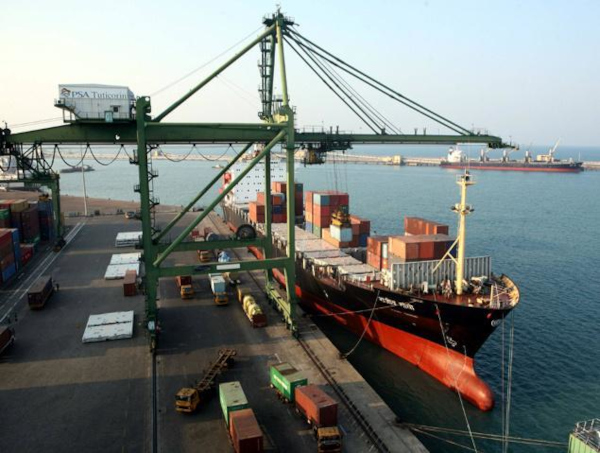
India’s export sector recorded strong growth during the opening quarter of the 2026–27 financial year, supported by higher merchandise shipments and continued strength in services. The combined value of merchandise and services exports during April–June 2026 reached an estimated $232.73 billion, rising by 11.37 per cent from $208.98 billion during the corresponding quarter of 2025–26.
Merchandise exports emerged as the principal driver of this expansion. Goods exports increased from $111.57 billion during April–June 2025 to $129.32 billion during April–June 2026, registering growth of 15.92 per cent. The performance reflects broader momentum across engineering goods, electronics, chemicals, gems and jewellery, agricultural commodities and several labour-intensive sectors.
June Exports Reach $73.45 Billion
India’s combined merchandise and services exports during June 2026 were estimated at $73.45 billion, compared with $67.09 billion in June 2025. This represented year-on-year growth of 9.48 per cent.
Merchandise exports during the month rose to $40.41 billion, up from $34.98 billion in June 2025. This amounted to growth of approximately 15.5 per cent and showed that physical goods remained the strongest contributor to the monthly export expansion.
Estimated services exports reached $33.03 billion, compared with $32.11 billion during June 2025. Services continued to generate a substantial trade surplus, helping offset a significant portion of India’s merchandise trade deficit.
The services figures for June are estimates because the latest services trade data released by the Reserve Bank of India covered May 2026. The Ministry of Commerce and Industry calculated the June numbers using available trends and revised the corresponding data for April–June 2025–26 on a pro-rata basis using quarterly balance-of-payments information.
Engineering Goods Lead Export Growth
Engineering goods remained India’s largest major merchandise export category during June. Their export value increased by 20.74 per cent, rising from $9.51 billion in June 2025 to $11.48 billion in June 2026.
The growth of engineering exports carries wider significance because the category includes machinery, industrial equipment, transport components, electrical goods, iron and steel products and other manufactured items. Sustained expansion in this sector reflects India’s increasing role in international manufacturing and industrial supply chains.
Gems and jewellery exports recorded one of the strongest increases among the major categories. Shipments rose from $1.79 billion in June 2025 to $2.41 billion in June 2026, representing growth of 34.64 per cent.
Exports of organic and inorganic chemicals expanded by 19.42 per cent, reaching $2.77 billion from $2.32 billion a year earlier. India’s chemical industry serves markets across pharmaceuticals, agriculture, manufacturing, textiles, construction and industrial processing, making it an important component of the country’s export base.
Electronic Goods Continue Their Upward March
Electronic goods exports increased from $4.14 billion in June 2025 to $4.93 billion in June 2026, registering growth of 18.93 per cent.
The figures continue the expansion of electronics as a major Indian export category. Rising domestic manufacturing capacity in mobile phones, components, consumer electronics and communication equipment has helped electronics secure a larger position within India’s merchandise trade.
The sector’s performance also reflects the development of an export-oriented manufacturing ecosystem supported by production-linked incentives, expanding supply chains and growing investment in domestic assembly and component production.
Rice and Agricultural Exports Gain Strength
Rice exports reached $1 billion in June 2026, increasing by 16.48 per cent from $860 million during June 2025.
Several other agricultural and food-related categories also registered positive growth. Exports of meat, dairy and poultry products rose by 54.63 per cent, while cereal preparations and miscellaneous processed products increased by 6.52 per cent. Fruits and vegetable exports recorded growth of 1.31 per cent.
Exports classified as other cereals rose by 244.29 per cent, making them the fastest-growing category by percentage during the month. The percentage increase reflects expansion from a relatively smaller base while demonstrating growing international demand for India’s wider range of cereal products.
Marine-product exports increased by 14.48 per cent, adding further strength to the agricultural and food-processing segment of India’s export basket.
Handicrafts and Labour-Intensive Sectors Perform Strongly
Handicraft exports, excluding handmade carpets, grew by 59.69 per cent during June 2026. This was among the highest rates recorded across the major export categories.
The performance has direct relevance for India’s artisan economy because handicraft production supports skilled workers, craft clusters, family enterprises and rural livelihoods across numerous states. Stronger exports can expand market access for traditional Indian products while improving the participation of small producers in international commerce.
Cotton yarn, fabrics, made-ups and handloom products registered growth of 8.82 per cent. Man-made yarn, fabrics and made-up products increased by 2.83 per cent, while plastic and linoleum exports rose by 21.24 per cent.
Pharmaceutical Exports Expand by 7.13%
India’s drugs and pharmaceutical exports recorded year-on-year growth of 7.13 per cent during June 2026.
The pharmaceutical sector remains one of India’s strategically important export industries, supplying generic medicines, vaccines, active pharmaceutical ingredients and healthcare products to global markets. Continued growth in pharmaceutical shipments strengthens India’s role as a major source of affordable medicines and healthcare manufacturing.
Exports of tobacco increased by 19.8 per cent, while mica, coal, ores, processed minerals and related products rose by 15.29 per cent. Iron-ore exports expanded by 49.97 per cent, and petroleum-product exports recorded growth of 9.19 per cent during the month.
Non-Petroleum Exports Show Broad-Based Momentum
India’s non-petroleum exports during April–June 2026 were valued at $106.30 billion, increasing by 12.44 per cent from $94.54 billion during the corresponding period of 2025.
This figure provides an important measure of the underlying strength of India’s export economy because it removes the influence of petroleum prices and refining-related trade. The increase indicates that export growth extended across manufacturing, agriculture, chemicals, engineering, electronics and other non-oil sectors.
Non-petroleum and non-gems-and-jewellery exports reached $99.04 billion during the first quarter, compared with $87.88 billion during April–June 2025. During June alone, this category increased from $28.73 billion to $33.13 billion.
The performance shows that export expansion was distributed across a broad range of industries and was supported by sectors beyond petroleum and precious commodities.
Services Generate a $49.43 Billion Surplus
Estimated services exports during April–June 2026 reached $103.41 billion, compared with $97.41 billion in the corresponding quarter of the previous financial year. This represented estimated growth of 6.16 per cent.
Services imports increased from $49.51 billion to $53.97 billion. India consequently recorded an estimated services trade surplus of $49.43 billion during the quarter, compared with $47.90 billion a year earlier.
The services surplus remains central to India’s external trade position. Earnings from information technology, business services, professional services, financial services, travel, transport and other activities help balance the country’s higher merchandise import requirements.
Imports Rise Faster Than Exports
India’s combined merchandise and services imports during April–June 2026 were estimated at $270.15 billion, increasing by 17.55 per cent from $229.82 billion during the corresponding period of 2025.
Merchandise imports rose from $180.31 billion to $216.18 billion, while estimated services imports increased from $49.51 billion to $53.97 billion. The combined trade deficit for the quarter consequently widened from $20.85 billion to $37.42 billion.
The merchandise trade deficit reached $86.86 billion, compared with $68.75 billion a year earlier. The services surplus absorbed $49.43 billion of this gap, demonstrating the stabilising contribution of India’s services economy.
During June, merchandise imports rose from $54.08 billion to $70.84 billion. Combined merchandise and services imports reached $88.76 billion, resulting in an overall monthly trade deficit of approximately $15.32 billion.
Key Export Markets Record Rapid Growth
South Africa, Singapore, China, Oman and Malaysia were among the export destinations recording the strongest increases in value during June 2026.
Exports to South Africa grew by 114.04 per cent, while shipments to Singapore increased by 48.91 per cent. Exports to China rose by 31.49 per cent. Oman and Malaysia recorded increases of 189.6 per cent and 99.18 per cent respectively.
Across the entire April–June quarter, Singapore, Tanzania, South Africa, Sri Lanka and China were the leading destinations in terms of positive changes in export value. Exports to Singapore increased by 101.16 per cent, while Tanzania recorded growth of 146.89 per cent. South Africa grew by 76.49 per cent, Sri Lanka by 124.63 per cent and China by 27.54 per cent.
These figures indicate growing trade engagement with markets across Southeast Asia, Africa, the Indian Ocean region and East Asia.
Stronger Export Base Supports India’s Global Trade Ambitions
India’s first-quarter export performance presents a picture of broad-based expansion led by merchandise shipments. Engineering goods, electronics, gems and jewellery, chemicals, pharmaceuticals, rice, marine products, handicrafts and processed foods all contributed to the increase.
The rise in non-petroleum exports demonstrates growing depth across India’s manufacturing and agricultural export base. The continued surplus in services further strengthens the country’s capacity to manage its external trade requirements.
The faster growth of imports reflects rising demand for energy, machinery, electronic components, industrial inputs and other products required by a growing economy. It also widened the merchandise and overall trade deficits during the quarter.
India entered the 2026–27 financial year with combined exports of more than $232 billion during its first three months. Sustaining this momentum will depend on global demand, trade conditions, commodity prices, logistics efficiency, domestic manufacturing competitiveness and the ability of Indian exporters to expand their presence across established and emerging markets.
Source: PIB
You may also like
-
Inbound Aerospace Turns to Australia to Test India’s Recoverable Re-Entry Spacecraft
-
BRICS Looks Beneath the Oceans as Bloc Moves Toward High-Speed Submarine Cable Network
-
India Proposes BRICS Gateway to Help 100 Startups Expand Across Member Markets Every Year
-
RVNL Completes 10.8-km Himalayan Escape Tunnel as Rishikesh–Karnaprayag Rail Project Nears Final Tunnelling Stage
-
India Emerges as World’s Largest Vaccine Producer as CEPI Partnership Enters Next Phase
