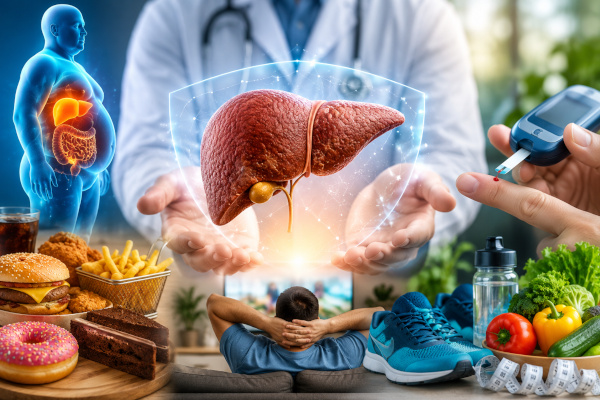
Union Minister Dr Jitendra Singh has called for a mission-mode national awareness campaign to address India’s growing burden of liver disease, Type-2 diabetes and related metabolic disorders. He said the sharp rise in fatty liver, diabetes, hypertension, dyslipidaemia and insulin resistance should be viewed as part of one larger metabolic health crisis rather than as isolated medical conditions.
Speaking at the 3rd anniversary of the Liver & Metabolic Disease Network, InFLiMeN, at the Institute of Liver and Biliary Sciences in New Delhi, Dr Jitendra Singh said metabolic disorders are now being detected among younger Indians, including young adults and adolescents. This changing pattern, he noted, has made the issue a national concern that requires prevention, early diagnosis, public awareness and lifestyle correction.
The Minister said the liver, although one of the most resilient and regenerative organs of the human body, is increasingly coming under pressure from unhealthy food habits, disturbed sleep patterns, stressful lifestyles, environmental pollution and lack of physical activity. He said these preventable factors must be addressed through a larger public health strategy.
Dr Jitendra Singh underlined that India has a unique metabolic profile. Genetic predisposition, central obesity and the Indian phenotype make many people vulnerable to diabetes, fatty liver and cardiovascular disease, even at relatively lower Body Mass Index levels. He said this makes it essential to develop Indian research, Indian data and Indian solutions instead of depending only on global studies.
The Minister praised the Liver & Metabolic Disease Network as an important national platform that brings together scientists, doctors, researchers and institutions to tackle one of India’s fastest-growing health challenges. Supported by the Department of Science and Technology, InFLiMeN focuses on collaborative research, innovation, early diagnosis and evidence-based policy support for liver and metabolic diseases.
Dr Jitendra Singh also welcomed the efforts of ILBS in creating a National Liver Biobank. He stressed the need for affordable early diagnostic technologies, community-level screening tools and indigenous biomarkers that can detect liver disease before irreversible damage occurs.
He said India’s growing biotechnology ecosystem, Genome Mission and large-scale gene sequencing programmes offer major opportunities to understand the country’s disease patterns more deeply. Advances in biotechnology, genomics and Artificial Intelligence, he added, can help build precision medicine approaches tailored to a person’s genes, lifestyle and environment.
However, the Minister cautioned that scientific progress alone will not be enough. He called upon doctors, researchers, educational institutions, civil society groups and the media to promote scientifically validated health practices and counter misinformation about nutrition, obesity and lifestyle diseases.
Dr Jitendra Singh said a healthy population is central to the vision of Viksit Bharat 2047. Reducing the burden of diabetes, fatty liver and related metabolic diseases, he said, is essential for protecting the productivity, aspirations and future potential of India’s young population.
The event was attended by Dr Vinod Paul, former Member of NITI Aayog; Dr Silviane Pied, French Attachée for Scientific and Academic Cooperation; Prof. Mridul Kumar Daga, Vice Chancellor of ILBS; Prof. Shiv Kumar Sarin, Director of ILBS; and leading clinicians, scientists and researchers from across the country.
Source: PIB
You may also like
-
Ayurveda and Mental Fatigue in the Digital Age: Ancient Wisdom for a Calm and Focused Mind
-
Bharat Biotech’s Nucelion and VeGen Bio Partner to Manufacture Advanced Dual-Target CAR-T Cancer Therapy in India
-
Ayurveda and Anger: How Emotional Excess Affects Physical and Mental Health
-
Ayurveda and Stress: Daily Practices for Mental Balance and Emotional Well-Being
-
Ayurveda and Bowel Routine: Why Regularity Matters for Digestive Health
