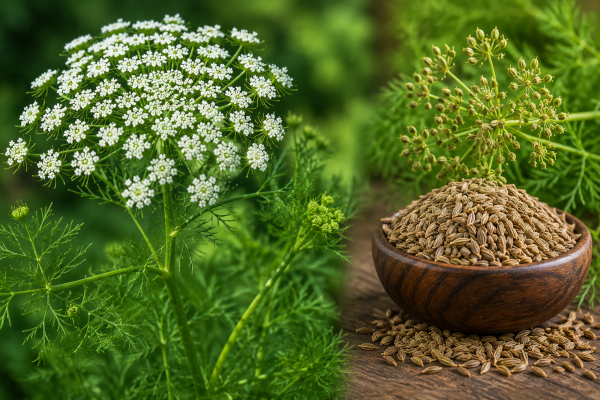
Ajamoda, commonly identified with wild celery or celery seed, is an important aromatic herb in Ayurveda, valued mainly for its seeds. It belongs to the group of pungent, digestive, carminative herbs that kindle Agni, support proper digestion, reduce abdominal heaviness, and help balance excess Kapha and Vata. In traditional households, Ajamoda has been used in small quantities as a medicinal spice, especially after meals and during conditions of indigestion, gas, sluggish appetite, and cold-type digestive discomfort.
In Sanskrit, the name Ajamoda is often explained through its strong aroma and digestive action. It is closely related in usage to herbs like Yavani, Jeeraka, Hingu, and Shunthi, but it has its own distinct place in Ayurvedic practice.
Names and Identity
Sanskrit name: Ajamoda
Common English name: Wild celery / Celery seed
Hindi: Ajmod / Ajmoda
Malayalam: Ayamodakam / Ajamodakam
Botanical identity: Commonly associated with Apium graveolens Linn.; in some Ayurvedic and regional traditions, related Apiaceae plants such as Apium leptophyllum or Trachyspermum roxburghianum are also discussed under similar usage.
Family: Apiaceae
The seeds are the most commonly used part. They are small, aromatic, slightly bitter-pungent, and warming in nature.
Ayurvedic Properties
Rasa: Katu, Tikta
Guna: Laghu, Ruksha, Tikshna
Virya: Ushna
Vipaka: Katu
Dosha action: Balances Vata and Kapha; may increase Pitta when used excessively
Ajamoda is especially known for its Deepana and Pachana actions. It stimulates digestive fire and helps the body process undigested food residue known as Ama. Because of its warming, sharp, and drying nature, it is useful where digestion is dull and Kapha-Vata accumulation creates heaviness, bloating, coldness, and sluggish movement in the abdomen.
Classical Ayurvedic Understanding
In Ayurveda, Ajamoda is placed among herbs that support digestion, remove abdominal wind, and clear obstruction caused by Kapha and Vata. It is appreciated for its aromatic volatile principles, which make it effective in small quantities. Traditional physicians used Ajamoda in powders, digestive mixtures, medicated buttermilk, decoctions, and formulations meant for Agnimandya, Adhmana, Shoola, Aruchi, and Gulma-like abdominal discomforts.
Ajamoda is not usually treated as a heavy nutritive herb. Its strength lies in correction of digestive function. It clears stagnation, improves appetite, supports downward movement of Vata, and reduces the cold, sticky, heavy quality of Kapha.
Manuscript Tradition
Old Ayurvedic manuscripts and regional medical notebooks often preserved simple household formulations using aromatic seeds such as Ajamoda, Jeeraka, Yavani, Hingu, and Shunthi. These recipes show how Kerala and wider Indian medical practice blended classical Ayurvedic principles with practical kitchen-based medicine. Ajamoda appears in such traditions as a digestive spice used in small measured quantities, often combined with warm water, ghee, rock salt, buttermilk, or other carminative herbs. The manuscript tradition highlights one important Ayurvedic idea: medicine need not always be rare or distant; many healing substances are present in the kitchen and become powerful when used with correct anupana, dose, season, and condition.
Important Actions of Ajamoda
Ajamoda is primarily Deepana, meaning it kindles digestive fire. It is also Pachana, helping digest Ama and improperly processed food. Its Vatanulomana property supports the natural downward movement of Vata, making it useful in gas, bloating, and abdominal discomfort.
It is also considered Kapha-hara because of its pungent, heating, and drying qualities. In cold-type cough, chest congestion, and mucus-related heaviness, Ajamoda may be used in traditional combinations with other warming herbs. Its sharp nature helps open channels and reduce stagnation.
Digestive Benefits
The most famous use of Ajamoda is in digestion. It is traditionally used for:
Indigestion, weak appetite, abdominal gas, bloating, heaviness after meals, sluggish digestion, nausea linked with Kapha, and mild cramping due to Vata.
A small pinch of Ajamoda powder with warm water after food is a common traditional approach. It helps reduce the heavy, cold, and stagnant feeling after meals. When combined with rock salt and a little dry ginger, it becomes a stronger digestive mixture.
Ajamoda for Vata Disorders
Because Ajamoda is warming and carminative, it is useful where Vata is blocked in the digestive tract. Symptoms such as abdominal distension, irregular appetite, gurgling, flatulence, and discomfort after cold or heavy food are traditionally managed with Ajamoda-based preparations.
Its action is not merely heating; it also helps move trapped Vata. This makes it valuable in Vata-Kapha conditions where coldness, heaviness, and obstruction appear together.
Ajamoda for Kapha Conditions
Ajamoda reduces Kapha by its Katu rasa, Tikshna guna, and Ushna virya. It is traditionally used when Kapha causes heaviness, mucus, low appetite, lethargy, and coating on the tongue. In such conditions, Ajamoda supports digestion and helps clear channels.
It may be used along with honey in small quantities in certain Kapha-dominant conditions, but honey should never be heated. Warm water may be taken separately.
Simple Traditional Use
A simple traditional digestive preparation can be made with:
Ajamoda seed powder, a small quantity of Saindhava lavana, and warm water after meals. This combination supports appetite, reduces gas, and improves digestion.
Another common approach is to lightly dry-roast Ajamoda seeds, powder them, and take a small pinch after heavy meals. Roasting reduces raw sharpness and improves aroma.
Ayurvedic Food Use
Ajamoda may be added in very small quantities to soups, gruels, buttermilk preparations, digestive spice powders, and medicinal cooking. It suits foods that are heavy, oily, cold, or Kapha-producing. It combines well with Jeeraka, Shunthi, Maricha, Hingu, and Saindhava lavana.
In food, it should be used as a spice, not as a bulk ingredient. Its strength lies in small measured use.
Dosage and Caution
Traditional seed powder dosage is generally small, often around 500 mg to 2 grams, depending on constitution, age, strength, and condition. Larger quantities should be taken only under the guidance of an Ayurvedic physician.
Ajamoda is heating and sharp, so excess use may aggravate Pitta, causing acidity, burning sensation, mouth dryness, or irritation. People with active gastritis, ulcers, high Pitta symptoms, pregnancy, or serious medical conditions should use it only with professional advice.
Who Benefits Most
Ajamoda is most suitable for people with Kapha-Vata digestion, where appetite is low, digestion is slow, and gas or heaviness appears after meals. It is especially useful in cold seasons, rainy periods, and after heavy food.
People with strong Pitta, burning sensation, acidity, loose stools with heat, or excessive body heat should use it carefully.
Conclusion
Ajamoda, or wild celery, is a powerful Ayurvedic digestive herb with a sharp, warming, aromatic nature. It kindles Agni, digests Ama, reduces gas, clears Kapha, and supports proper movement of Vata. Its importance lies not in quantity, but in precision. A small amount, used correctly, can transform sluggish digestion and restore lightness.
In the Ayurvedic view, Ajamoda represents the healing intelligence of spices. It reminds us that food and medicine are closely connected, and that the kitchen itself can become a pharmacy when guided by classical wisdom.
You may also like
-
Before the Heart Falls Ill: The Ayurvedic Way of Protecting Hridaya Through Daily Living
-
Why Ayurveda Begins the Morning by Looking at the Tongue
-
High Blood Pressure Through an Ayurvedic Lens: Stress, Diet and Dosha Imbalance
-
IISc Develops Engineered Nanobody Antivenom With Broad Protection Against Indian Cobra Venoms
-
Indian MedTech Startup Periwinkle Takes Rapid AI Cervical Cancer Screening to BRICS
