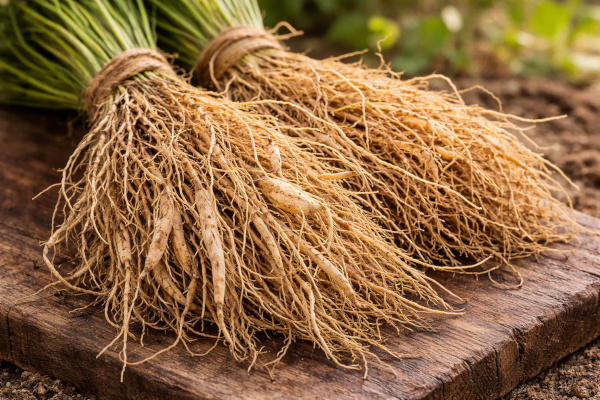
Vetiver, known in Ayurveda as Ushira, is one of the most respected aromatic roots used in traditional Indian healing culture. In Malayalam it is commonly called Ramachham, while in Tamil it is known as Vettiver. The plant is a perennial grass whose roots carry a deep earthy fragrance, a natural cooling quality and a long history of use in summer drinks, herbal waters, medicated preparations, perfumes and household wellness practices.
In the Ayurvedic understanding of food and medicine, vetiver is valued as a cooling, fragrant and calming herb. It is especially remembered for its ability to support the body during heat, thirst, fatigue, burning sensation and excess pitta conditions. The root is light, pleasant and naturally aromatic, making it useful both as a medicinal ingredient and as a daily seasonal wellness support.
Botanical Identity
Vetiver belongs to the grass family and grows as a hardy clump-forming plant with long narrow leaves and a strong root system. The medicinal value lies mainly in the roots. These roots are washed, dried and used in decoctions, herbal infusions, cooling drinks, powders, oils and aromatic preparations.
The fragrance of vetiver is deep, earthy, woody and slightly sweet. This natural aroma is one reason why it became popular in traditional cooling mats, drinking water pots, herbal fans, perfume blends and temple-related aromatic practices.
Ayurvedic Names and Identity
In Sanskrit, vetiver is called Ushira. The name is associated with cooling, fragrance and stability. Other common names include Ramachham in Malayalam, Vettiver in Tamil and Khus in many North Indian traditions.
In Ayurveda, Ushira is placed among herbs that soothe heat, calm pitta and support balance during hot seasons. It is also used in many classical formulations where cooling, aromatic and pitta-pacifying action is required.
Rasa Panchaka of Ushira
Ayurveda understands every herb through its taste, qualities, potency, post-digestive effect and action on doshas. Vetiver is traditionally understood in the following way:
Rasa: Tikta and Madhura — bitter and sweet taste
Guna: Laghu and Snigdha — light and mildly unctuous qualities
Veerya: Sheeta — cooling potency
Vipaka: Madhura — sweet post-digestive effect
Dosha Action: Vata-pitta shamana, especially useful in pacifying aggravated pitta
This explains why vetiver is used in cooling drinks, summer preparations and herbal waters. Its cooling veerya helps reduce excess heat, while its mild sweetness and fragrance make it pleasant for regular seasonal use.
Traditional Ayurvedic Understanding
Ushira is especially associated with cooling the body and refreshing the mind. It is traditionally used in conditions connected with heat, thirst, burning sensation, excess sweating, fatigue and pitta aggravation. It is also valued for supporting urinary comfort and for its refreshing effect during hot weather.
In traditional households, vetiver roots were often placed in drinking water to make naturally fragrant cooling water. This practice was common in Kerala and other parts of India during summer. The root slowly releases its aroma into the water, creating a mild herbal drink that is refreshing without being heavy.
Vetiver is also appreciated for its calming effect. Its aroma is grounding and soothing, which is why it is used in oils, perfumes and cooling external applications. In Ayurvedic lifestyle, fragrance is not merely cosmetic; it is also connected with mental balance, clarity and sensory harmony.
Vetiver as a Summer Herb
Summer increases heat, thirst, sweating and pitta-related discomfort. Ayurveda gives special importance to cooling herbs, light food, sweet drinks and fragrant waters during this season. Vetiver fits beautifully into this seasonal wisdom.
Vetiver water, vetiver-infused buttermilk, herbal panaka and cooling syrups are traditional ways of using Ushira. These preparations help refresh the body, reduce heat and bring a sense of calm. The herb is gentle, aromatic and suitable as a seasonal wellness ingredient when used properly.
Ushiradi Panaka — Vetiver Sweet Drink
A traditional reference mentions Ushiradi Panaka, a sweet cooling drink prepared with vetiver. The name means a panaka beginning with Ushira, where vetiver forms the central cooling and aromatic ingredient. This drink is linked with the classical Ayurvedic tradition of using fragrant herbal beverages to manage heat, thirst, exhaustion and pitta-related imbalance.
Simple Traditional Preparation
Take a small handful of clean dried vetiver roots and rinse them well. Soak them in clean drinking water for a few hours, preferably in an earthen or glass vessel. After the water becomes fragrant, strain it carefully. Add a suitable sweetener such as rock sugar, sugar candy or jaggery according to taste. A few drops of lemon juice may be added for freshness, though the classical spirit of the drink remains rooted in vetiver’s cooling fragrance.
This Ushiradi Panaka may be served slightly cool during hot weather. It should be light, fragrant and mildly sweet. The aim is not heaviness, but gentle cooling and refreshment.
Manuscript Note
The reference to Ushiradi Panaka is associated with the Kashyapa tradition, particularly in the context of Madatyaya Chikitsa, where cooling, stabilising and restorative preparations are described. Madatyaya in Ayurveda deals with disorders arising from excess intake of intoxicating drinks and the resulting imbalance in the body. In such contexts, aromatic cooling drinks like vetiver-based panaka were valued for their ability to relieve heat, thirst, dryness and internal discomfort.
Kashyapa Samhita, also known in tradition as Vriddha Jivakiya Tantra, holds an important place in Ayurveda and is especially remembered for its connection with child health, women’s health and practical clinical wisdom. The mention of Ushiradi Panaka shows how Ayurveda used simple herbs, water, sweetness and fragrance to create therapeutic drinks suited to specific conditions.
Food as Medicine
Vetiver is a beautiful example of the Ayurvedic idea that medicine need not always be bitter, complex or difficult to use. A fragrant root soaked in water can become a cooling drink. A simple sweet panaka can support the body during heat and exhaustion. A natural aroma can calm the senses.
This is the strength of Ayurveda’s food-as-medicine approach. The daily kitchen, seasonal drinks and household traditions become part of preventive health. Vetiver stands at this meeting point of medicine, fragrance, climate wisdom and lifestyle.
Traditional Uses of Vetiver
Vetiver is traditionally used in the following ways:
Vetiver-infused drinking water for summer cooling
Vetiver panaka as a sweet refreshing drink
Vetiver decoction in selected Ayurvedic preparations
Vetiver oil in external use and aroma traditions
Vetiver roots in water pots for fragrance and cooling
Vetiver in formulations such as Ushirasava and Shadanga Paneeya
Each use reflects the same central quality of Ushira: cooling, fragrant, grounding and pitta-pacifying.
Home Use and Practical Guidance
For daily summer use, a few pieces of clean vetiver root may be soaked in drinking water overnight. The water can be strained and consumed the next day. It should have a mild fragrance and a clean taste. The roots must be washed properly, sourced from a trusted place and stored in a dry condition.
For panaka, the drink should be prepared fresh and consumed in moderation. Very strong decoctions or excessive use are unnecessary for daily wellness. Ayurveda always values correct quantity, season, body type and digestive strength.
Precautions
Vetiver is generally considered gentle when used traditionally in small quantities as infused water or panaka. People with chronic illness, pregnancy, lactation, kidney conditions, regular medication use or ongoing treatment should take professional advice before using herbal preparations regularly. Any herb used medicinally should be approached with respect, purity and moderation.
Conclusion
Vetiver, or Ushira, is one of Ayurveda’s finest cooling roots. It carries the fragrance of the earth, the calmness of shade and the healing intelligence of seasonal living. From simple vetiver water to Ushiradi Panaka, this root shows how Ayurveda transformed everyday natural ingredients into graceful tools of balance.
In a hot climate like India, vetiver remains more than a herb. It is a summer companion, a pitta-pacifying drink ingredient, a fragrant purifier and a reminder that nature often offers the simplest remedies in the most elegant form.
You may also like
-
Ayurveda and Mental Fatigue in the Digital Age: Ancient Wisdom for a Calm and Focused Mind
-
Bharat Biotech’s Nucelion and VeGen Bio Partner to Manufacture Advanced Dual-Target CAR-T Cancer Therapy in India
-
Ayurveda and Anger: How Emotional Excess Affects Physical and Mental Health
-
Ayurveda and Stress: Daily Practices for Mental Balance and Emotional Well-Being
-
Ayurveda and Bowel Routine: Why Regularity Matters for Digestive Health
