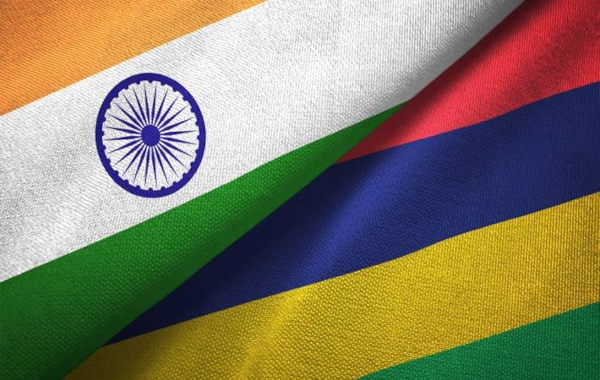
India and Mauritius are preparing to deepen their strategic and economic partnership through a major $1 billion container terminal project in the island nation. The proposed development is expected to support Mauritius’ ambition of becoming a leading transshipment and logistics hub in the Indian Ocean while giving India a stronger maritime gateway to Africa and wider regional trade routes.
The project was highlighted by Mauritius Prime Minister Dr. Navinchandra Ramgoolam during his recent budget speech. He said the island container terminal would be implemented as a high-impact project under a government-to-government arrangement with India. The Mauritius Ports Authority is also expected to issue a second licence to an international operator for container handling, bunkering and transshipment services.
The project is being viewed as a transformative step for Mauritius. Once developed, it can strengthen Port Louis as a major regional maritime centre connecting Asia, Africa and the Indian Ocean region. For India, the terminal offers a valuable opportunity to expand trade access, improve supply-chain connectivity and reinforce its long-standing partnership with Mauritius.
Discussions on the final structure of the agreement are still under way. The Mauritian authorities have indicated that ownership and operational details are being worked out between the two sides. The wider vision, however, is clear: the terminal is expected to create a modern port ecosystem that can support larger cargo movement, improve regional logistics and attract greater maritime business to Mauritius.
Port Louis already plays an important role in regional shipping. In calendar year 2025, the port handled 10.14 million tonnes of EXIM cargo and 5.25 lakh twenty-foot equivalent containers. The port has also seen higher vessel calls over the past two years, as shipping companies increasingly used the Cape of Good Hope route amid disruptions in the Red Sea and Suez Canal corridor. This changing maritime environment gives Mauritius an opportunity to strengthen its position as a reliable Indian Ocean transshipment point.
The container terminal plan also fits into India’s wider maritime outlook. Mauritius remains an important partner in India’s Neighbourhood First policy and the MAHASAGAR vision, which focuses on development, capacity building, security and shared prosperity across the Global South. The project can support these goals by creating new trade capacity, improving port infrastructure and expanding maritime cooperation.
India and Mauritius already share deep cultural, commercial and strategic ties. In September, Prime Minister Narendra Modi announced a special economic package for Mauritius, covering development support in areas such as health and transport. Both countries had also agreed in principle to work on the redevelopment and restructuring of port infrastructure in Mauritius.
The maritime partnership is growing alongside stronger defence cooperation. India’s decision to position a defence attaché in Mauritius reflects the expanding security dimension of the relationship. Together, these steps show how the India–Mauritius partnership is moving beyond traditional ties into a broader framework covering trade, logistics, maritime security and regional development.
The project also comes at a time when India is expanding its global port infrastructure ambitions. India has already been involved in port projects such as Chabahar in Iran and Sittwe in Myanmar. The creation of Bharat Ports Global, a consortium of government-owned companies to build and operate ports overseas, marks another step in this direction. The initiative is aimed at strengthening logistics, supporting exports and improving India’s role in global supply chains.
Private Indian companies have also been expanding their port presence abroad, with Indian-linked terminal operations in locations such as Israel, Sri Lanka and Tanzania. The proposed Mauritius project adds a strong government-backed dimension to India’s overseas port strategy.
The $1 billion India–Mauritius container terminal project therefore carries both economic and strategic importance. For Mauritius, it can become a major engine of port-led growth, employment, logistics expansion and regional connectivity. For India, it can become a powerful maritime bridge to Africa and the Indian Ocean region. Together, the project reflects a forward-looking partnership built on trust, trade, security and shared development.
You may also like
-
India’s E-Commerce Platforms Record ₹24,000 Crore Festive Sales in Two Days as Meesho Reports 75% Surge in Orders
-
Exercise Tarang Shakti 2026 Concludes in Jodhpur, Showcasing India’s Air Power, Indigenous Defence Technology
-
India’s Economic Warfare Challenge: Strategic Autonomy, Energy Security and the Rise of a Global Power
-
India-US Trade Deal Stalemate: Why Washington’s Tariff Pressure Has Failed to Secure an Agreement
-
US Double Standards in Foreign Policy: 16 Recent Cases Involving India, Russia, China and Global Trade
