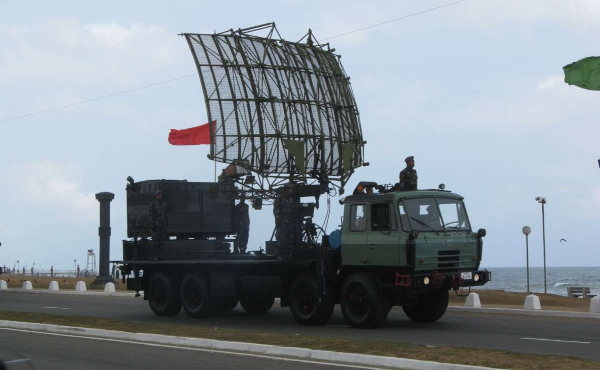
The INDRA-I radar is one of the landmark systems in India’s indigenous radar journey. Developed by DRDO’s Electronics and Radar Development Establishment and produced by Bharat Electronics Limited, INDRA-I belongs to the Indian Doppler Radar series of mobile 2D surveillance radars designed for low-level air target detection. For the Indian Army, it was created as a tactical surveillance radar for point defence, area defence and gap-filler roles in the air-defence grid.
INDRA-I represents an important phase in Indian defence electronics. It came at a time when India needed mobile air-surveillance radars that could detect low-flying aircraft, support forward air-defence units, provide early warning to weapon crews and reduce dependence on imported systems. It became one of DRDO’s early high-power radar achievements and helped establish the foundation for later Indian radars such as INDRA-II, Rohini, Bharani, Rajendra, Reporter and other battlefield surveillance systems.
Why INDRA-I Matters
Modern air threats often try to exploit gaps in radar coverage. Aircraft, helicopters and later-generation low-flying threats can use terrain, valleys, tree lines and curvature of the earth to approach below the coverage of large static radars. Long-range air surveillance radars provide wide-area coverage, but their low-altitude picture can be affected by terrain masking and ground clutter. This creates the need for mobile low-level radars deployed closer to vulnerable sectors.
INDRA-I was built for this requirement. It gives air-defence commanders a forward-deployed radar that can watch low-altitude airspace around important assets, troop formations, ammunition areas, bridges, airfields, logistics nodes and tactical battle zones. In simple terms, it acts as a battlefield watchman, filling local air-surveillance gaps and feeding target information to air-defence weapons and command posts.
Its value lies in mobility, quick deployment and focused low-level detection. A commander can move the radar with the formation, deploy it in a threat sector and use it to provide local warning against hostile aircraft attempting to enter at low altitude. This makes it useful for both point defence of specific assets and area defence of a tactical zone.
Indigenous Development
INDRA stands for Indian Doppler Radar. The series was developed by the Electronics and Radar Development Establishment of DRDO for the Army and Air Force, with Bharat Electronics Limited as the production partner. INDRA-I was the Army-oriented mobile surveillance radar for low-level target detection, while INDRA-II or the pulse-compression version later served the Air Force’s low-flying detection and ground-controlled interception requirements.
The importance of INDRA-I goes beyond its immediate battlefield role. It was one of DRDO’s first major radar systems produced in numbers for the armed forces. This gave Indian scientists, engineers and production agencies valuable experience in radar transmitters, receivers, signal processing, antenna systems, display consoles, IFF integration, field mobility and military-grade reliability.
Every later Indian radar programme benefited from this experience. INDRA-I therefore deserves recognition as a foundation stone in India’s radar self-reliance story.
Core Technical Profile
INDRA-I is a mobile 2D surveillance radar. A 2D radar provides two main pieces of information: range and azimuth. Range tells the operator how far the target is from the radar. Azimuth tells the direction or bearing of the target. A 3D radar additionally provides height information. INDRA-I’s role is to detect, track and report low-level targets in the local air-defence environment, while height information can be obtained from other sensors or estimated through air-defence procedures when required.
The radar belongs to the L-band family of low-flying detection radars. L-band is useful for surveillance because it provides good propagation, useful coverage and stable performance for tracking airborne targets across battlefield conditions. The system uses Doppler principles to separate moving targets from ground clutter. This is central to low-level air defence because low-flying aircraft appear against a background of terrain returns, vegetation, buildings and ground reflections.
Publicly available descriptions identify INDRA-I as a radar housed on wheeled vehicles, with features such as automated Track-While-Scan, integrated Identification Friend or Foe, and high scan rate for high-speed target detection. These features define its battlefield personality: it scans continuously, detects moving air targets, builds tracks, supports identification and passes useful information to air-defence units.
How INDRA-I Operates
INDRA-I begins its mission by deploying in a selected tactical location. The radar is positioned to cover the expected direction of air threat, with attention to terrain, line of sight, masking, local clutter and protection of the radar site. Once deployed, the radar antenna scans the assigned airspace and emits radio-frequency energy. Airborne targets reflect a portion of that energy back to the radar receiver.
The radar then measures the time delay between transmission and return to calculate range. It uses the antenna direction to determine azimuth. Because the target is moving, the reflected signal contains a Doppler shift. This Doppler information helps the radar distinguish moving aircraft from stationary ground objects. In low-altitude surveillance, this is extremely important because ground clutter can be intense.
After detection, the radar’s processing system filters returns, rejects unwanted clutter and creates a target plot. Repeated plots are associated over time to form a track. The Track-While-Scan function allows the radar to continue scanning the airspace while maintaining tracks on detected targets. This means the radar does not stop its search function every time it tracks a target. It builds a tactical air picture while still watching for new threats.
The radar display presents target information to operators, usually in a plan-position style display where range and bearing are visible. Operators or connected command systems can then pass the track to air-defence control units, gun control units or higher command posts. In a layered air-defence system, this track data helps cue weapons, warn defended assets and coordinate engagement decisions.
Doppler Logic: Separating Aircraft from Ground Clutter
The heart of INDRA-I’s tactical usefulness is Doppler processing. When a radar beam hits stationary terrain, the reflected signal comes back with little or no Doppler shift. When it hits a moving aircraft, the frequency of the reflected signal shifts because the target is moving relative to the radar. The radar uses this difference to identify moving targets.
This is especially useful for low-level air defence. An aircraft flying close to the ground may be surrounded by strong returns from hills, trees, buildings or rough terrain. A simple non-Doppler radar can struggle to pick out the aircraft clearly. A Doppler radar can filter much of the stationary background and focus on moving targets. That is why the INDRA series was important for detecting low-flying targets in cluttered environments.
Track-While-Scan Capability
Track-While-Scan is a key feature of INDRA-I. In older radar operation, a radar might search for targets and then dedicate more attention to tracking a specific target. Track-While-Scan improves this by allowing the radar to keep searching while also maintaining tracks on targets already detected.
For an air-defence unit, this is critical. A hostile air raid may include more than one aircraft. It may include decoys, multiple approaches or fast changes in direction. A radar that can track while scanning gives the commander a more continuous air picture. It supports better warning time, better target prioritisation and better coordination with air-defence weapons.
Integrated IFF
INDRA-I includes Identification Friend or Foe support. IFF is essential in air defence because every radar contact must be classified quickly and accurately. The radar may detect an aircraft, but the commander must know whether it is friendly, hostile or unknown before weapons are committed.
IFF works through interrogation and response. The radar or associated system sends an interrogation signal, and friendly aircraft with the correct transponder respond with coded information. This helps reduce the risk of fratricide and supports safe airspace management. In battlefield air defence, integrated IFF is as important as detection because speed without identification can create dangerous confusion.
Point Defence and Area Defence Role
INDRA-I’s Army role is best understood through two missions: point defence and area defence.
In point defence, the radar protects a specific high-value asset. This may be an ammunition depot, command post, bridge, airstrip, logistics hub or forward formation headquarters. The radar watches the local airspace around that asset and provides warning against low-level approach.
In area defence, the radar contributes to the protection of a wider tactical zone. It can be placed to cover a gap between larger radars, support a brigade or divisional air-defence layout, or strengthen surveillance in terrain where long-range radars face masking. In this role, it becomes part of a distributed sensor grid.
Gap-Filler in the Air-Defence Network
The term “gap-filler” is central to understanding INDRA-I. A national or theatre air-defence network uses many radars. Large long-range radars provide wide coverage. Medium-range radars fill operational sectors. Low-level radars like INDRA-I cover local blind zones where low-flying threats may slip through.
This layered architecture creates a stronger air picture. INDRA-I does not need to replace larger systems. Its job is to strengthen the layer closest to the battlefield. When placed correctly, it can close a low-altitude approach lane, protect troops from surprise air attack and feed local target information into air-defence command channels.
What INDRA-I Detects
INDRA-I was designed for low-level airborne target detection. Its primary targets include hostile aircraft and helicopters operating at low altitude. In practical air-defence terms, such targets may try to approach below the main radar horizon, use terrain masking or fly along valleys and low routes.
The later INDRA-II pulse-compression version expanded the family’s capability for low-flying detection in heavy ground clutter and is associated with tracking low-flying aircraft, helicopters and cruise-missile-type threats. INDRA-I must therefore be seen as the Army’s early tactical surveillance version, while INDRA-II represents the more advanced pulse-compression evolution of the same indigenous radar family.
Mobility and Deployment
Mobility is one of INDRA-I’s biggest strengths. A mobile radar is harder to target and easier to reposition according to battlefield needs. It can move with formations, shift to new defensive sectors and support changing tactical priorities.
The radar is housed on wheeled vehicles, allowing road movement and field deployment. This mobility gives the Army flexibility in deserts, plains, semi-urban sectors and forward operational areas. In a conflict, radar mobility also supports survivability. Once a radar emits, it becomes part of the electronic battlefield. Mobile systems can change location to reduce vulnerability to enemy targeting.
INDRA-I and the Sensor-to-Shooter Chain
INDRA-I’s real battlefield value appears when it is connected to weapons and command systems. A radar detects. A command post assesses. A weapon engages. This is the sensor-to-shooter chain.
In an Army air-defence layout, INDRA-I detects the target and provides range and bearing. The track can be shared with gun control units, short-range air-defence systems or higher air-defence control nodes. This gives weapon crews more time to prepare, slew sensors, orient guns or missiles, and take engagement decisions.
The faster this chain works, the better the defended force survives. Low-flying aircraft give defenders limited reaction time. INDRA-I increases that warning window and improves readiness.
Difference Between INDRA-I and INDRA-II
INDRA-I and INDRA-II belong to the same Indian Doppler Radar family, but their roles and technology emphasis differ. INDRA-I is the Army’s mobile 2D surveillance radar for low-level target detection, point defence and area defence. INDRA-II, also described as the pulse-compression version, is a low-flying detection radar used in the air-defence environment, especially as a gap-filler.
INDRA-II publicly lists features such as L-band operation, fully coherent design, frequency agility, pulse compression, advanced signal processing, Track-While-Scan, handling of large numbers of tracks, primary-secondary target association, multicolour PPI display, automatic target-data transmission, integrated IFF and around 60 minutes deployment time. This shows how the INDRA family matured from an early tactical radar into a more capable low-level air-defence sensor.
Operational Strengths
INDRA-I gives several advantages to the Army. It improves low-level air surveillance. It supports defended assets with local early warning. It reduces blind spots in the radar network. It provides mobile radar coverage in forward sectors. It supports air-defence weapons with target data. It strengthens point and area defence. It builds the foundation for a more layered and responsive air-defence structure.
Its greatest strength is practical battlefield relevance. Large radars may see far, but forward troops need local warning. INDRA-I was designed for that battlefield need.
Limitations and Tactical Considerations
Like every 2D radar, INDRA-I provides range and azimuth, while height information requires additional systems or tactical estimation. Terrain can create radar shadow zones. Low-flying targets may appear late if masked by hills, buildings or tree lines. Heavy clutter and electronic warfare conditions can affect performance. These limitations are normal for battlefield radars and are handled through smart deployment, overlapping coverage, networking, operator training and integration with other sensors.
A radar also needs protection. Since it emits radio energy, an enemy can try to detect, jam or target it. Mobility, camouflage, emission discipline and regular repositioning are therefore part of its operational use.
Strategic Significance for India
INDRA-I’s strategic value lies in what it represented. It was not simply a radar inducted into service. It was a national capability milestone. It proved that India could design and produce a high-power military surveillance radar for its armed forces. It built confidence inside DRDO, BEL and the armed forces that indigenous radar systems could meet operational requirements.
From INDRA-I, India moved into a wider family of radar technologies: pulse-compression radars, 3D surveillance radars, battlefield surveillance radars, fire-control radars, weapon-locating radars and modern AESA systems. The road to advanced systems like Rohini, Rajendra, Swathi and modern air-defence radars passes through the experience gained from early programmes such as INDRA.
Conclusion
INDRA-I is one of India’s important indigenous air-defence radar systems. As a mobile 2D surveillance radar, it was built to detect low-level airborne targets, support point and area defence, fill radar gaps and strengthen the Army’s air-defence picture. Its Doppler processing, Track-While-Scan capability, integrated IFF and mobile deployment made it a valuable tactical sensor for forward air defence.
In battlefield terms, INDRA-I gives the commander what every air-defence network needs: early warning, target direction, mobility and local coverage. In national terms, it gave India something even larger: confidence in indigenous radar design.
INDRA-I stands as the early watchman of India’s modern radar story — a mobile eye built to guard the low skies and open the path for a The INDRA-I radar is one of the landmark systems in India’s indigenous radar journey. Developed by DRDO’s Electronics and Radar Development Establishment and produced by Bharat Electronics Limited, INDRA-I belongs to the Indian Doppler Radar series of mobile 2D surveillance radars designed for low-level air target detection. For the Indian Army, it was created as a tactical surveillance radar for point defence, area defence and gap-filler roles in the air-defence grid.
INDRA-I represents an important phase in Indian defence electronics. It came at a time when India needed mobile air-surveillance radars that could detect low-flying aircraft, support forward air-defence units, provide early warning to weapon crews and reduce dependence on imported systems. It became one of DRDO’s early high-power radar achievements and helped establish the foundation for later Indian radars such as INDRA-II, Rohini, Bharani, Rajendra, Reporter and other battlefield surveillance systems.
Why INDRA-I Matters
Modern air threats often try to exploit gaps in radar coverage. Aircraft, helicopters and later-generation low-flying threats can use terrain, valleys, tree lines and curvature of the earth to approach below the coverage of large static radars. Long-range air surveillance radars provide wide-area coverage, but their low-altitude picture can be affected by terrain masking and ground clutter. This creates the need for mobile low-level radars deployed closer to vulnerable sectors.
INDRA-I was built for this requirement. It gives air-defence commanders a forward-deployed radar that can watch low-altitude airspace around important assets, troop formations, ammunition areas, bridges, airfields, logistics nodes and tactical battle zones. In simple terms, it acts as a battlefield watchman, filling local air-surveillance gaps and feeding target information to air-defence weapons and command posts.
Its value lies in mobility, quick deployment and focused low-level detection. A commander can move the radar with the formation, deploy it in a threat sector and use it to provide local warning against hostile aircraft attempting to enter at low altitude. This makes it useful for both point defence of specific assets and area defence of a tactical zone.
Indigenous Development
INDRA stands for Indian Doppler Radar. The series was developed by the Electronics and Radar Development Establishment of DRDO for the Army and Air Force, with Bharat Electronics Limited as the production partner. INDRA-I was the Army-oriented mobile surveillance radar for low-level target detection, while INDRA-II or the pulse-compression version later served the Air Force’s low-flying detection and ground-controlled interception requirements.
The importance of INDRA-I goes beyond its immediate battlefield role. It was one of DRDO’s first major radar systems produced in numbers for the armed forces. This gave Indian scientists, engineers and production agencies valuable experience in radar transmitters, receivers, signal processing, antenna systems, display consoles, IFF integration, field mobility and military-grade reliability.
Every later Indian radar programme benefited from this experience. INDRA-I therefore deserves recognition as a foundation stone in India’s radar self-reliance story.
Core Technical Profile
INDRA-I is a mobile 2D surveillance radar. A 2D radar provides two main pieces of information: range and azimuth. Range tells the operator how far the target is from the radar. Azimuth tells the direction or bearing of the target. A 3D radar additionally provides height information. INDRA-I’s role is to detect, track and report low-level targets in the local air-defence environment, while height information can be obtained from other sensors or estimated through air-defence procedures when required.
The radar belongs to the L-band family of low-flying detection radars. L-band is useful for surveillance because it provides good propagation, useful coverage and stable performance for tracking airborne targets across battlefield conditions. The system uses Doppler principles to separate moving targets from ground clutter. This is central to low-level air defence because low-flying aircraft appear against a background of terrain returns, vegetation, buildings and ground reflections.
Publicly available descriptions identify INDRA-I as a radar housed on wheeled vehicles, with features such as automated Track-While-Scan, integrated Identification Friend or Foe, and high scan rate for high-speed target detection. These features define its battlefield personality: it scans continuously, detects moving air targets, builds tracks, supports identification and passes useful information to air-defence units.
How INDRA-I Operates
INDRA-I begins its mission by deploying in a selected tactical location. The radar is positioned to cover the expected direction of air threat, with attention to terrain, line of sight, masking, local clutter and protection of the radar site. Once deployed, the radar antenna scans the assigned airspace and emits radio-frequency energy. Airborne targets reflect a portion of that energy back to the radar receiver.
The radar then measures the time delay between transmission and return to calculate range. It uses the antenna direction to determine azimuth. Because the target is moving, the reflected signal contains a Doppler shift. This Doppler information helps the radar distinguish moving aircraft from stationary ground objects. In low-altitude surveillance, this is extremely important because ground clutter can be intense.
After detection, the radar’s processing system filters returns, rejects unwanted clutter and creates a target plot. Repeated plots are associated over time to form a track. The Track-While-Scan function allows the radar to continue scanning the airspace while maintaining tracks on detected targets. This means the radar does not stop its search function every time it tracks a target. It builds a tactical air picture while still watching for new threats.
The radar display presents target information to operators, usually in a plan-position style display where range and bearing are visible. Operators or connected command systems can then pass the track to air-defence control units, gun control units or higher command posts. In a layered air-defence system, this track data helps cue weapons, warn defended assets and coordinate engagement decisions.
Doppler Logic: Separating Aircraft from Ground Clutter
The heart of INDRA-I’s tactical usefulness is Doppler processing. When a radar beam hits stationary terrain, the reflected signal comes back with little or no Doppler shift. When it hits a moving aircraft, the frequency of the reflected signal shifts because the target is moving relative to the radar. The radar uses this difference to identify moving targets.
This is especially useful for low-level air defence. An aircraft flying close to the ground may be surrounded by strong returns from hills, trees, buildings or rough terrain. A simple non-Doppler radar can struggle to pick out the aircraft clearly. A Doppler radar can filter much of the stationary background and focus on moving targets. That is why the INDRA series was important for detecting low-flying targets in cluttered environments.
Track-While-Scan Capability
Track-While-Scan is a key feature of INDRA-I. In older radar operation, a radar might search for targets and then dedicate more attention to tracking a specific target. Track-While-Scan improves this by allowing the radar to keep searching while also maintaining tracks on targets already detected.
For an air-defence unit, this is critical. A hostile air raid may include more than one aircraft. It may include decoys, multiple approaches or fast changes in direction. A radar that can track while scanning gives the commander a more continuous air picture. It supports better warning time, better target prioritisation and better coordination with air-defence weapons.
Integrated IFF
INDRA-I includes Identification Friend or Foe support. IFF is essential in air defence because every radar contact must be classified quickly and accurately. The radar may detect an aircraft, but the commander must know whether it is friendly, hostile or unknown before weapons are committed.
IFF works through interrogation and response. The radar or associated system sends an interrogation signal, and friendly aircraft with the correct transponder respond with coded information. This helps reduce the risk of fratricide and supports safe airspace management. In battlefield air defence, integrated IFF is as important as detection because speed without identification can create dangerous confusion.
Point Defence and Area Defence Role
INDRA-I’s Army role is best understood through two missions: point defence and area defence.
In point defence, the radar protects a specific high-value asset. This may be an ammunition depot, command post, bridge, airstrip, logistics hub or forward formation headquarters. The radar watches the local airspace around that asset and provides warning against low-level approach.
In area defence, the radar contributes to the protection of a wider tactical zone. It can be placed to cover a gap between larger radars, support a brigade or divisional air-defence layout, or strengthen surveillance in terrain where long-range radars face masking. In this role, it becomes part of a distributed sensor grid.
Gap-Filler in the Air-Defence Network
The term “gap-filler” is central to understanding INDRA-I. A national or theatre air-defence network uses many radars. Large long-range radars provide wide coverage. Medium-range radars fill operational sectors. Low-level radars like INDRA-I cover local blind zones where low-flying threats may slip through.
This layered architecture creates a stronger air picture. INDRA-I does not need to replace larger systems. Its job is to strengthen the layer closest to the battlefield. When placed correctly, it can close a low-altitude approach lane, protect troops from surprise air attack and feed local target information into air-defence command channels.
What INDRA-I Detects
INDRA-I was designed for low-level airborne target detection. Its primary targets include hostile aircraft and helicopters operating at low altitude. In practical air-defence terms, such targets may try to approach below the main radar horizon, use terrain masking or fly along valleys and low routes.
The later INDRA-II pulse-compression version expanded the family’s capability for low-flying detection in heavy ground clutter and is associated with tracking low-flying aircraft, helicopters and cruise-missile-type threats. INDRA-I must therefore be seen as the Army’s early tactical surveillance version, while INDRA-II represents the more advanced pulse-compression evolution of the same indigenous radar family.
Mobility and Deployment
Mobility is one of INDRA-I’s biggest strengths. A mobile radar is harder to target and easier to reposition according to battlefield needs. It can move with formations, shift to new defensive sectors and support changing tactical priorities.
The radar is housed on wheeled vehicles, allowing road movement and field deployment. This mobility gives the Army flexibility in deserts, plains, semi-urban sectors and forward operational areas. In a conflict, radar mobility also supports survivability. Once a radar emits, it becomes part of the electronic battlefield. Mobile systems can change location to reduce vulnerability to enemy targeting.
INDRA-I and the Sensor-to-Shooter Chain
INDRA-I’s real battlefield value appears when it is connected to weapons and command systems. A radar detects. A command post assesses. A weapon engages. This is the sensor-to-shooter chain.
In an Army air-defence layout, INDRA-I detects the target and provides range and bearing. The track can be shared with gun control units, short-range air-defence systems or higher air-defence control nodes. This gives weapon crews more time to prepare, slew sensors, orient guns or missiles, and take engagement decisions.
The faster this chain works, the better the defended force survives. Low-flying aircraft give defenders limited reaction time. INDRA-I increases that warning window and improves readiness.
Difference Between INDRA-I and INDRA-II
INDRA-I and INDRA-II belong to the same Indian Doppler Radar family, but their roles and technology emphasis differ. INDRA-I is the Army’s mobile 2D surveillance radar for low-level target detection, point defence and area defence. INDRA-II, also described as the pulse-compression version, is a low-flying detection radar used in the air-defence environment, especially as a gap-filler.
INDRA-II publicly lists features such as L-band operation, fully coherent design, frequency agility, pulse compression, advanced signal processing, Track-While-Scan, handling of large numbers of tracks, primary-secondary target association, multicolour PPI display, automatic target-data transmission, integrated IFF and around 60 minutes deployment time. This shows how the INDRA family matured from an early tactical radar into a more capable low-level air-defence sensor.
Operational Strengths
INDRA-I gives several advantages to the Army. It improves low-level air surveillance. It supports defended assets with local early warning. It reduces blind spots in the radar network. It provides mobile radar coverage in forward sectors. It supports air-defence weapons with target data. It strengthens point and area defence. It builds the foundation for a more layered and responsive air-defence structure.
Its greatest strength is practical battlefield relevance. Large radars may see far, but forward troops need local warning. INDRA-I was designed for that battlefield need.
Limitations and Tactical Considerations
Like every 2D radar, INDRA-I provides range and azimuth, while height information requires additional systems or tactical estimation. Terrain can create radar shadow zones. Low-flying targets may appear late if masked by hills, buildings or tree lines. Heavy clutter and electronic warfare conditions can affect performance. These limitations are normal for battlefield radars and are handled through smart deployment, overlapping coverage, networking, operator training and integration with other sensors.
A radar also needs protection. Since it emits radio energy, an enemy can try to detect, jam or target it. Mobility, camouflage, emission discipline and regular repositioning are therefore part of its operational use.
Strategic Significance for India
INDRA-I’s strategic value lies in what it represented. It was not simply a radar inducted into service. It was a national capability milestone. It proved that India could design and produce a high-power military surveillance radar for its armed forces. It built confidence inside DRDO, BEL and the armed forces that indigenous radar systems could meet operational requirements.
From INDRA-I, India moved into a wider family of radar technologies: pulse-compression radars, 3D surveillance radars, battlefield surveillance radars, fire-control radars, weapon-locating radars and modern AESA systems. The road to advanced systems like Rohini, Rajendra, Swathi and modern air-defence radars passes through the experience gained from early programmes such as INDRA.
Conclusion
INDRA-I is one of India’s important indigenous air-defence radar systems. As a mobile 2D surveillance radar, it was built to detect low-level airborne targets, support point and area defence, fill radar gaps and strengthen the Army’s air-defence picture. Its Doppler processing, Track-While-Scan capability, integrated IFF and mobile deployment made it a valuable tactical sensor for forward air defence.
In battlefield terms, INDRA-I gives the commander what every air-defence network needs: early warning, target direction, mobility and local coverage. In national terms, it gave India something even larger: confidence in indigenous radar design.
INDRA-I stands as the early watchman of India’s modern radar story — a mobile eye built to guard the low skies and open the path for a generation of Indian battlefield sensors.generation of Indian battlefield sensors.
You may also like
-
Murshidabad Becomes First West Bengal District to Complete Land Handover for India-Bangladesh Border Fencing
-
India’s LR-AShM Family Could Reach 3,500 Km as DRDO Develops Extended-Range Hypersonic Variants
-
Indian Composite Manufacturing Gets BrahMos Boost With ₹60-Crore Order to Allen Reinforced Plastics
-
HAL-Samtel Opens New Gurugram Facility to Expand Indigenous Defence Avionics and Display Manufacturing
-
India and Kuwait Hold Inaugural Joint Defence Committee Meeting in New Delhi
