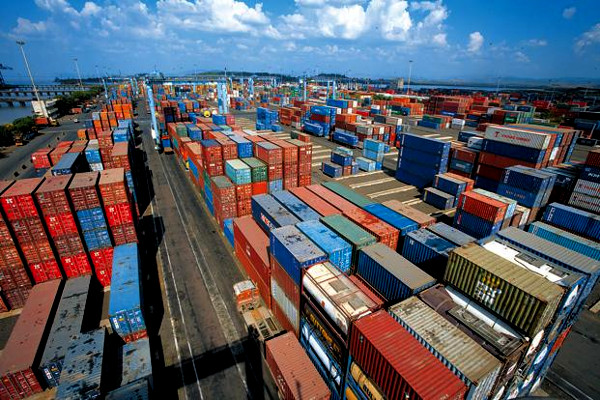
India’s merchandise exports have recorded strong growth in the opening months of FY27, underlining the resilience of the country’s trade sector amid global economic uncertainty, tariff pressures and shifting international demand patterns.
Union Commerce and Industry Minister Piyush Goyal said India’s exports grew by nearly 15% year-on-year between April 1 and June 14, 2026. The performance reflects the growing competitiveness of Indian exporters and the country’s expanding role in global trade networks.
The growth comes at a time when international trade is passing through a challenging phase, with tariff-related pressures, geopolitical disruptions and uneven global demand affecting several major economies. India’s export performance during this period shows that domestic manufacturers, producers and service-linked trade sectors are increasingly capable of adapting to changing global market conditions.
Recent trade data also points to a strong monthly performance. India’s merchandise exports touched a six-month high of ₹4.26 lakh crore, or about US$45.2 billion, in May 2026. This represented an 18% increase compared with the same period last year. The May numbers strengthened confidence that India’s export momentum is being supported by wider market access, diversified product categories and better integration with global value chains.
During April-May 2026, India’s exports rose 16.09% to ₹8.39 lakh crore, or about US$88.91 billion. Imports during the same period increased 15.14% to ₹13.71 lakh crore, or about US$145.35 billion. The trade deficit for April-May stood at ₹5.33 lakh crore, or around US$56.44 billion.
The Government remains confident about achieving the ambitious export target of ₹94.36 lakh crore, equivalent to US$1 trillion, during FY27. The target is part of India’s larger strategy to strengthen manufacturing, boost services, expand trade partnerships and improve the country’s position in global supply chains.
India’s export growth is being supported by several factors, including stronger domestic production capacity, a wider base of export-oriented industries, growing demand for Indian goods in multiple regions and policy efforts aimed at improving trade facilitation. Sectors linked to engineering goods, electronics, pharmaceuticals, textiles, agriculture, chemicals and emerging manufacturing are expected to remain important contributors to the country’s trade performance.
Trade diplomacy is also set to play an important role in the coming months. India and the United States are scheduled to hold discussions on June 23-24, 2026, on the first phase of a proposed bilateral trade agreement. The talks are expected to focus on strengthening trade cooperation, improving market access and addressing tariff-related concerns.
A successful trade framework with the United States could provide further momentum to India’s export sector, especially at a time when global companies are looking for reliable manufacturing and sourcing partners. Wider trade agreements, smoother customs processes, improved logistics and competitive production costs can help Indian exporters expand their footprint in key global markets.
India’s latest export performance sends a positive signal for the economy. It shows that the country’s trade sector is developing the depth and flexibility needed to withstand global pressures while continuing to grow. With policy support, stronger market access and rising industrial capacity, exports are expected to remain an important driver of India’s long-term economic growth.
You may also like
-
India and Mauritius Sign Oil and Gas Cooperation Pact, Deepen Long-Term Energy Partnership
-
Over 6.5 Crore Income-Tax Returns Filed for Assessment Year 2026-27
-
India’s Unincorporated Non-Agriculture Establishments Rise 9.2% in Q1 FY27, Employment Reaches 13.7 Crore
-
Big Bang Boom Solutions — Building Indigenous Counter-Drone Defences for India’s New Battlefield
-
India Prepares Major Incentive Scheme to Localise Advanced Construction Equipment Manufacturing
