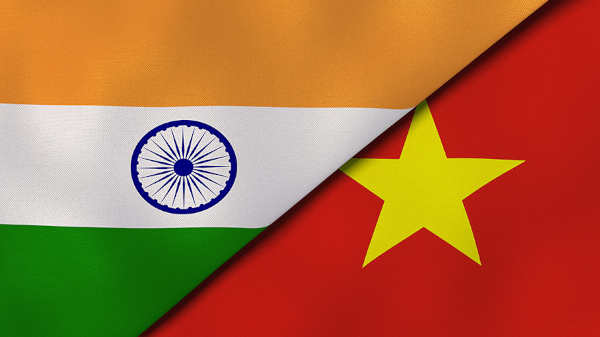
India’s proposed BrahMos missile agreement with Vietnam has moved into a decisive stage, placing New Delhi close to another major defence export breakthrough in Southeast Asia. The development reflects India’s growing confidence as a supplier of high-end weapon systems and Vietnam’s steady effort to strengthen maritime deterrence in a contested regional environment.
The BrahMos system has become one of India’s most visible defence export products. Developed through the India-Russia joint venture, the missile is known for supersonic speed, precision strike capability and deployment flexibility across land, sea and air platforms. For a maritime nation such as Vietnam, a shore-based BrahMos capability would offer a powerful coastal defence instrument, especially in waters where sea-lane security, territorial awareness and deterrence are central to national strategy.
The India-Vietnam defence relationship already rests on a strong foundation. The two countries share a Comprehensive Strategic Partnership, and defence cooperation has steadily expanded through training, military exchanges, naval engagement, capacity building, defence industry collaboration and maritime security dialogue. India has earlier supported Vietnam through naval training, submarine crew training, software infrastructure, high-speed guard boats and the gifting of INS Kirpan. A BrahMos agreement would therefore fit into an existing pattern of defence trust rather than appear as a standalone transaction.
For India, the deal would strengthen the “Make in India, Make for the World” push in defence manufacturing. The BrahMos export journey began with the Philippines contract, which proved that India could supply advanced missile systems to a friendly partner in the Indo-Pacific. A Vietnam deal would deepen that momentum and show that Indian defence exports are moving from basic platforms and support equipment toward strategic systems with regional impact.
The timing is significant. Southeast Asian countries are investing heavily in maritime surveillance, coastal defence, anti-ship capability and precision strike systems. The region’s security environment has made sea denial, coastal missile batteries and mobile anti-ship weapons more important. BrahMos fits this requirement because it gives a country the ability to hold hostile naval assets at risk from land-based launch positions. Its speed reduces reaction time for the target, while its mobility improves survivability.
For Vietnam, BrahMos would add a strong layer to its coastal defence architecture. The country has a long coastline, active maritime interests and a strategic geography that places it close to critical Indo-Pacific waters. A BrahMos battery can support deterrence by making adversary naval movement more costly and risky. It also gives Vietnam a precision strike option without requiring a large blue-water fleet for every contingency.
The strategic message is equally important. India and Vietnam have steadily moved closer through shared concerns over maritime stability, freedom of navigation, resilient supply chains and a balanced Indo-Pacific. Both countries avoid unnecessary military theatrics, but both understand the value of credible capability. Defence cooperation between them has matured through quiet consistency, and BrahMos would become the clearest symbol of that maturity.
The deal also highlights India’s evolution as a responsible defence exporter. India’s defence export policy is now linked with strategic partnerships, capacity building and long-term military cooperation. New Delhi is not only selling equipment; it is building ecosystems of training, maintenance, operational support and industrial trust. This approach allows friendly countries to acquire systems with confidence while strengthening India’s own defence manufacturing base.
BrahMos itself has become a success story of technological confidence. The system combines speed, accuracy and versatility. Its land-based coastal defence version is particularly attractive to countries seeking anti-ship capability without the cost of large naval expansion. As India increases indigenous content, expands production capacity and brings private industry into the supply chain, BrahMos is becoming both a strategic weapon and an industrial achievement.
The reported final clearances matter because defence exports of this scale involve multiple layers. Technical configuration, financing, delivery schedule, training, integration, maintenance, end-use protocols and diplomatic clearances all require careful handling. Since BrahMos is an India-Russia joint venture, export approvals also carry an additional layer of coordination. Once these steps are completed, the agreement can move from strategic intent to delivery planning.
The Vietnam deal would also influence India’s wider defence export image. Countries in Asia, Africa and the Middle East are watching India’s ability to deliver sophisticated systems reliably. Successful BrahMos exports create confidence around Indian missiles, radars, naval systems, drones, artillery, electronic warfare systems and air defence technologies. Each successful deal strengthens India’s credibility as a serious defence technology partner.
The Indo-Pacific dimension is unavoidable. BrahMos in Vietnam would enhance deterrence in a region where maritime pressure and grey-zone tactics have become frequent. The system does not need to be used to have value. Its value lies in deterrence, signalling and the creation of operational caution. A fast, accurate coastal missile changes the calculations of any naval commander approaching sensitive waters.
For India, this also supports Act East policy through hard-security cooperation. India’s relationship with Vietnam is built on civilisational warmth, political trust, development partnership and shared strategic interests. Defence cooperation gives this relationship a strong security pillar. A BrahMos agreement would show that India is willing to support trusted partners with meaningful capabilities, while staying within the framework of responsible exports.
The agreement could also open the door for deeper defence industrial cooperation. Training, maintenance facilities, spare support, simulators, command systems and possible future upgrades can create long-term engagement. Vietnam’s armed forces would benefit from Indian operational experience, while Indian industry would gain a trusted export partner in Southeast Asia.
This development also comes at a time when India is expanding its missile ecosystem. Recent milestones in indigenous boosters, warheads, integration facilities and production capacity show that BrahMos is becoming more Indian in content and scale. That matters because export sustainability depends on assured production. A missile system becomes globally attractive only when the supplier can deliver, support and upgrade it over time.
The expected Vietnam deal therefore carries three layers of importance. Militarily, it strengthens Vietnam’s coastal defence. Diplomatically, it deepens India-Vietnam strategic trust. Industrially, it boosts India’s defence export profile. Together, these layers make the agreement one of the most important defence export stories in India’s recent strategic outreach.
India is no longer only an importer of advanced defence systems. It is becoming a producer, integrator and exporter of strategic technologies. BrahMos is at the centre of that transformation. If the Vietnam agreement moves through the final clearances, it will mark another milestone in India’s rise as a defence supplier and a trusted security partner in the Indo-Pacific.
You may also like
-
India and Mauritius Sign Oil and Gas Cooperation Pact, Deepen Long-Term Energy Partnership
-
EndureAir Unveils VAHAK-6 Multi-UAV Mothership as India Pushes Deeper Into Drone Teaming
-
Big Bang Boom Solutions — Building Indigenous Counter-Drone Defences for India’s New Battlefield
-
DIASPRO Develops Indigenous SATEEK Digital Ballistic Computer to Modernise T-90 Tank Fire-Control Systems
-
Paras Defence Targets Twofold Export Growth as Global Military Demand Rises
