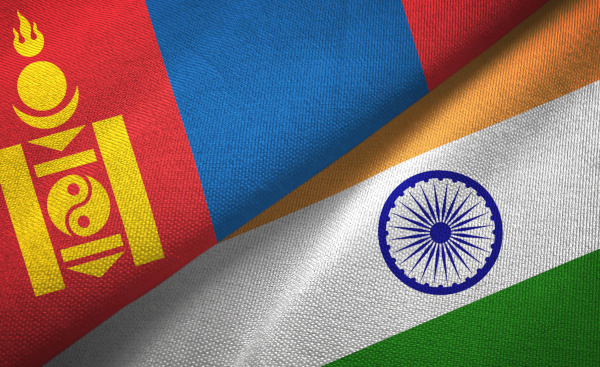
The Ramayana did not remain confined to one land, one language, or one community. It travelled like a sacred fire carried from altar to altar. From Ayodhya, it moved into forests, across rivers, through ports, along caravan paths, into monasteries, temple courtyards, royal courts and oral storytelling circles. In Southeast Asia, it became dance, sculpture and theatre. In Tibet and Central Asia, it entered Buddhist narrative worlds. In Mongolia, its presence appears through the larger Buddhist and Sanskritic stream that joined the Indian heartland to the high Himalayas, the Silk Route and the vast northern steppe. This is where Mongolia becomes a beautiful chapter in the wider idea of Akhand Bharat: a civilisational mandala held together by Dharma, memory, pilgrimage, learning and sacred stories.
Akhand Bharat, in this cultural sense, is a map of consciousness rather than a map of conquest. It is the memory of Bharat as a giver of ideas, a source of epics, a centre of pilgrimage, a teacher of spiritual disciplines and a cradle of moral imagination. Its boundaries are traced through stories carried by monks, traders, scholars and seekers. Its rivers flow through manuscripts. Its mountains are crossed by chants. Its influence is measured through the way distant peoples absorbed Indian ideas and made them part of their own cultural life. Mongolia, far beyond the plains of the Ganga and the temples of South India, stands as one such northern lamp in this civilisational geography.
The Ramayana is central to this world because it carries the idea of Maryada — disciplined conduct, righteous leadership, loyalty, sacrifice and the victory of Dharma. Rama is remembered as the king who places duty above comfort, the warrior who fights for justice, the son who honours his father, the husband who crosses oceans for Sita, and the ruler whose name becomes a standard for good governance. These values travelled easily across cultures because they spoke to the universal human desire for order, courage and moral clarity. A Mongolian herder, a Tibetan monk, a Thai dancer, a Javanese puppeteer and an Indian village storyteller could all recognise the same ethical force in Rama’s journey.
The Buddhist route gave the Ramayana another life. In Buddhist narrative traditions, the Rama story appears through the Dasaratha Jataka, where Rama is presented as Rama-Pandita, a Bodhisattva figure associated with wisdom, restraint and obedience to Dharma. This Buddhist memory of Rama allowed the epic to move through monasteries and teaching circles across Asia. The story became a vessel for values cherished in Buddhist thought: self-control, compassion, renunciation, patience and righteous rule. Through this process, Rama entered a wider Indic-Buddhist universe, where the epic’s royal and heroic themes were joined with the monastic language of inner discipline.
Mongolia received Indian civilisational influence through this grand Buddhist corridor. The road from India to Mongolia passed through the Himalayas, Tibet, Central Asia and the manuscript world of the Silk Route. Monks carried texts. Translators carried concepts. Pilgrims carried memories of Bodh Gaya, Nalanda and the sacred geography of Bharat. Sanskrit terms entered religious vocabulary. Indian philosophical ideas, especially through Mahayana Buddhism and the works of masters such as Nagarjuna, shaped intellectual life. In Mongolian spiritual memory, India became the land of the Buddha, the land of sacred knowledge, and the southern source from which wisdom travelled northward.
This connection was deep because Mongolia did not merely receive Buddhism as a foreign import. It absorbed it into its own steppe civilisation. The Mongolian mind joined the vastness of the grasslands with the depth of Buddhist metaphysics. The horse, the monastery, the prayer flag, the thangka, the lama, the sutra and the nomadic sky became part of a distinctive Mongolian spiritual world. Yet at the root of that world lay a strong Indian seed. The Dharma that rose in Bharat found a northern home in Mongolia. The same civilisational current that carried the Buddha also carried fragments, echoes and retellings of India’s epics.
The Ramayana’s Mongolian presence is especially fascinating because it appears through scholarship, manuscript traditions and translation rather than through one single popular court version. Mongolian academician Ts. Damdinsuren studied Mongolian versions of the Ramayana based on Kalmyk and Oirat language manuscripts. This is important because the Oirat-Kalmyk world forms part of the wider Mongolic cultural sphere, stretching across Mongolia, Xinjiang and the Volga region. The existence of such manuscripts shows that the Rama story reached the Mongolian literary and Buddhist environment, where it survived as part of a larger archive of sacred and heroic narratives.
Modern India-Mongolia cultural records also mention Mongolian scholars translating Indian classics such as the Ramayana, Mahabharata, Kalidasa and other works into Mongolian. This modern translation movement is more than a literary exercise. It is the recovery of a shared civilisational memory. It shows that the epic bridge between Bharat and Mongolia still exists. When a Mongolian scholar translates the Ramayana, he is not simply moving words from one language to another. He is reopening an ancient path across the mountains and steppes.
The Mongolian Kanjur adds another powerful layer to this story. The Kanjur, the great Buddhist canon in classical Mongolian, is revered in Mongolian monasteries and homes as a sacred body of knowledge. India’s role in preserving, reprinting and sharing the Mongolian Kanjur in modern times is a living example of civilisational responsibility. It shows Bharat acting as the custodian of a shared Asian inheritance. The Kanjur may be a Buddhist canon, while the Ramayana is an Itihasa, yet both belong to the same vast Indic knowledge-world where sacred speech, ethical conduct and liberation are treated as treasures of humanity.
This is where the idea of Akhand Bharat becomes vivid and uplifting. Mongolia reminds us that Bharat’s unity was never only administrative. It was civilisational. It was held together by Sanskrit, Pali, Prakriti, Buddhist philosophy, Hindu epics, temple art, monastic universities, pilgrimage routes, stories of kingship, and the moral grammar of Dharma. This Bharat lived in Nalanda, Kashi, Ayodhya, Kanchipuram and Bodh Gaya. It also echoed in Lhasa, Khotan, Dunhuang, Ulaanbaatar, Angkor, Bangkok, Bali and Luang Prabang. The Ramayana was one of its brightest messengers.
In the Mongolian context, Rama becomes a symbol of how Indian civilisation travelled with dignity. The epic did not demand uniformity. It allowed each civilisation to receive it in its own language, costume and imagination. This is the genius of Bharat’s cultural power. It does not erase local traditions. It enriches them. In Southeast Asia, Rama appears in dance and temple walls. In Buddhist traditions, he appears as an ethical exemplar. In Mongolian and Oirat-linked traditions, his story enters manuscript culture and scholarly memory. The core flame remains the same: Dharma must guide power, courage must serve justice, and leadership must be rooted in restraint.
Mongolia also strengthens the emotional meaning of India’s role as a spiritual neighbour. Even without a shared physical border, India and Mongolia share a sacred civilisational bridge. That bridge was built by Buddhism, strengthened by Sanskritic learning, preserved in manuscripts, and renewed in modern diplomacy. When Indian leaders speak of Mongolia as a spiritual neighbour, the phrase carries the weight of centuries. It is a recognition that the distance between the Ganga and the steppe can be crossed by Dharma.
The Ramayana in Mongolia becomes evidence of Bharat’s northern reach as a civilisation of stories and values. It shows that Akhand Bharat is also Akhand Sanskriti — an unbroken cultural radiance. This radiance does not depend on political control. It lives through reverence, translation, memory and shared moral imagination. It lives when a monk chants, when a scholar translates, when a child hears the name of Rama, when a nation remembers India as the land of Buddha, and when two ancient peoples recognise each other through Dharma.
The Mongolian steppe, with its endless sky and windswept grasslands, may seem far from Ayodhya. Yet in the deeper geography of civilisation, the distance becomes sacred. Somewhere between the monastery lamp and the horseman’s horizon, the story of Rama found another listening world. That is the beauty of the Ramayana. It travels without losing its soul. It changes its garments while preserving its heart. It becomes local while remaining eternal.
Mongolia is a northern witness to the Akhand Bharat idea. It tells us that Bharat’s greatness lay in its ability to send wisdom across Asia with grace. The Ramayana, the Buddha’s Dharma, Nalanda’s learning, Sanskritic thought and the manuscript traditions of the Buddhist world all moved outward like rays from a central sun. Mongolia received those rays and preserved them in its own sky. That is the civilisational miracle: Rama’s journey did not end in Lanka, and Bharat’s cultural journey did not end at the Himalayas. It continued across the passes, across the deserts, across the monasteries, and into the soul of Asia.
The Ramayana in Mongolia is therefore a story of memory, Dharma and civilisational friendship. It is a reminder that Akhand Bharat is not merely seen on a map. It is heard in chants, read in manuscripts, felt in pilgrimage, preserved in translations, and recognised in the respect that distant nations hold for India’s sacred inheritance. In that luminous sense, Mongolia is part of the great Ramayana world — a distant steppe where the flame of Bharat still glows.
You may also like
-
Avanti in the Mahabharata: The Ancient Kingdom of Ujjain and the Malwa Region
-
Karusha in the Mahabharata: The Ancient Kingdom of Baghelkhand and the Vindhyan Heartland
-
Indian Woodblock Craft Helps Preserve Indigenous Australian Designs for Future Generations
-
Surasena and Chedi in the Mahabharata: The Ancient Kingdoms of Mathura-Braj and Bundelkhand
-
Matsya in the Mahabharata: The Kingdom of Virata Across Alwar, Jaipur and Bharatpur
