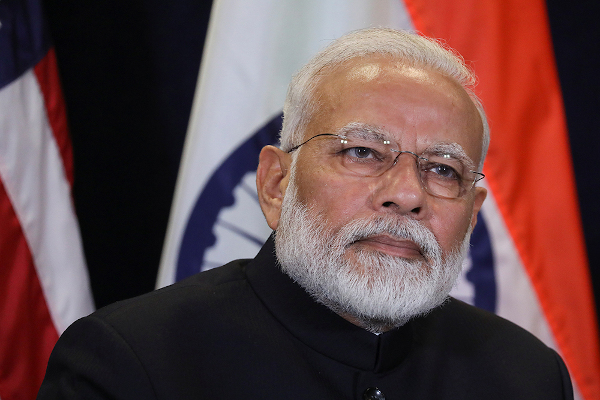
Prime Minister Narendra Modi participated in a high-level working session at the G7 Summit in Evian, France, marking another important moment in India’s expanding role in global diplomacy. The session was held under the theme “Forging New Partnerships and Rebuilding International Solidarity” and brought together G7 leaders, partner countries, and senior representatives from major international institutions such as the World Bank and the African Development Bank.
India’s presence at the G7 outreach platform carries growing diplomatic weight. The G7 brings together some of the world’s most advanced economies, while India enters the conversation as a major developing economy, a voice of the Global South, a fast-growing technology power, and a strategic partner across multiple regions. This gives India a unique position in global discussions where development, security, climate action, technology and economic stability now move together.
The Evian session began after French President Emmanuel Macron formally welcomed Prime Minister Modi and other participating leaders. The gathering reflected the wider purpose of the G7 outreach format: to bring advanced economies, emerging powers and international financial institutions into the same conversation on global challenges. For India, this setting provides an opportunity to place the priorities of developing countries before the most influential economic bloc in the world.
Prime Minister Modi’s participation comes at a time when global politics is under pressure from conflict, trade uncertainty, energy insecurity, climate stress and technological disruption. The G7 agenda in Evian includes geopolitical challenges, peace and security, the Middle East situation, international partnerships, balanced economic growth and the future of artificial intelligence. These themes align closely with India’s own diplomatic priorities.
India’s message at such platforms has remained consistent. Global growth must become more balanced. Climate action must respect the development needs of poorer countries. Technology must become a tool of inclusion. International institutions must give stronger representation to emerging and developing nations. Food, fuel and fertiliser security must remain central to global policy. These are the concerns that India has repeatedly raised as a representative voice of the Global South.
The theme of “rebuilding international solidarity” is especially important. Many developing countries are facing debt stress, climate vulnerability, supply-chain shocks and uneven access to technology. India has used platforms such as the G20, Voice of Global South Summit, International Solar Alliance, Coalition for Disaster Resilient Infrastructure and Global Biofuels Alliance to show that global cooperation must produce practical benefits. At Evian, India carried the same approach into the G7 outreach setting.
The Prime Minister also highlighted India’s commitment to global prosperity, sustainability and human well-being. This reflects India’s attempt to connect national development with global responsibility. India is expanding renewable energy capacity, building digital public infrastructure, promoting financial inclusion, investing in innovation, and pushing for resilient supply chains. These domestic achievements strengthen India’s voice in global negotiations because they show practical models that can be adapted by other countries.
The G7 outreach also gives India space to deepen bilateral diplomacy. On the sidelines of the summit, Prime Minister Modi is scheduled to hold meetings with several world leaders, including Canadian Prime Minister Mark Carney, UK Prime Minister Keir Starmer, UAE President Sheikh Mohamed bin Zayed Al Nahyan, and US President Donald Trump. Such meetings add strategic value to the summit because they allow India to discuss trade, investment, technology, defence, energy, mobility and regional security with key partners.
The expected meeting with the US President is significant because India-US ties now cover defence cooperation, critical technologies, semiconductors, energy, space, trade and Indo-Pacific security. India’s engagement with the UK remains important for trade, education, technology and diaspora links. The UAE is a major energy, investment and connectivity partner. Canada remains relevant for economic engagement and people-to-people ties. The G7 venue allows India to handle multiple diplomatic tracks within one high-level setting.
India’s G7 participation also strengthens its position as a bridge between the developed world and developing countries. Western economies see India as a major market, strategic partner and stabilising force in the Indo-Pacific. Developing countries see India as a country that understands poverty reduction, food security, digital inclusion and climate finance from direct experience. This dual credibility gives India influence in negotiations where trust is often limited.
Artificial intelligence is another major area where India’s role is becoming more visible. The Evian agenda includes the safe, rapid and efficient rollout of AI. India has a major stake in this conversation because AI will shape jobs, governance, education, health care, cybersecurity and military systems. India’s experience with digital public infrastructure gives it a strong platform to argue for technology that is open, inclusive, secure and development-oriented.
The summit also comes soon after India’s deepening engagement with France. Prime Minister Modi’s France visit included bilateral talks with President Macron and wider cooperation linked to innovation, technology, defence and strategic partnership. France remains one of India’s closest partners in Europe, especially in defence, nuclear energy, space, maritime security and Indo-Pacific cooperation. The G7 summit in Evian builds on that wider India-France momentum.
For India, the key value of the G7 outreach is strategic visibility. The country is present in the room where major powers discuss global economic direction, security crises and future technology. India uses that presence to push for a fairer international order, greater respect for developing-country priorities, and stronger cooperation on shared challenges. This is the diplomacy of a country that is no longer a passive participant in global forums, but an active agenda-shaper.
The Evian session therefore represents more than another multilateral meeting. It shows India’s growing ability to connect national interest with global responsibility. Prime Minister Modi’s participation places India at the centre of conversations on prosperity, sustainability, international solidarity and technology governance. As global institutions search for new balance, India’s role as a bridge between the G7 and the Global South is becoming more important.
You may also like
-
Rajnath Singh to Lead Indian Delegation at ASEAN Defence Summit in Philippines, Strengthening Indo-Pacific Security Cooperation
-
India Hosts 12th BRICS Parliamentary Forum in New Delhi
-
India Strengthens Trade Ties with Netherlands as Piyush Goyal Visits Port of Rotterdam
-
India to Train 600 Nigerian Army Soldiers in Specialised Jungle and Mountain Warfare
-
India and Russia Strengthen Parliamentary Diplomacy as Om Birla Meets State Duma Chairman Vyacheslav Volodin
