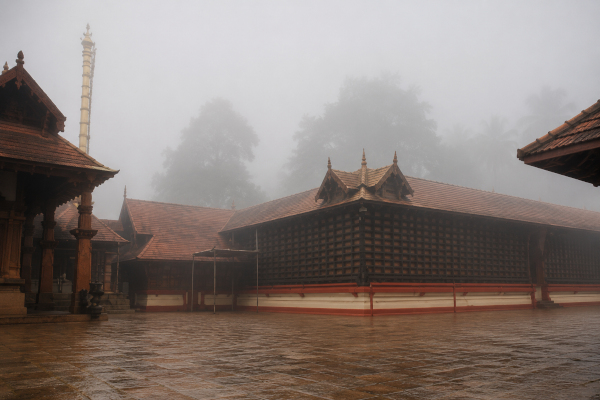
Chottanikkara Bhagavathy Temple in Ernakulam is one of Kerala’s most revered goddess shrines, a sacred centre where devotion, healing, mythology and temple tradition come together with rare intensity. Located in Chottanikkara near Kochi, the temple stands in the Ernakulam district, north of Kottayam, and draws devotees from across Kerala and beyond. For many families, this temple is a place of prayer, surrender, protection and inner strength.
The presiding deity is worshipped as Bhagavathy, also revered as Rajarajeswari and Adiparasakthi. The temple tradition gives the Devi a unique daily rhythm. In the morning, she is worshipped as Saraswathy, the goddess of learning, wisdom and clarity. At noon, she is worshipped as Lakshmi, the giver of prosperity, grace and abundance. In the evening, she is worshipped as Durga, the fierce mother who protects, destroys fear and grants courage. This threefold worship gives Chottanikkara a special spiritual character. A devotee who enters the temple through the course of the day sees the Divine Mother as knowledge, nourishment and power.
The temple’s atmosphere carries the deep emotional force of Kerala’s Devi worship. The sanctum, lamps, chants, drums, offerings and disciplined temple rituals create a sacred world where the goddess is experienced as a living presence. Chottanikkara is deeply connected with the faith of ordinary people. Devotees come here with personal burdens, family prayers, health concerns, vows, gratitude and hope. The temple has become a spiritual refuge where people seek strength when life feels heavy.
One of the most important elements of the temple is its association with healing and spiritual relief. Chottanikkara is especially known for the Kizhukkavu Bhagavathy shrine within the temple complex. Devotees traditionally associate this shrine with protection from negative forces and relief from deep mental and emotional distress. The rituals here carry a strong folk-religious and tantric character, reflecting Kerala’s older traditions of goddess worship, protective rites and community faith.
The temple’s legends add to its sacred power. Tradition speaks of the deity as a self-manifested presence, worshipped by sages and great spiritual figures. The belief that great souls such as Adi Shankaracharya and Vilwamangalam Swamiyar were connected with the temple gives it a special place in Kerala’s sacred geography. Such legends are part of the temple’s living memory, passed down through generations by priests, devotees and local families.
Makam Thozhal is the most celebrated festival of Chottanikkara Bhagavathy Temple. It is observed on the Makam star in the Malayalam month of Kumbham, usually falling around February or March. Devotees believe that the Devi gives a special darshan on this day in her full divine radiance. Thousands gather for this sacred moment, turning the temple and its surroundings into a powerful ocean of devotion. The festival is marked by faith, discipline, music, lamps, offerings and the emotional intensity of devotees waiting for the Devi’s grace.
The temple also reflects Kerala’s larger cultural pattern, where goddess worship is closely linked with family life, land, health and protection. In Kerala, Bhagavathy is often seen as the mother of the region, the guardian of households and the force that stands between the devotee and danger. Chottanikkara carries this tradition in a highly developed form. The Devi here is gentle, prosperous, wise and fierce, depending on the time, ritual and devotional mood.
The location of the temple adds to its importance. Ernakulam is one of Kerala’s major districts and Kochi is one of the state’s most active urban centres. Yet Chottanikkara preserves the feeling of an ancient sacred settlement. The temple stands close to the movement of modern life while holding on to the rhythm of traditional worship. This mix of accessibility and sanctity has helped make it one of the most visited Devi temples in Kerala.
For pilgrims travelling from Kottayam, Chottanikkara lies to the north, making it an important shrine in the central Kerala pilgrimage circuit. Devotees often connect it with other sacred sites in Ernakulam, Kottayam and Thrissur, creating a route of temple worship across the heart of Kerala. The temple’s fame has grown through centuries because its appeal is deeply personal. People come here because they believe the Mother listens.
Chottanikkara Bhagavathy Temple is therefore much more than a historic shrine. It is a living centre of Devi worship where Kerala’s spiritual imagination remains vibrant. It holds mythology, ritual, healing faith, festival splendour and mother-goddess devotion in one sacred space. The temple continues to stand as a place where devotees seek wisdom in the morning, prosperity by noon and courage by evening. In that daily transformation of the Devi, Chottanikkara reveals the full emotional and spiritual depth of Kerala’s goddess tradition.
References:
- Kerala Tourism — Chottanikkara Temple, Ernakulam
https://www.keralatourism.org/kochi/chottanikkara-temple-ernakulam.php - Kerala Tourism — Chottanikkara Bhagavathy Temple, Ernakulam
https://www.keralatourism.org/temples/ernakulam/chottanikkara - Chottanikkara Bhagavathy Temple Official Website
https://chottanikkarabhagavathy.org/ - Chottanikkara Bhagavathy Temple Official Website — History
https://www.chottanikkarabhagavathy.org/history.php
You may also like
-
Abhira in the Mahabharata: The Pastoral People of Western India and the Northern Deccan
-
Nasikya in the Mahabharata World: The Ancient Nashik Region on the Upper Godavari
-
Bharukachchha in the Mahabharata: The Ancient Port of Bharuch at the Mouth of the Narmada
-
Surparaka in the Mahabharata: The Ancient Sacred Port of Nala Sopara on the Konkan Coast
-
Aparanta in the Mahabharata: The Ancient Western Coastal Region of Northern Konkan
