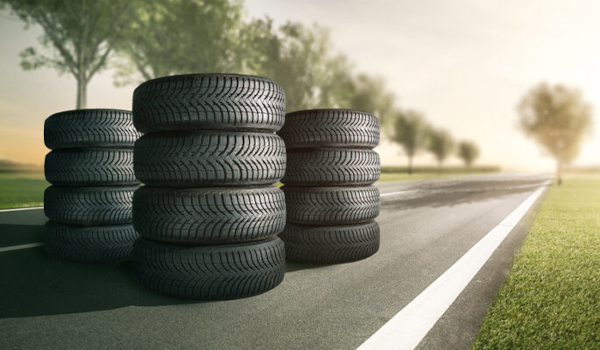
India’s tyre industry has rolled into a new milestone, with exports touching an all-time high of ₹27,312 crore in FY 2025–26. The achievement marks a strong 9 per cent growth over the previous financial year, when exports stood at ₹25,057 crore. This is the second consecutive year of 9 per cent export growth, showing that the sector has maintained momentum despite global uncertainty, higher freight costs and supply-chain pressures.
The record performance reflects the rising global acceptance of Indian tyres across passenger vehicles, commercial vehicles, farm equipment, industrial machinery and off-road applications. Indian manufacturers have steadily improved product quality, technology, durability and compliance with international standards. This has helped the industry compete in demanding overseas markets where safety, performance and reliability are critical.
The United States remained the largest destination for Indian tyre exports, accounting for ₹4,082 crore, or about 15 per cent of the total export value. Although the US share declined from the previous year, it continued to remain the single biggest overseas market for Indian tyre makers. The decline was linked to tariff pressure, after duties on Indian tyre imports were increased in 2025 before being reduced in early 2026.
Europe also remained a major growth arena. Germany, Italy and France continued to feature among the leading destinations for Indian tyre exports, while Brazil added strength from Latin America. These markets are important because they are highly competitive and quality-sensitive. Continued demand from such countries shows that Indian tyre manufacturers are building credibility not only on price but also on engineering capability.
The export surge is also connected to recent investments in capacity expansion. Tyre companies have invested heavily in both greenfield and brownfield projects over the past few years. These investments have expanded production capacity, improved technology, strengthened radial tyre manufacturing and supported exports across multiple categories. The sector’s estimated annual turnover is around ₹1 lakh crore, with exports now accounting for more than one-fourth of total output.
The tyre industry occupies a strategic place in India’s manufacturing ecosystem. It is linked to automobiles, road transport, logistics, agriculture, mining, construction and rubber plantations. A strong tyre sector supports both domestic mobility and export-led industrial growth. Its success also strengthens India’s wider ambition of becoming a major global manufacturing hub.
One of the most important features of this export performance is resilience. The sector achieved record shipments at a time when global trade faced headwinds from geopolitical tensions, unstable shipping routes, energy price movements and supply-chain disruptions. Higher logistics costs directly affect export-heavy industries, yet Indian tyre makers managed to protect their position through market diversification, cost management and stronger customer networks.
The industry’s export growth also reflects India’s improved role in global value chains. As countries and companies look for reliable manufacturing alternatives, India’s tyre sector has gained from its scale, engineering base and competitive production ecosystem. Indian tyres are now reaching a wide range of markets, giving the sector a broader international footprint.
However, future growth will depend on solving raw material challenges. Natural rubber remains a key input for tyre production, and domestic supply limitations can affect cost competitiveness. Strengthening rubber plantation output, improving productivity, encouraging sustainable rubber cultivation and reducing import dependence will be important for the next phase of industry expansion.
Trade agreements can also play a major role. Better market access, lower duties and smoother regulatory processes can help Indian tyre makers expand into new regions. As India negotiates and deepens trade partnerships, the tyre industry can become one of the sectors that benefits strongly from improved export conditions.
The record ₹27,312 crore export figure is therefore more than a business milestone. It is a signal that Indian manufacturing is gaining strength in a globally competitive sector. The tyre industry has combined scale, investment, technology and export discipline to build a strong international presence.
As global demand for mobility, agriculture, construction and logistics continues to grow, Indian tyre manufacturers have an opportunity to capture an even larger share of the world market. With stronger raw material security, continued investment and wider trade access, India’s tyre exports can move from record performance to long-term global leadership.
You may also like
-
US Hosts 91% of Overseas Unicorns Built by Founders Who Grew Up in India, Prosus-Dealroom Report Finds
-
India Approves Pioxaniliprole, Indigenous Insecticide Molecule Developed by PI Industries
-
India Overtakes Hong Kong to Become Asia’s Fourth-Largest REIT Market
-
Banaras Langda Aam — Kashi’s Green-Skinned Summer Treasure and the Mango Heritage of the Gangetic Plain
-
ONGC Strikes Gas in Mahanadi Deepwater Basin Off Odisha Under Samudra Manthan Campaign
