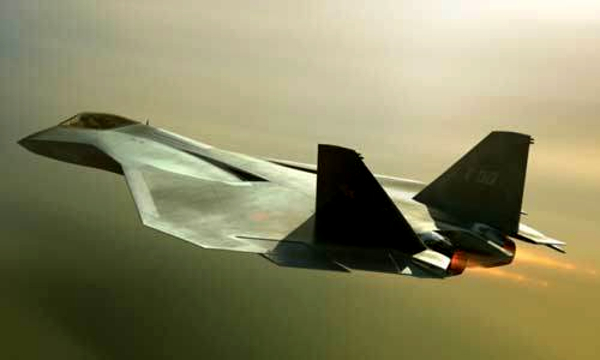
India’s most ambitious fighter aircraft programme has moved into a decisive new stage, with the Ministry of Defence issuing Request for Proposal documents to three shortlisted industry teams for the Advanced Medium Combat Aircraft programme. The contest will decide who helps build and industrialise India’s first indigenous fifth-generation stealth fighter, a project estimated at around ₹15,000 crore for the prototype development phase. The shortlisted contenders are Tata Advanced Systems, the Larsen & Toubro–Bharat Electronics combine, and the Bharat Forge–BEML team.
The AMCA is more than another aircraft project. It is India’s attempt to enter the small league of nations capable of designing, testing and producing a stealth combat aircraft with advanced sensors, internal weapons carriage, network-centric operations and survivability against modern air defence systems. For the Indian Air Force, the aircraft is expected to become a major pillar of combat capability from the mid-2030s, when legacy fleets will be under pressure and regional air warfare will be shaped increasingly by stealth aircraft, long-range weapons, unmanned systems and electronic warfare.
The Ministry of Defence had earlier cleared the AMCA Programme Execution Model through industry partnership, giving both private and public sector companies equal opportunity to compete. The Aeronautical Development Agency, functioning under DRDO, is the lead design agency and is expected to execute the programme with industry participation. The model permits Indian companies to bid independently, as joint ventures or as consortia, provided they comply with Indian laws and possess the capability to support such a high-end aerospace programme.
This competitive route marks a major shift in India’s fighter aircraft ecosystem. For decades, advanced fighter production in India has largely revolved around Hindustan Aeronautics Limited. The AMCA model opens space for a second major fighter production base, potentially creating deeper private-sector participation in military aviation. This is significant because a fifth-generation fighter demands far more than final assembly. It requires mastery over precision structures, composites, stealth shaping, sensor integration, avionics, software, flight testing, certification, maintenance planning and long-term production discipline.
The winning industry team will have to work with ADA to build five AMCA prototypes. Earlier programme details indicated that the development, prototyping, flight testing and certification cycle should be completed within eight years from the effective date of contract. The aircraft’s first flight has been projected around the end of this decade or early next decade, while full development and production planning are aimed towards the mid-2030s.
The aircraft itself is designed as a twin-engine fifth-generation multirole fighter. Its combat value will come from a combination of low-observable shaping, internal weapons bays, advanced radar and sensors, sensor fusion, electronic warfare capability, artificial intelligence-enabled assistance and the ability to operate within a wider network of aircraft, drones, ground systems and command nodes. In practical terms, AMCA is being shaped for missions where a fighter must enter contested airspace, avoid early detection, strike high-value targets, share battlefield data and survive in an environment filled with radars, missiles and jamming systems.
The engine question will remain one of the most important elements of the programme. The early AMCA prototypes are expected to use GE F414-class engines, while later versions are planned around a more powerful engine solution to give the aircraft stronger performance margins. This matters because fifth-generation aircraft are judged not only by stealth shaping but also by thrust, endurance, weapons load, cooling capacity, electrical power generation and upgrade headroom for future sensors and weapons.
The new AMCA race also comes at a time when India is trying to accelerate the entire combat aviation pipeline. The Tejas Mk1A is intended to strengthen light fighter numbers, the Tejas Mk2 is aimed at the medium-weight category, and the AMCA is planned as the top-end stealth platform. Together, these programmes represent a long-term attempt to reduce dependence on foreign combat aircraft while building an Indian aerospace base capable of designing and producing increasingly complex systems.
The strategic urgency is clear. China already fields the J-20 and is pushing deeper into next-generation aviation. Reports have also repeatedly linked Pakistan with future Chinese stealth fighter acquisitions. India currently operates powerful 4 and 4.5-generation aircraft such as the Su-30MKI, Rafale, Mirage 2000, MiG-29 and Tejas, but it has no operational fifth-generation fighter. AMCA is therefore not just a technology demonstrator; it is intended to close a future capability gap and ensure that India’s airpower remains credible in high-end conflict scenarios.
The programme will also test whether India’s private aerospace industry is ready for a generational leap. Companies such as Tata Advanced Systems, L&T, BEL, Bharat Forge and BEML already bring experience in aerospace structures, electronics, systems engineering, armoured platforms, artillery, missiles, radar, manufacturing and defence production. The AMCA contest will demand integration of these strengths into a disciplined aircraft development framework where delays, quality lapses and supply chain weaknesses can affect the entire national airpower roadmap.
If handled well, AMCA can create an industrial ecosystem far beyond the aircraft itself. It can expand India’s capacity in stealth-compatible materials, precision tooling, advanced composites, mission computers, radomes, flight-control systems, electronic warfare suites, data links, actuators, landing gear, testing infrastructure and weapons integration. These capabilities can later support unmanned combat aircraft, loyal wingman systems, next-generation missiles and future export-oriented defence platforms.
The ₹15,000 crore prototype phase is therefore only the opening gate. The real value of AMCA will emerge if the programme moves from prototype to production without losing momentum. India has often built impressive technology demonstrators, but the AMCA challenge is bigger: it has to become a combat-ready aircraft, enter squadron service, remain upgradeable for decades and support a domestic production chain strong enough to deliver aircraft at scale.
For the Indian Air Force, AMCA promises a future platform built around Indian operational needs rather than imported design compromises. For industry, it is a chance to prove that India can build complex military aviation ecosystems outside traditional structures. For national security, it represents a move towards strategic autonomy in one of the hardest domains of defence technology. The race has now begun; its success will depend on speed, engineering discipline, funding continuity, industrial maturity and the ability to convert ambition into flying metal.
Sources:
Hindustan Times — India opens ₹15,000 crore race to build AMCA stealth fighter
https://www.hindustantimes.com/india-news/india-opens-15-000-crore-race-to-build-amca-stealth-fighter-101779880453228.html
Press Information Bureau — Aatmanirbhar Bharat: Raksha Mantri approves Advanced Medium Combat Aircraft Programme Execution Model through industry partnership
https://www.pib.gov.in/PressReleasePage.aspx?PRID=2131528®=3&lang=1
The Economic Times — Defence Ministry issues AMCA fighter jet tenders to Tata, L&T-BEL, Bharat Forge-BEML
https://economictimes.indiatimes.com/news/defence/defence-ministry-issues-amca-fighter-jet-tenders-to-tata-lt-bel-bharat-forge-beml-report/articleshow/131347302.cms
The Times of India — Tata, L&T and Bharat Forge shortlisted for India’s fifth-generation fighter project
https://timesofindia.indiatimes.com/defence/news/tata-lt-and-bharat-forge-shortlisted-for-indias-fifth-generation-fighter-project/articleshow/131348969.cms
DRDO News Clippings — ADA set to shortlist Indian firms for stealth fighter project
https://drdo.gov.in/drdo/sites/default/files/drdo_news/NPC19Jun2025.pdf
You may also like
-
Kokasa Launches to Build Indigenous Mission-Critical Systems for Su-30MKI, MiG-29 and T-72
-
Flying Wedge Defence Partners With Portugal’s Keydef to Manufacture Kaal Bhairava and YAMA Drones in Europe
-
ASEAN Diplomats Visit BrahMos Facility as India Showcases Defence Engineering Capabilities
-
India and UAE Agree to Expand Army Cooperation and Desert Cyclone Participation
-
ARKin Labs Showcases Indigenous UAV Avionics for Defence, Agriculture and Enterprise Drones
