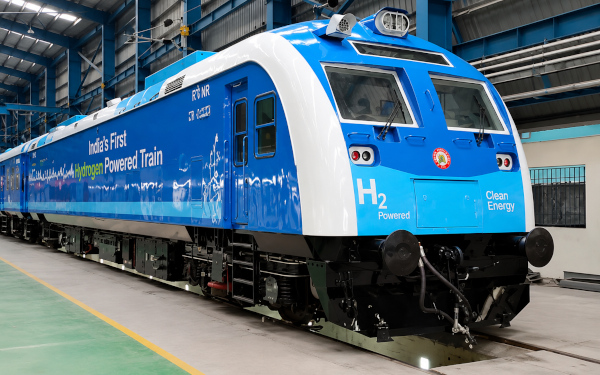
India’s railway modernisation journey is moving into a new clean-energy chapter, with Indian Railways approving the introduction of the country’s first indigenous hydrogen fuel cell-based trainset. The 10-car train has been cleared for operation on the Jind–Sonipat section of Northern Railway and is expected to begin service soon. Powered by a 1200 KW hydrogen fuel cell propulsion system, the train will run at a maximum speed of 75 kmph on the pilot route in Haryana.
The project places India among a small group of nations actively exploring hydrogen-powered rail mobility, alongside countries such as Germany, Japan, China and the United States. Hydrogen rail technology is still at an early stage worldwide, making India’s move significant both as a technological experiment and as a statement of intent in sustainable transport.
Hydrogen fuel cell trains generate electricity through a chemical reaction using hydrogen, with water vapour as the main emission. This makes the system a cleaner alternative to conventional fossil fuel-based traction, especially on routes where full electrification may be difficult, expensive or operationally complex. For Indian Railways, which operates one of the largest rail networks in the world, the project opens a pathway for future green mobility solutions beyond traditional diesel and electric models.
The Jind–Sonipat section has been selected as the pilot corridor for the new train. To support operations, an indigenous hydrogen storage and refuelling facility has been established at Jind. The Petroleum and Explosives Safety Organisation has also granted the required licence for storage and dispensing of compressed hydrogen gas at the site, giving the project the necessary safety and regulatory clearance for fuel handling.
The supporting infrastructure includes a hydrogen compression system for refuelling, technical support arrangements, critical spares and provisions for a standby compressor unit. Safety has been built into the system through hydrogen leak detectors, flame detectors and regular inspection protocols at the production, storage and dispensing facility. These measures are essential because hydrogen-powered transport depends not only on propulsion technology but also on safe fuel management across the entire operating chain.
Indian Railways has also prepared operation and maintenance manuals for the trainset and hydrogen plant, with approval from the Research Designs and Standards Organisation. The proposed maintenance facility at Shakurbasti will follow standard operating procedures, regular audits and safety provisions. During the initial phase, trained technical personnel will accompany the train to monitor performance and support smooth operations.
The launch of the hydrogen train represents more than a single railway experiment. It reflects a larger shift in India’s transport policy, where energy efficiency, domestic innovation and emission reduction are becoming central to infrastructure planning. As India works towards its clean energy and net-zero goals, hydrogen-powered rail systems could become an important part of the future mobility mix, especially for selected regional routes and specialised corridors.
For Indian Railways, this pilot will serve as a live testbed. Its performance on the Jind–Sonipat route will help assess fuel efficiency, safety systems, maintenance demands, passenger operations and the practicality of expanding hydrogen rail technology to other sections. If the model proves successful, it could become a stepping stone for broader deployment of indigenous hydrogen mobility solutions across the country’s railway network.
Source: PIB
You may also like
-
Tata Projects and MDS Aero Partner to Build Advanced Aero-Engine Test Infrastructure in India
-
Flying Wedge Defence Partners With Portugal’s Keydef to Manufacture Kaal Bhairava and YAMA Drones in Europe
-
Armenia Conducts Live-Fire Exercise With Indo-French TRAJAN 155 mm Howitzers Manufactured in India
-
Centre Approves ₹1,176 Crore Six-Lane Bridge Across Teesta River on NH-10 at Sevoke
-
Kapil Future Tech Showcases Indigenous Ground Control System for Indian UAVs
