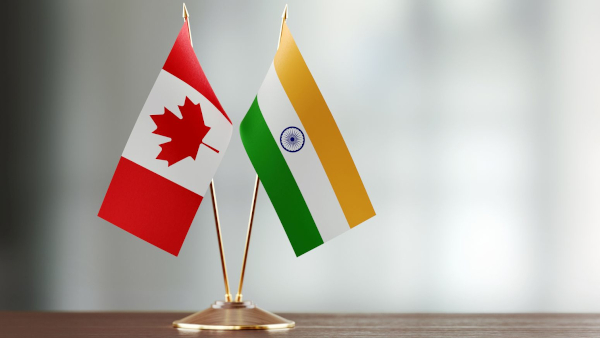
India and Canada have begun a fresh and ambitious push to rebuild economic momentum, with Union Commerce and Industry Minister Piyush Goyal leading the largest-ever Indian business delegation to Canada. The visit, spread across Ottawa and Toronto from May 25 to 27, has been positioned as a major step towards reviving bilateral trade ties and accelerating negotiations for the India-Canada Comprehensive Economic Partnership Agreement, or CEPA.
The message from Ottawa was clear: both countries want to move the relationship from caution to confidence. Goyal’s meetings with Canadian Prime Minister Mark Carney, International Trade Minister Maninder Sidhu, Agriculture Minister Heath MacDonald and Foreign Minister Anita Anand reflected a broad diplomatic and economic agenda covering trade, investment, technology, agriculture, food security, sustainability and strategic cooperation.
A major highlight of the visit was the discussion around CEPA, which Canada’s Prime Minister described as a potential “game changer” for opening a large new market. Both sides have reaffirmed their intention to work towards a balanced, commercially meaningful and ambitious agreement that benefits businesses, investors and citizens in both countries. The target is to conclude a mutually beneficial agreement by the end of 2026.
The timing is important. India and Canada are looking to restore depth in economic engagement after a period of strain, and trade is emerging as the practical route to rebuild trust. A structured trade agreement can give both countries a predictable framework for market access, investment flows, services trade, technology partnerships and business mobility. For India, Canada offers strengths in agriculture, mining, energy, education, technology and advanced research. For Canada, India represents one of the world’s fastest-growing major markets, with expanding demand across infrastructure, consumer goods, digital services, clean energy and manufacturing.
The scale of the Indian delegation shows that the visit is not merely symbolic. More than 100 Indian industry leaders from sectors such as energy, mining, automotive goods, pharmaceuticals, telecommunications, artificial intelligence, leather and textiles are part of the outreach. This gives the visit a strong business-to-business character, where official diplomacy is being matched by direct commercial engagement.
Agriculture was another significant area of discussion. Goyal’s meeting with Canadian Agriculture Minister Heath MacDonald focused on food security, sustainability, agri-technology and food processing. This is an area where both sides can build practical cooperation. Canada has deep agricultural and agri-tech capabilities, while India has a vast farm economy, a large food-processing market and growing demand for productivity-enhancing technologies. Such cooperation can support farmers, producers, processors and exporters on both sides.
The talks with Canadian Foreign Minister Anita Anand widened the engagement beyond trade alone. Goyal highlighted opportunities in India’s infrastructure, renewable energy, logistics, digital infrastructure and consumer sectors, all of which are central to India’s current growth story. For Canadian investors, these sectors offer long-term opportunities in a market that is expanding in both scale and sophistication.
The CEPA process itself has gained visible speed. Terms of Reference were signed in March 2025, the first round of virtual negotiations took place in March 2026, and the second round concluded on May 8, 2026. A technical round is also being held in Ottawa from May 25 to 29 alongside Goyal’s visit, showing that political intent and working-level negotiations are moving together.
The ambition is large. Bilateral trade currently stands at around USD 8.5 billion, while both governments have set a target of raising it to USD 50 billion by 2030. Achieving that jump will require more than goodwill. It will need smoother trade rules, stronger investment channels, sector-specific cooperation, supply-chain partnerships and sustained engagement between businesses.
The Indian diaspora also remains an important bridge in the relationship. Goyal underlined the contribution of Indians in Canada to economic, cultural and people-to-people ties. This community connection gives the partnership a social depth that can support education, entrepreneurship, technology collaboration and professional mobility.
From Ottawa, the focus now shifts to Toronto, where industry roundtables and B2B meetings are expected to convert political momentum into commercial outcomes. The larger direction is unmistakable: India and Canada are attempting a serious economic reset, using CEPA as the central instrument. If both sides maintain the current pace, the partnership can move from recovery to expansion, creating a new trade corridor between two major democracies with complementary strengths.
You may also like
-
ASEAN Diplomats Visit BrahMos Facility as India Showcases Defence Engineering Capabilities
-
India and UAE Agree to Expand Army Cooperation and Desert Cyclone Participation
-
India and Myanmar Prepare for Third Annual Defence Dialogue in Guwahati
-
India and South Korea Deepen Defence Industry and Logistics Cooperation at 10th Joint Committee Meeting
-
India and US Review Defence, Energy and Critical Technology Cooperation
