Bharat Sanchar Nigam Limited is witnessing one of the most important revival phases in India’s public-sector telecom history, with its revenue rising from around ₹21,000 crore to ₹25,000 crore in two years. Union Minister of State for Communications and Rural Development Dr. Chandra Sekhar Pemmasani said the growth represents a healthy 20–25% increase, while BSNL’s EBITDA has moved sharply from about ₹50 crore to nearly ₹7,000 crore, showing a major improvement in operational efficiency.
The significance of this turnaround goes beyond financial recovery. BSNL was once seen as a struggling telecom enterprise, weighed down by ageing infrastructure, weak customer perception, tower maintenance issues and slow adaptation to the new mobile-data economy. The latest update suggests that the company is trying to rebuild itself through a combination of network modernisation, indigenous technology, stricter monitoring and a renewed focus on last-mile connectivity.
According to the Minister, the revival effort began by identifying practical problem areas: work culture, tower condition and outdated infrastructure. In states such as Andhra Pradesh, tower uptime was earlier around 75%, and the target was raised to 95%. BSNL replaced 50,000 batteries across 50,000 towers, upgraded power plants and replaced ageing cables to improve service reliability.
This is the most important part of the story. Telecom revival does not happen only through slogans or tariff changes. It happens when towers stay active, batteries work during power cuts, cables are repaired, field teams are accountable and customers get stable service. BSNL’s biggest challenge has always been trust. A customer may forgive a high tariff, but a weak signal or unreliable connection pushes them away permanently.
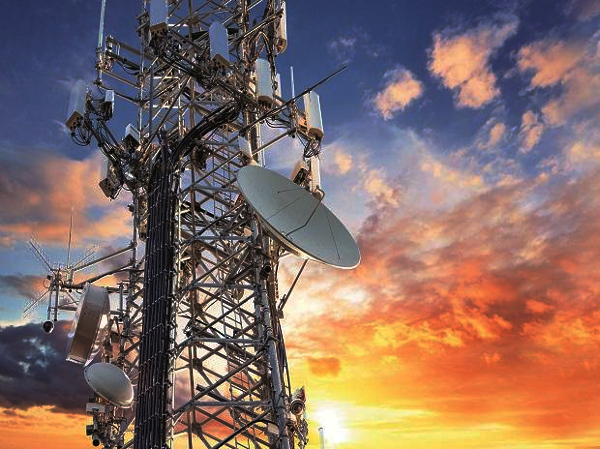
The rollout of indigenous 4G technology across 1,00,000 towers within a single year has become the centrepiece of BSNL’s new identity. Dr. Pemmasani said India has now become only the fifth country in the world to develop such deep indigenous 4G technology. This gives BSNL’s revival a strategic dimension because telecom networks are no longer just commercial utilities; they are part of national digital sovereignty.
For India, an indigenous 4G stack matters because the future of connectivity will be shaped by domestic control over hardware, software, network management and upgrade pathways. A country that can build and deploy its own telecom technology gains resilience against supply-chain disruptions, foreign dependency and security vulnerabilities. BSNL’s network modernisation therefore supports both public service and strategic technology independence.
The company is also trying to win back ordinary users through affordability and outreach. The Minister said BSNL tariffs are cheaper than private-sector competitors and that one-rupee SIM cards are being offered through India Post offices so people can test the improved service. India Post is also being used to spread awareness in rural areas, where postal workers can explain BSNL’s improved services directly to households.
This India Post link is important because BSNL’s natural strength lies in Bharat rather than only in premium urban markets. Private telecom operators dominate India’s high-density commercial circles, but BSNL has a public-service role in difficult geographies, border areas, tribal regions, rural belts and low-revenue locations. If the company can combine low tariffs with improved reliability, it can regain relevance among users who value coverage and affordability over brand perception.
One of the strongest achievements highlighted by the Ministry is BSNL’s work in remote and tribal regions. Around 35,000 villages earlier lacked proper connectivity because of difficult terrain, techno-commercial challenges or left-wing extremism. The Minister said nearly 25,000 towers have already been installed to cover these villages, while another 10,000 towers are in progress.
This is where BSNL’s revival becomes a national-security story. In areas affected by left-wing extremism, connectivity is not just about phone calls or mobile data. It allows villagers to contact police, access emergency services, receive welfare information, use digital payments, connect with administration and participate in the wider economy. Dr. Pemmasani specifically referred to areas such as Narayanpur in Chhattisgarh, where BSNL towers have helped people contact authorities more quickly.
Digital connectivity can weaken extremist influence by reducing isolation. When a village is cut off from communication, fear and misinformation travel faster than governance. When mobile networks arrive, people gain access to administration, markets, education, telemedicine, banking and social support. This is why telecom towers in remote areas are as much a development asset as they are a communication asset.
BSNL’s revival is also being supported by the larger BharatNet project. The government is investing nearly ₹1,40,000 crore to provide high-speed fibre connectivity to every Gram Panchayat. Dr. Pemmasani said the earlier shortcomings of BharatNet 1 and 2 have been addressed, and the new execution model is being pursued with stronger accountability.
The rural household target is ambitious. At present, around 15 lakh rural households are connected, while the first-phase target is 1.5 crore households. Village-level entrepreneurs are expected to play a role in expanding last-mile usage, turning fibre infrastructure into actual household and business connectivity.
This approach is practical because laying fibre up to a Gram Panchayat is only the first step. The real impact begins when homes, shops, schools, health centres, panchayat offices, local businesses and students start using reliable broadband. Village-level entrepreneurs can become the bridge between national infrastructure and local adoption.
The deeper message from BSNL’s turnaround is that public institutions can be revived when they are pushed through clear targets, operational discipline and technology upgrades. The Minister described communication infrastructure as central to the Viksit Bharat 2047 vision and said the goal is not only to build towers and cables, but also to change the working culture of public institutions.
BSNL’s future will still depend on execution. The company must sustain tower uptime, improve customer service, complete 4G rollout, prepare for 5G evolution, reduce complaints, strengthen enterprise business and convince users that the new BSNL is different from the old perception. Trust will return only if customers experience better service repeatedly.
But the direction is now visible. Higher revenue, stronger EBITDA, indigenous 4G deployment, rural tower expansion and BharatNet integration have given BSNL a credible revival platform. If this momentum continues, BSNL can once again become a major instrument of India’s digital inclusion strategy.
In that sense, BSNL’s revival is not merely a telecom-company recovery. It is a story of public infrastructure returning to relevance. It is about connecting villages that markets ignored, using indigenous technology for national capability, rebuilding confidence in a state-owned enterprise and making communication a tool of development, security and social inclusion.
You may also like
-
India Advances Trade Diplomacy at G20 Ministerial in Milwaukee
-
Kokasa Launches to Build Indigenous Mission-Critical Systems for Su-30MKI, MiG-29 and T-72
-
Tata Projects and MDS Aero Partner to Build Advanced Aero-Engine Test Infrastructure in India
-
Flying Wedge Defence Partners With Portugal’s Keydef to Manufacture Kaal Bhairava and YAMA Drones in Europe
-
Armenia Conducts Live-Fire Exercise With Indo-French TRAJAN 155 mm Howitzers Manufactured in India
