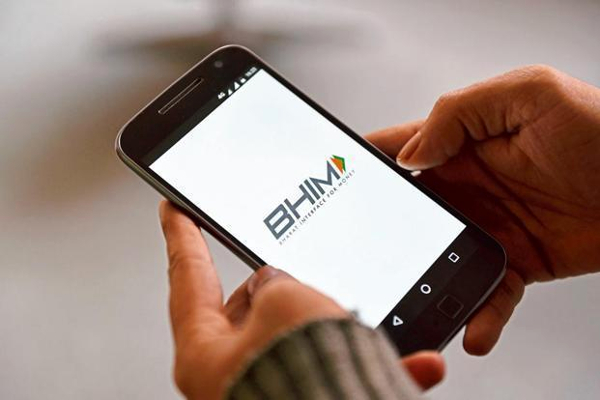
India’s homegrown BHIM Payments App has recorded a major surge in usage, with transaction volumes rising by 301% during FY26 compared with the previous financial year. The sharp increase reflects how deeply UPI-based payments have entered everyday Indian life, from small retail purchases and grocery payments to dining, bill payments, online shopping and merchant transactions.
According to NPCI BHIM Services Limited, monthly transaction volumes on the BHIM app rose from 5.93 crore in April 2025 to 21.6 crore in March 2026. The momentum continued into the new financial year as well, with the app recording 22.49 crore transactions worth ₹26,040 crore in April 2026. This shows that the growth was not just a temporary spike, but part of a larger behavioural shift towards digital payments.
BHIM, or Bharat Interface for Money, was created as an NPCI-backed UPI application to make digital payments simple, secure and accessible. The official BHIM platform describes it as an initiative to enable instant money transfer through mobile phones, with interoperability across other UPI apps and bank accounts. This interoperability is one of UPI’s biggest strengths because users are not locked into one platform; they can pay or receive money across apps using the same underlying digital payments infrastructure.
The latest growth numbers are important because BHIM operates in a highly competitive digital payments market dominated by large private fintech and technology platforms. Despite that, the app has managed to regain momentum by focusing on trust, simplicity, direct UPI access and user-friendly features. Reports also point to cashback incentives introduced earlier as one of the factors that helped more users try the app and increase repeat usage.
The rise of BHIM also reflects the larger expansion of India’s UPI ecosystem. UPI has changed the way India transacts by making real-time bank-to-bank payments available to ordinary citizens, small merchants, street vendors, service providers and businesses. A transaction that once required cash, card machines or bank visits can now be completed instantly through a QR code or mobile number. BHIM’s FY26 growth shows that the digital payments revolution is no longer limited to metros or tech-savvy consumers; it is becoming part of the country’s everyday economic behaviour.
Merchant adoption is a particularly important part of this story. As more shopkeepers, food outlets, service providers and small businesses accept UPI payments, digital transactions become normal even for low-value purchases. This supports formalisation because more payments leave a digital trail, helping small businesses build transaction histories that can later support access to credit, insurance and other financial services.
The app’s growth also has a financial inclusion angle. BHIM was designed as a simple public digital payments tool, and its continued expansion strengthens the idea that digital payments should not be limited to premium banking customers or urban app users. Features such as QR payments, bill payments, UPI Lite, RuPay credit card support and multilingual access can make the platform useful for a wide range of users across income groups and regions.
Another reason the numbers matter is the public digital infrastructure model behind UPI. India’s payments success has not come from one closed private network. It has come from an interoperable framework where banks, public institutions, fintech companies and payment apps operate on shared rails. BHIM’s renewed growth strengthens that ecosystem by keeping a public, NPCI-backed app active in the market.
For the wider economy, the increase in BHIM transactions supports India’s movement towards a more transparent, efficient and less cash-dependent system. Faster payments reduce friction for consumers and merchants. Digital records improve accountability. Small businesses can transact beyond local cash limits. Government benefit delivery, utility payments and everyday commerce become easier when citizens are comfortable with digital financial tools.
The strong FY26 growth of BHIM is therefore more than an app-level success story. It is another sign that India’s digital payments architecture is maturing. The country is not merely adopting digital payments; it is creating a mass-use public payments culture where even small-value transactions can move instantly, securely and affordably through mobile phones.
In the coming years, BHIM’s challenge will be to convert this renewed momentum into deeper market presence. If it continues improving user experience, expanding merchant acceptance, reaching feature-phone and semi-urban users, and building trust through a clean and reliable interface, it can remain an important part of India’s UPI journey. For now, the 301% FY26 transaction growth shows that India’s own payments app is once again finding stronger traction in the world’s most dynamic real-time payments market.
You may also like
-
Government Guarantees Zero Charges on UPI Payments Up to ₹2,000 Under New Notification
-
India Remains World’s Largest Remittance Recipient as Inflows Reach $151 Billion: IFAD
-
CarbonCraft Design Turns Industrial Carbon and Construction Waste Into Building Materials
-
India and MERCOSUR Move Toward Paperless Trade With Electronic Certificates of Origin
-
Inbound Aerospace Turns to Australia to Test India’s Recoverable Re-Entry Spacecraft
