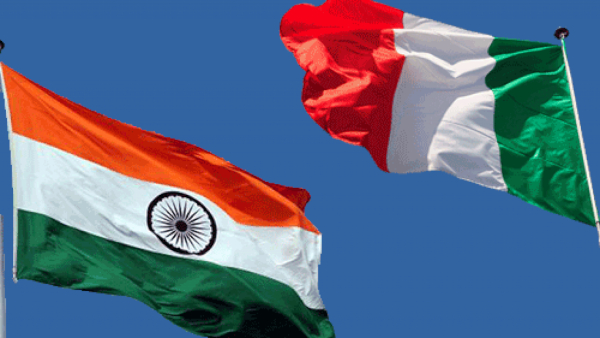
India and Italy have taken a major step forward in their bilateral relationship, with Prime Minister Narendra Modi and Italian Prime Minister Giorgia Meloni deciding to elevate ties to the level of a Special Strategic Partnership. The decision came during Prime Minister Modi’s official visit to Italy on 19–20 May 2026, a visit that built on the momentum created by his participation in the G7 Summit in Italy in 2024 and Prime Minister Meloni’s visit to India for the G20 Summit in 2023.
The joint declaration reflects a broad expansion of India-Italy cooperation across politics, trade, defence, technology, connectivity, migration, culture, education and multilateral affairs. Both leaders agreed to hold annual leader-level meetings, including on the sidelines of major international events, along with regular ministerial and institutional-level consultations. A Foreign Ministers-led mechanism will also be established to review the India-Italy Joint Strategic Action Plan 2025–2029 and provide strategic direction to the newly elevated partnership.
A key highlight of the declaration is the economic ambition set by the two countries. India and Italy agreed to work towards expanding bilateral trade to €20 billion by 2029, supported by stronger industrial cooperation, technology partnerships and resilient supply chains. The two sides identified several priority sectors for deeper investment, including textiles, clean technologies, semiconductors, automotive, energy, tourism, pharmaceuticals, medical technologies, digital technologies, critical raw materials, steel, ports and infrastructure.
The declaration also gives strong attention to critical minerals, an area that has become central to the future of clean energy, electronics, defence manufacturing and advanced technologies. The two Prime Ministers welcomed the signing of an MoU on critical minerals and agreed to build a structured framework for cooperation, with emphasis on sustainability and resilient supply chains. They also underlined the importance of recovering critical minerals from unconventional sources such as electronic waste and mine tailings, linking the partnership to the circular economy.
Connectivity emerged as another major pillar of the partnership. India and Italy reaffirmed their commitment to the India-Middle East-Europe Economic Corridor, recognising its potential to reshape trade and connectivity between Asia, the Middle East and Europe. Both leaders encouraged the first IMEC Ministerial meeting to take concrete steps in 2026. They also welcomed an MoU on maritime transport and ports, with directions to establish a joint working group for early implementation.
On science, technology and innovation, the two countries announced the creation of INNOVIT India, an innovation hub in India aimed at strengthening links between start-ups, universities, research centres and industries in both countries. The hub will support start-up acceleration, business matching, market access, joint research and talent mobility in sectors such as fintech, healthcare, semiconductors, logistics, agritech, energy, quantum computing and artificial intelligence.
Artificial intelligence, supercomputing and advanced research also received special focus. Both leaders reaffirmed their commitment to human-centric, secure and trustworthy AI, while agreeing to collaborate in this domain, including in third countries. They also supported joint projects and researcher mobility in quantum technologies, renewable energy, green hydrogen and the sustainable blue economy under the 2025–2027 Executive Program for Scientific Cooperation.
Space cooperation is another area where the partnership is expected to deepen. India and Italy agreed to strengthen collaboration between ISRO and the Italian Space Agency in Earth observation, heliophysics and space exploration. The two sides also discussed cooperation on access to space, protection of space infrastructure and greater commercial collaboration between space industries of both countries.
The defence section of the declaration marks one of the most strategically significant outcomes. The two Prime Ministers welcomed a Joint Declaration of Intent and a Defence Industrial Roadmap that will encourage technological cooperation, co-production and co-development in areas such as helicopters, naval platforms, marine armament and electronic warfare. The two sides will also examine the possibility of establishing an annual high-level military structured dialogue, while promoting joint exercises and inter-force courses.
Maritime security has been given a separate push, with India and Italy agreeing to launch a dedicated dialogue on the subject. This will focus on maritime security cooperation, information exchange, coordination and best practices in the maritime domain. For India, this fits naturally with its wider Indo-Pacific approach, while for Italy it complements its growing interest in maritime routes, trade security and strategic engagement beyond the Mediterranean.
Both leaders also delivered a strong message against terrorism and violent extremism, including cross-border terrorism. They condemned the April 2025 Pahalgam terror attack and reaffirmed cooperation against terrorists, terrorist groups and their affiliates, including those listed under the UN Security Council 1267 sanctions regime. The two countries also welcomed cooperation between India’s Directorate of Enforcement and Italy’s Guardia di Finanza, along with ongoing work on counter-terror financing, police cooperation, extradition and mutual legal assistance.
Migration and mobility formed another important part of the declaration. India and Italy agreed to enhance the movement of students, researchers and skilled workers, especially in STEM sectors. They also welcomed a Joint Declaration of Intent on facilitating the mobility of nurses from India to Italy, along with discussions on a Social Security Agreement. The launch of “ICI – Italy Calls India”, a university-enterprise talent bridge, is expected to help Indian students in Italian universities connect with career pathways in Italian companies.
Cultural and educational cooperation also received a major boost. Italy’s participation in the development of the National Maritime Heritage Complex at Lothal was welcomed, while both sides announced their intention to celebrate 2027 as the Year of Culture and Tourism between Italy and India. The two countries also encouraged an Italy-India Cultural Forum and welcomed twinning programmes between Indian and Italian UNESCO World Heritage sites.
The declaration also placed India-Italy ties within the wider India-EU framework. Both leaders welcomed the new Joint India-EU Comprehensive Strategic Agenda agreed at the India-EU Summit on 27 January 2026 and the conclusion of negotiations on the India-EU Free Trade Agreement, which they said would strengthen market access, reduce trade barriers and improve economic security through diversified value chains.
On global issues, India and Italy supported reform of the United Nations to make it more representative of present-day realities. They also reaffirmed support for a free, open and peaceful Indo-Pacific, cooperation in Africa through areas such as digital public infrastructure, agriculture, healthcare, AI and renewable energy, and diplomatic solutions to conflicts in West Asia and Ukraine.
Overall, the India-Italy Joint Declaration marks a clear widening of the relationship from traditional diplomacy into a modern strategic partnership. The focus on trade, critical minerals, defence production, maritime security, AI, space, education and skilled mobility shows that both countries are looking at each other not merely as political partners, but as long-term collaborators in technology, industry and global governance. For India, Italy brings advanced manufacturing, design, maritime capability and European market access. For Italy, India offers scale, talent, growth, strategic geography and a fast-expanding innovation ecosystem. The new Special Strategic Partnership gives both nations a stronger platform to turn these complementarities into concrete outcomes.
You may also like
-
China Welcomes Modi’s Strategic Autonomy Message as India–China Ties Move Toward Wider Engagement
-
India–Canada CEPA Talks Enter Fourth Round as Both Sides Target Deal by End of 2026
-
India and MERCOSUR Move Toward Paperless Trade With Electronic Certificates of Origin
-
Quad Moves Indo-Pacific Logistics Network Toward Operational Stage With Tokyo Exercise
-
The Return of Strategic Autonomy in a Fragmented World
