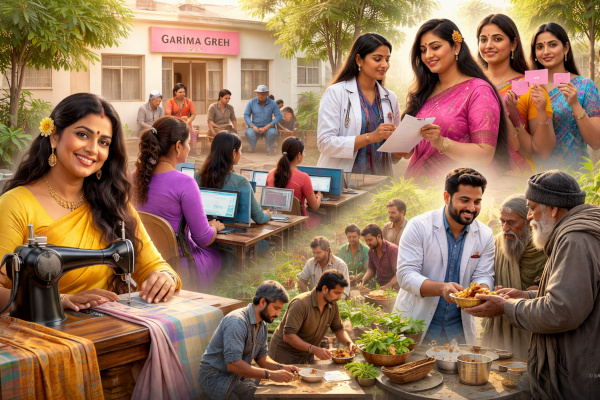
The Centre’s SMILE scheme is emerging as a major social welfare intervention aimed at bringing some of India’s most marginalised communities into the mainstream through health support, shelter, education, skill development and rehabilitation. According to a PIB research release issued on April 20, 2026, the scheme received a total allocation of ₹390 crore for the 2021–26 period and is focused on two groups: transgender persons and individuals engaged in begging.
The government said the programme has made visible progress on the ground. As of March 2026, 31,055 individuals had been identified under the beggary rehabilitation sub-scheme, while 9,935 had been rehabilitated. The release also said 21 Garima Grehs, which serve as shelter homes for transgender persons, are currently operational across 17 states, with three more sanctioned in August 2025.
For the transgender community, the scheme is positioned as a broader support framework linked to legal protections under the Transgender Persons (Protection of Rights) Act, 2019. The release said transgender beneficiaries can access scholarships from Class IX through post-graduation, skill development support through PM-DAKSH, shelter through Garima Grehs, and digital documentation through the National Portal for Transgender Persons. It also highlighted Ayushman Bharat TG Plus, which provides health coverage of up to ₹5 lakh per year for each transgender person, including gender-affirming care, hormone therapy and sex reassignment surgery at empanelled hospitals.
The government has also emphasised livelihood creation as a core pillar of the scheme. According to the PIB release, 18 pilot entrepreneurship development programmes have been launched across the country to train 1,800 transgender persons in business planning, market assessment, regulatory compliance, access to finance and connections with incubation centres and banks.
The second component of SMILE focuses on the rehabilitation of persons engaged in begging, under the broader goal of creating a “Begging-Free India.” The scheme operates through district administrations, urban local bodies, municipal corporations and other agencies working in beggary prevention. The rehabilitation process includes survey and identification, counselling, rescue, shelter, food, basic care, skill development and long-term convergence with other welfare institutions such as old age homes and de-addiction centres.
The PIB release said the beggary sub-scheme is currently operational in 181 selected cities. Beneficiaries are offered training in areas such as carpentry, tailoring, cooking, gardening, sanitation, security work and e-rickshaw driving, alongside support through self-help groups and bank linkages aimed at helping them move towards sustainable livelihoods.
Overall, the government is presenting SMILE as a shift from fragmented welfare delivery to a more integrated model that combines identity documentation, healthcare, education, shelter and economic rehabilitation. With rising budget allocations and expanding implementation networks, the scheme is being projected as a long-term attempt to replace exclusion with dignity and participation.
Reference:
https://www.pib.gov.in/PressReleasePage.aspx?PRID=2253621®=3&lang=1
You may also like
-
Mandapala and the Bird Family of Khandava — The Four Chicks Who Faced a Forest of Fire
-
Sanchar Saathi Helps Recover Record 75,000 Lost and Stolen Mobile Phones in a Single Month
-
India Recognises Heatwaves and Lightning as Notified Calamities, Expands Disaster Relief Framework to 14 Hazards
-
NBEMS Announces Additional FMGE by October
-
Nahusha as a Python: When Bhima’s Strength Failed and Yudhishthira’s Wisdom Prevailed
