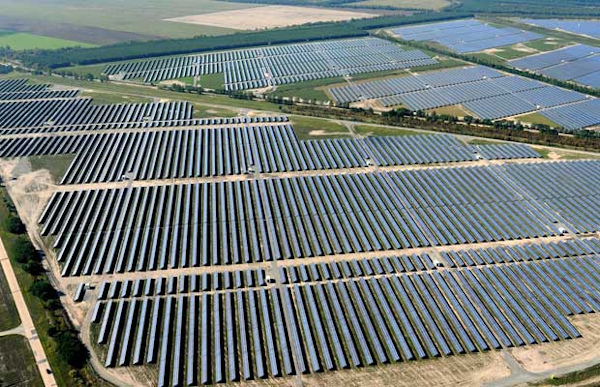
Juniper Green Energy has begun commissioning what it says is India’s first firm and dispatchable renewable energy, or FDRE, project under the government’s new bidding framework, marking an important step in the country’s effort to combine renewable generation with storage for more reliable power supply. The project has been developed under an SJVN tender and is designed to deliver scheduled renewable electricity aligned with grid demand rather than variable generation alone.
Spread across Rajasthan and Gujarat, the project combines 259 MWp of solar capacity, 280 MW of wind generation, and a 200 MWh battery energy storage system. According to the company, the solar component began operations in March 2026, while the battery storage system was commissioned in April 2026, allowing the project to move toward firm renewable supply backed by storage.
The project is tied to a 200 MW power purchase agreement signed by Juniper Green with SJVN, which in turn has executed a back-to-back power sale arrangement with Haryana’s power procurement agency. That makes the project particularly relevant for meeting peak demand in Haryana, especially during the high-load summer season when dependable supply becomes critical.
The broader significance lies in the FDRE model itself. India’s Ministry of Power issued guidelines for tariff-based competitive bidding for firm and dispatchable renewable energy projects with storage on June 9, 2023. These guidelines define FDRE as power supplied according to a specified demand profile, effectively pushing developers to integrate solar, wind and energy storage in a way that improves reliability and reduces the intermittency traditionally associated with renewable energy.
Juniper Green’s commissioning move comes as the FDRE segment gathers momentum across the country. Industry reports say more than 14 GW of FDRE capacity has already been tendered since 2023, with around 10 GW under construction across agencies such as SJVN, NHPC, SECI and NTPC. That suggests India’s renewable sector is moving beyond simple capacity addition and into a new phase focused on grid-ready, dispatchable clean power.
For India’s power sector, that shift matters. Projects like this are aimed at making renewable energy more usable during peak demand windows, improving grid stability, and reducing dependence on fossil-fuel-based peaking power. If commissioning and delivery proceed smoothly, Juniper Green’s project could become an early proof point for how hybrid renewable systems with storage may shape the next stage of India’s energy transition.
Reference:
https://www.saurenergy.com/solar-energy-news/juniper-green-begins-commissioning-indias-first-fdre-project-under-sjvn-project-11745399
https://energy.economictimes.indiatimes.com/news/renewable/juniper-green-energy-launches-indias-first-firm-and-dispatchable-renewable-energy-project/130385764
https://mnre.gov.in/en/policies-and-regulations/schemes-and-guidelines/guidelines/
https://powermin.gov.in/en/content/ammendmentin-tariff-based-competitive-bidding-guidelines-procurement-grid-commented
You may also like
-
Tata Power Renewables Commissions 72.5 MW Solar Project in Rajasthan to Support Tata Steel’s Decarbonisation
-
NTPC Targets 244 GW by 2037 With ₹16.86-Lakh-Crore Expansion Across India’s Energy Sector
-
UPI Completes a Decade as Transaction Value Surges More Than 4,000-Fold
-
AGNIT Semiconductors: Building India’s Gallium-Nitride Chip Capability for Radar, Communications and Power Electronics
-
India and Canada Target Comprehensive Trade Agreement by End of 2026
