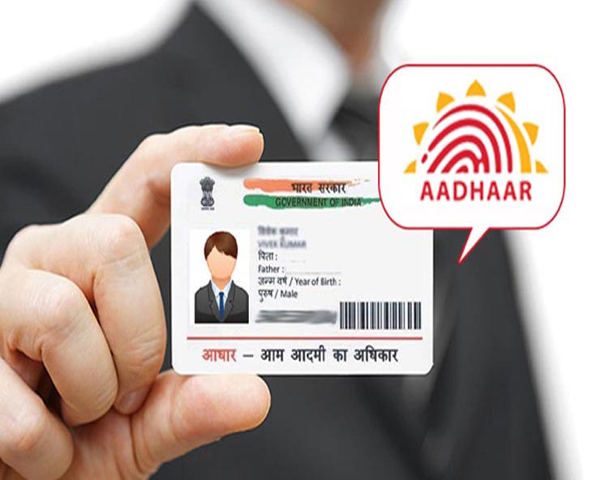
The Unique Identification Authority of India (UIDAI) is strengthening Aadhaar authentication systems through multi-modal verification, periodic updating of user details, and infrastructure upgrades aimed at reducing authentication-related issues in public service delivery. The government said these steps are intended to ensure smoother access to welfare benefits and services for eligible beneficiaries.
Aadhaar, maintained by UIDAI, is currently the world’s largest biometric identity system, covering around 134 crore live Aadhaar holders. The platform has so far recorded more than 17,000 crore authentication transactions, reflecting its vast integration into India’s governance and service delivery architecture.
According to the government, Aadhaar has become a key identity tool for the delivery of welfare benefits and public services across both Central and State schemes. More than 3,100 Direct Benefit Transfer (DBT) schemes and over 360 public services now use Aadhaar-based authentication or verification. This has helped governments improve targeting, reduce duplication, and curb leakages by identifying and excluding ineligible or duplicate beneficiaries.
The government also highlighted the role of Aadhaar-bank linkage in enabling direct transfer of benefits to beneficiaries’ bank accounts. It said this has improved the efficiency, transparency and accountability of welfare delivery. Beyond welfare schemes, Aadhaar also serves as a widely accepted digital identity, helping users access services in sectors such as banking, telecom, credit and insurance.
At the same time, the government underlined that Aadhaar functions as a purpose-agnostic identity platform. UIDAI does not collect or retain information about the purpose for which authentication is conducted by scheme-implementing agencies using Aadhaar to verify beneficiaries.
Given the massive scale of Aadhaar’s use in service delivery, authentication failures can occur for a range of reasons, including connectivity problems, biometric or demographic mismatches, invalid one-time passwords, device-related issues, and other technical factors. The government said such grievances are addressed in a time-bound manner in coordination with the concerned ministries and departments implementing the schemes.
To reduce such issues, UIDAI has introduced several corrective measures. These include enabling multi-modal authentication through biometrics, OTP and face authentication, facilitating periodic updates of biometric and demographic details, and reinforcing the underlying authentication infrastructure. According to the government, these steps have helped improve the reliability of Aadhaar-based verification and support uninterrupted delivery of welfare benefits.
The government also reiterated that under the Aadhaar Act, 2016, no eligible beneficiary can be denied welfare benefits or services because Aadhaar has not been assigned or because Aadhaar authentication fails. In such cases, alternate and viable means of identification are to be provided.
The information was shared by Minister of State for Electronics and Information Technology Jitin Prasada in a written reply in the Rajya Sabha on March 27, 2026.
Source: PIB
You may also like
-
Sanchar Saathi Helps Recover Record 75,000 Lost and Stolen Mobile Phones in a Single Month
-
India Recognises Heatwaves and Lightning as Notified Calamities, Expands Disaster Relief Framework to 14 Hazards
-
India Deepens Green Diplomacy With Bhutan and Sri Lanka at UNCCD COP17 in Mongolia
-
India Restored 21.76 Million Hectares of Land, Generated 1.22 Billion Person-Days of Employment During 2011–2020
-
India’s Livestock Disease-Control Drive Cuts FMD and Brucellosis Outbreaks
