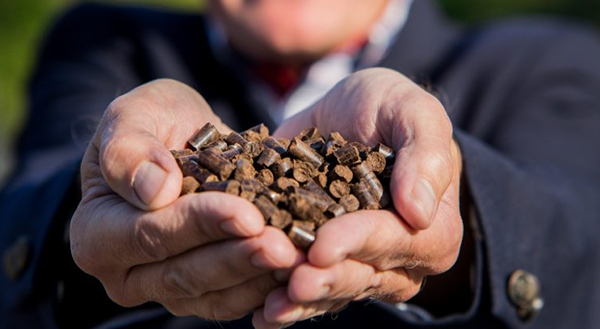
Pollution from stubble burning in winter is the key contributor to the sharp decline in air quality in Delhi. But stubble burning continues unabated. To find a solution to this issue, India is testing a Swedish technology — torrefaction that can convert rice stubble into ‘bio-coal’.
The Office of the Principal Scientific Advisor (PSA) to Government of India has funded a pilot project in Punjab to evaluate the feasibility of the technology. Bioendev, a Swedish company, has set up a pilot plant at the National Agri-Food Biotechnology Institute in Mohali.
Stubble to bio-coal
According to Amar Singh, Director (India) of Bioendev, if scaled up, about 65% of the biomass could be converted to energy. The technology involves heating up straw, grass, saw mill residue and wood biomass to 250 degrees Celsius – 350 degrees Celsius. This changes the elements of the biomass into ‘coal-like’ pellets. These pellets can be used for combustion along with coal for industrial applications like steel and cement production
“We have a very small plant at Mohali but we are hoping to make a plant that can treat 30,000 tons [of residue] per annum,” said Mr. Singh. So far the technology has only been substantially tested in Scandivia as a 16,000 ton/year plant.
The Bioendev project was discussed at a gathering on Tuesday, chaired by King Carl Gustaf XVI of Sweden. Swedish and senior Indian government officials, academics and representatives from companies and non-governmental organisations were also present.
Source: TH
Image Courtesy: Bioendev
You may also like
-
Indian Semiconductor Companies Propose New Manufacturing and Chip Design Investments in Madhya Pradesh
-
CSIR-CRRI Partners with Industry to Develop Advanced Indigenous Airport Runway and Pavement Materials
-
Paras Semiconductors Secures 43 Acres in Madhya Pradesh for Proposed ₹6,200 Crore Advanced Chip Packaging Facility
-
Petronet LNG Plans ₹1,200 Crore Joint Venture for Ten Compressed Biogas Plants Across India
-
India Seeks South Korean Shipbuilding Partnerships as Sarbananda Sonowal Begins Four-Day Visit to Busan
