Kautilya

Study to Help Develop Better Treatment for Blood-Related Disorders

The new study conducted by researchers at the Indian Institutes of Science Education and Research (IISER) – Mohali, has now filled the gap. It has shown that a local signaling system defined by two genes called Ultrabithorax (Ubx) and Collier in the tertiary lobe regulated the activities of the progenitors in the tertiary as also secondary lobes and that the system shared several biomarkers with the local environment of the primary lobe.

Researchers Develop Super-Hydrophobic Cotton for Oil-Spill Cleanup

The MOF composite has great capability for selective separation of the oils from oil/water mixtures, and the separation efficiency lies between 95% and 98%, irrespective of the chemical composition and density of the oils. Besides, the MOF composite is also able to absorb large volumes of oils and can be reused for a minimum of 10 times so that the sorbents can provide more recovery of the spilled oil.

PMUY 2.0 Nears 10 Million LPG Connections Target, 9.5 Million KYCs Already in Place

Know-your-customer (KYC) approvals for 9.5 million new applications have already been received by the public sector oil marketing companies that are executing the system, according to oil ministry officials. Before commencing services, institutions must go through a KYC procedure to check the details of the intended recipient. A recipient’s KYC approval gets them one step closer to receiving the desired benefit.

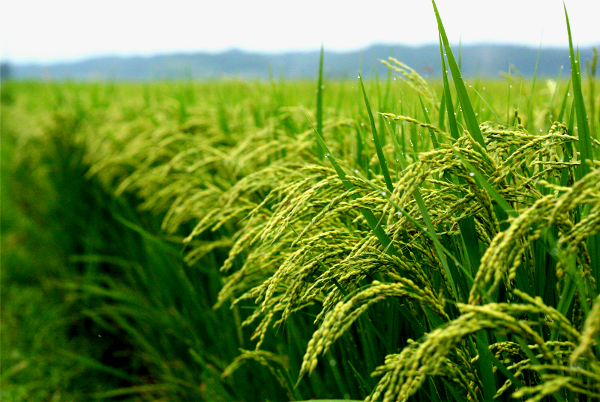
Record Foodgrain Production of 150.50 Million Tonnes Estimated in Kharif Season

First Advance Estimates of production of major Kharif crops for 2021-22 have been released by the Ministry of Agriculture and Farmers Welfare. The Union Minister of Agriculture and Farmers Welfare Shri Narendra Singh Tomar said that the record foodgrain production of 150.50 million tonnes is estimated in kharif season. He said that, there has been bumper production due to hardwork of farmers, proficiency of scientists and farmer friendly policies of the Government in the leadership of Prime Minister Shri Narendra Modi.

Study Probes How Ejections from Sun’s Corona Influence Space Weather Predictions Crucial for Monitoring Satellites

Space weather refers to the conditions in the solar wind and near-Earth space, which can adversely affect the performance of space-borne and ground-based technological systems. The space weather near the Earth is mainly due to Coronal Mass Ejections (CMEs), which are frequent explosive expulsions of huge magnetized plasma from the Sun into its surroundings, which can blow past the Earth. Example of space weather events is the geomagnetic storm, a perturbation in the Earth’s magnetic field, which can last for few hours to few days. Understanding of how events in the solar atmosphere influence space weather is necessary for monitoring and maintaining our satellites.