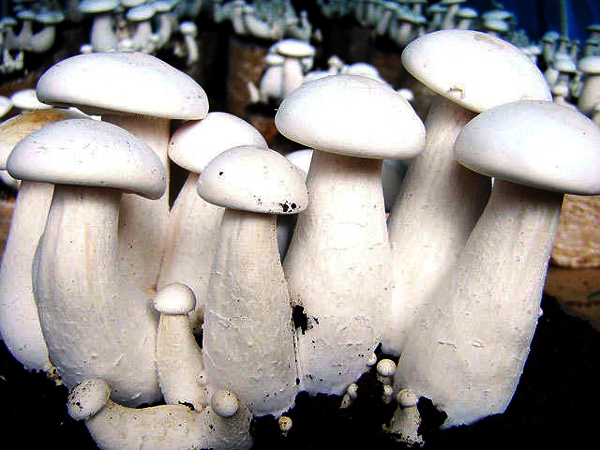
Vijayawada, April 26: Andhra Pradesh is preparing a major push into mushroom cultivation with the proposed AP Mushroom Mission 2026–31, a dedicated programme aimed at turning the State into one of India’s leading mushroom production hubs. The initiative is being positioned as part of Chief Minister N. Chandrababu Naidu’s broader agriculture roadmap, which focuses on higher farmer incomes, crop diversification, horticulture expansion and market-linked farming.
The mission is expected to give mushroom cultivation a structured policy framework rather than treating it as a small side activity. Reports say the government wants to scale production sharply, support growers with subsidies, create new production units, and bring women’s self-help groups into the centre of the programme. Some reports have pegged the proposed outlay at ₹12,960 crore, with a focus on training, production infrastructure and rural enterprise development.
The State has reportedly set an ambitious target of producing one lakh metric tonnes of mushrooms annually under the mission. The plan is important because mushroom cultivation requires comparatively less land, can be done in controlled or semi-controlled spaces, and has strong potential for value addition through processing, packaging, dehydration and branded retail sales.
The programme is also expected to encourage cultivation of varieties suited to Andhra Pradesh’s climate and market conditions, including milky mushrooms, paddy-straw-based varieties and button mushrooms. Button mushrooms, which enjoy strong demand in urban and export-linked markets, are likely to be promoted through larger organised units, while small and medium growers may be supported through decentralised rural production models.
A key social angle of the mission is the proposed involvement of women’s self-help groups. By training women in mushroom cultivation, spawn handling, production hygiene, harvesting, grading and local marketing, the State hopes to convert mushroom farming into a rural livelihood engine. Since mushroom units can be established at small scale and operated close to households or village clusters, the crop is being seen as especially suitable for women-led micro-enterprises.
The mushroom mission is part of a larger agricultural diversification strategy. At the same review, the Chief Minister also directed officials to expand horticulture cultivation to 50 lakh acres, promote Rayalaseema as a global horticulture hub, explore saffron cultivation in Araku, expand apple trials in Anantapur, and encourage crops such as avocado, fig, jackfruit, guava and pepper.
The State is also linking this farm push with digital monitoring and natural farming. Officials reported that more than eight lakh farmers have registered on the Farmer App, which integrates information on crops, land, soil testing, input usage, scheme benefits and water resources. The government has also set a target to expand natural farming to 11 lakh hectares across 13,300 gram panchayats, covering around 25 lakh farmers.
If implemented effectively, the AP Mushroom Mission could give Andhra Pradesh a new high-value agricultural identity. Instead of depending only on traditional field crops, the State is trying to build a modern farm economy around horticulture, mushrooms, cocoa, natural farming, value-added processing and digital farm services. The real test will be execution: quality spawn supply, cold-chain support, farmer training, market tie-ups, disease control and reliable procurement channels will decide whether the mission becomes a genuine rural income revolution or remains only an ambitious policy announcement.
You may also like
-
India Seeks South Korean Shipbuilding Partnerships as Sarbananda Sonowal Begins Four-Day Visit to Busan
-
Koraput Kalajeera Rice of Odisha: The GI-Tagged Aromatic Heritage of India’s Ancient Rice-Growing Region
-
ICAR Scientists Develop Indigenous Protective Gloves for Cotton Farmers, Sign Commercial Manufacturing Agreement
-
BHEL–Coal India Joint Venture Begins Construction of ₹25,016 Crore Indigenous Coal Gasification Project in Odisha
-
PM Modi to Inaugurate RBI’s Tier IV Data Centre and Cybersecurity Training Institute in Bhubaneswar
