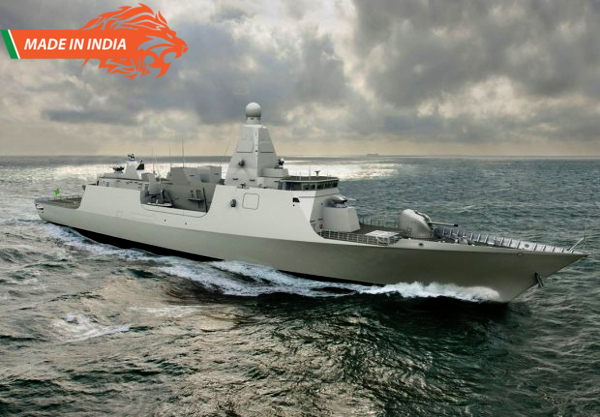
The Indian Navy is set to commission Mahendragiri (F38), the sixth indigenous stealth frigate under Project 17A, at Visakhapatnam on 11 July 2026. The warship marks another major step in India’s transition from a buyer of complex naval platforms to a confident designer and builder of advanced frontline combatants. The commissioning also strengthens the Navy’s surface fleet at a time when maritime competition across the Indian Ocean and the wider Indo-Pacific is becoming increasingly technology-driven.
Named after the Mahendragiri mountain range in the Eastern Ghats, the frigate carries a name associated with strength, endurance and majesty. As the first Indian naval warship to bear this name, Mahendragiri enters service with a distinct identity and a powerful symbolic connection to India’s geography, civilisational memory and maritime ambition. Its motto, “Mighty–Majestic–Matchless,” captures the spirit of a warship built for high-end combat, sustained deployment and national service.
Mahendragiri has been designed in-house by the Indian Navy’s Warship Design Bureau and built by Mazagon Dock Shipbuilders Limited, Mumbai. This is significant because modern frigates are among the most complex naval platforms in the world. They must combine stealth shaping, propulsion, sensors, weapons, electronic warfare systems, aviation facilities, combat management networks and survivability features into one balanced fighting unit. Mahendragiri reflects the maturity of India’s naval design ecosystem and the rising capability of Indian shipyards to deliver sophisticated combat vessels.
Project 17A is the advanced follow-on to the Shivalik-class frigates, bringing improved stealth, enhanced automation, greater survivability and stronger mission flexibility. Mahendragiri incorporates reduced radar signature features, a high degree of automation and a modern Combined Diesel or Gas propulsion system, allowing the ship to operate at speed while maintaining endurance for extended maritime missions. These attributes are vital for a frigate expected to patrol vast sea spaces, escort high-value units, respond to crises and participate in networked naval operations.
The frigate is equipped with a powerful mix of weapons and sensors for anti-air, anti-surface and anti-submarine warfare. Its combat package includes surface-to-surface missile capability, surface-to-air missile systems, electronic warfare equipment, anti-submarine warfare systems and an integrated Combat Management System. This makes Mahendragiri a multi-role combatant capable of protecting naval task groups, engaging hostile surface units, detecting undersea threats and contributing to layered fleet air defence.
The ship’s value goes beyond missile firepower. A modern frigate is a mobile command-and-combat node. Mahendragiri’s sensors, combat management architecture and communications allow it to operate as part of a larger maritime network with aircraft, submarines, destroyers, maritime patrol platforms and shore-based command centres. In a future conflict, such connectivity can decide how quickly a fleet detects, classifies and engages threats across air, surface and sub-surface domains.
The warship also supports India’s wider maritime security responsibilities. Apart from combat missions, Mahendragiri can be deployed for Humanitarian Assistance and Disaster Relief, Search and Rescue, maritime security, power projection and sustained presence operations. This range is especially important for India, whose naval responsibilities extend from the Arabian Sea and Bay of Bengal to island territories, sea lanes, chokepoints and partner nations across the Indian Ocean Region.
A major highlight of Mahendragiri is its over 75 percent indigenous content. This places the warship firmly within India’s Aatmanirbhar Bharat defence vision. The construction of such a platform brings together public sector shipyards, private industry, specialised component manufacturers, weapons suppliers, electronics firms and a large number of MSMEs. Every ship of this class therefore strengthens combat capability while also expanding the domestic defence industrial base.
For the Indian Navy, the commissioning of Mahendragiri adds momentum to the steady induction of Project 17A frigates. Each new ship improves fleet density, operational availability and mission flexibility. The arrival of successive frigates also allows the Navy to distribute advanced capability across commands, maintain presence in critical waters and respond faster to emerging security situations.
Mahendragiri’s commissioning comes at a time when India is strengthening its role as a Preferred Security Partner in the Indian Ocean Region. The region carries some of the world’s most important energy flows, trade routes and strategic chokepoints. A capable, indigenous and mission-ready frigate adds weight to India’s ability to safeguard maritime interests, reassure friendly nations and maintain stability in the Indo-Pacific.
Mahendragiri is more than another addition to the Navy’s order of battle. It is a statement of India’s growing confidence in warship design, shipbuilding, systems integration and maritime power projection. With stealth features, multi-domain combat capability, high indigenous content and strong mission versatility, the frigate stands as a formidable force multiplier for the Indian Navy. As she prepares to enter service, Mahendragiri carries forward the message that India’s future naval strength will be built increasingly by Indian hands, Indian industry and Indian strategic vision.
Source: PIB
You may also like
-
Indian Army Special Forces Depart for Indonesia for Exercise Garuda Shakti 2026
-
India to Train 600 Nigerian Army Soldiers in Specialised Jungle and Mountain Warfare
-
India Moves Towards Five-Year Assured Orders for Defence Startups Under New Procurement Reforms
-
Zen Technologies Introduces Indigenous Hyper-Strike Falcon AI-Guided Counter-Drone Interceptor
-
L&T and Germany’s SCHOTTEL Expand Partnership for Controllable Pitch Propeller Systems in Indian Shipbuilding
