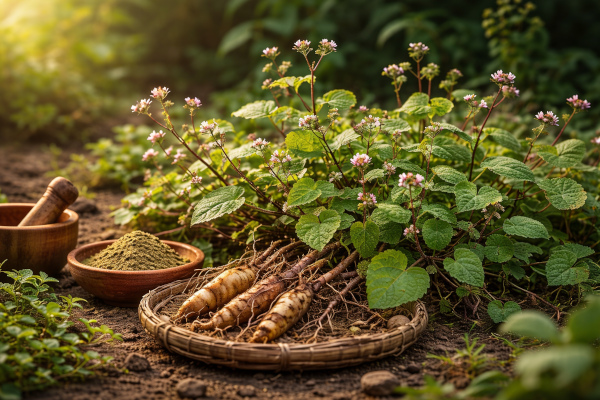
Punarnava, botanically known as Boerhavia diffusa L., is one of the most valued herbs in Ayurveda for reducing swelling, supporting urinary function, improving digestion and restoring lightness in the body. It is commonly called Hogweed in English, though it should be clearly understood that Ayurvedic Punarnava refers to Boerhavia diffusa, not the toxic giant hogweed found in some Western countries.
The Sanskrit name Punarnava means “that which becomes new again.” This name reflects the nature of the plant. Even after drying in harsh conditions, it grows fresh again with the arrival of rain. Ayurveda sees this renewing quality as a symbol of its medicinal action. Punarnava helps clear stagnation, reduce heaviness and support the body’s natural ability to regain balance.
Punarnava is a spreading herb with slender branches, small leaves and tiny pinkish or reddish flowers. The whole plant is used medicinally, though the root is especially important in many classical preparations. In traditional practice, Punarnava is used in conditions involving swelling, water retention, sluggish digestion, urinary difficulty, liver-spleen imbalance and Kapha-related heaviness.
Sanskrit and Common Names
In Sanskrit, Punarnava is also known as Shothaghni, Varshabhu, Raktapunarnava, Shvetapunarnava and Katilla. The name Shothaghni means “that which reduces swelling,” showing its classical importance in conditions of fluid accumulation and inflammation.
In Hindi, it is known as Punarnava or Gadahpurna. In Malayalam, it is called Thazhuthama. In Tamil, it is known as Mookkarattai. In Telugu, it is called Galijeru. In English, it is commonly referred to as Hogweed or Spreading Hogweed.
Ayurvedic Properties
Punarnava is light, dry, cleansing and channel-opening in action. It is especially useful when the body feels heavy, swollen, dull or waterlogged.
Rasa: Tikta, Kashaya and Madhura — bitter, astringent and slightly sweet
Guna: Laghu and Ruksha — light and dry
Virya: Ushna — warming in potency
Vipaka: Madhura — sweet after digestion
Dosha action: Helps reduce Kapha and Vata when used properly
Main actions: Mutrala, Shothahara, Deepana, Pachana, Rasayana, Kapha-hara and Vata-kapha-hara
Punarnava is mainly valued for removing excess fluid, reducing swelling and improving the proper movement of body channels. Its dry and light nature reduces Kapha, while its warming action supports digestion and clears obstruction.
Punarnava and Swelling
Punarnava is one of Ayurveda’s best-known herbs for Shotha, or swelling. Ayurveda understands swelling as a sign of disturbed fluid movement, weak digestion, tissue stagnation or blockage in channels. Punarnava helps by supporting urination, improving metabolism and reducing water retention.
This makes it useful in puffiness, heaviness of the limbs, fluid accumulation and Kapha-type swelling. However, swelling due to kidney disease, heart disease, liver disease or serious medical conditions requires proper diagnosis and treatment. Punarnava should be used in such cases only under qualified medical guidance.
Punarnava as a Mutrala Herb
Punarnava is traditionally described as Mutrala, meaning it supports healthy urination. By helping the body remove excess water through the urinary system, it brings lightness and reduces heaviness. This is one of the reasons it is used in classical formulations for urinary disorders and swelling.
It is also helpful when Kapha and Ama block the body’s channels. In such cases, the person may feel dull, bloated, heavy and sluggish. Punarnava helps restore movement and balance.
Punarnava and Digestion
Punarnava supports Agni, the digestive fire. When Agni becomes weak, the body produces Ama, or undigested metabolic waste. Ama blocks channels and leads to heaviness, swelling, fatigue and poor appetite.
Punarnava helps by reducing Kapha, improving digestion and clearing stagnation. Its bitter and astringent taste reduces excess moisture and heaviness, while its warming potency stimulates digestive activity.
Classical Recipe: Khala Takra or Herbs-Infused Buttermilk
A classical preparation known as Khala Takra, meaning herbs-infused buttermilk, uses Punarnava as an important ingredient. This preparation belongs to the category of Pana, or drinkable preparations, and is described as useful for Vata-Kapha related problems, abdominal lump-like conditions and weak digestion.
The main ingredient is Takra, or buttermilk. Punarnava, Chitraka and Ajaji are ground into a fine powder and mixed thoroughly with Takra. The preparation is then made fragrant with Karpura, or camphor. The ingredients used are:
Takra — buttermilk
Punarnava — Boerhavia diffusa, whole plant
Chitraka — Plumbago zeylanica, root
Ajaji — cumin, Cuminum cyminum, fruit
Karpura — camphor, aromatic extract
This preparation is described as Ushna, or hot in potency, Tikta, Katu, Ruksha and Tikshna. That means it is bitter, pungent, dry and penetrating in action. These qualities make it suitable for reducing Kapha, clearing stagnation and stimulating digestion.
The benefits of Khala Takra are described as Vata-kapha-hara, Gulma-hara and Agnivardhaka. This means it helps reduce Vata-Kapha imbalance, supports relief in abdominal lump-like or mass-like conditions described as Gulma, and stimulates digestive fire.
Punarnava from Manuscript of Culinary Medicine
The recipe of Khala Takra is recorded in the traditional culinary-medical text Pakadarpanam, specifically in the section dealing with drinkable preparations. This shows the sophistication of India’s ancient food-as-medicine tradition. The manuscript does not treat buttermilk as a simple drink alone; it transforms Takra into a therapeutic preparation by combining it with Punarnava, Chitraka, cumin and camphor. Such recipes reveal how Ayurveda used everyday food bases like buttermilk as carriers for herbs that improve digestion, reduce Kapha, correct Vata movement and support internal cleansing. The inclusion of Punarnava in this formulation highlights its classical role in reducing heaviness, swelling and stagnation while restoring digestive strength.
Medicinal Logic of the Ingredients
The ingredients of Khala Takra are chosen with clear Ayurvedic reasoning. Takra is light, digestive and especially valued for Kapha and Vata disorders. It supports the gut, improves appetite and reduces heaviness.
Punarnava reduces swelling, supports urination and clears stagnation. Chitraka is a strong digestive herb that kindles Agni and breaks down Ama. Ajaji, or cumin, improves digestion, reduces gas and supports abdominal comfort. Karpura adds fragrance, subtle stimulation and freshness to the preparation.
Together, these ingredients make Khala Takra a sharp, light and digestive drink. It is especially suitable where the body shows signs of heaviness, bloating, sluggish digestion and Vata-Kapha obstruction.
Punarnava for Vata and Kapha
Punarnava is especially useful when Vata and Kapha are disturbed together. Kapha creates heaviness, mucus, swelling and sluggishness. Vata creates gas, pain, irregular movement and abdominal discomfort. When these two doshas obstruct each other, conditions like bloating, swelling and poor digestion may arise.
Punarnava helps by reducing Kapha and clearing channels. When combined with Takra, Chitraka and cumin, it becomes more digestive and more suitable for Vata-Kapha disorders.
Punarnava and Gulma
The Khala Takra preparation is traditionally described as Gulma-hara. In Ayurveda, Gulma refers to abdominal lump-like conditions, mass-like sensations, gas accumulation, pain or obstruction in the abdomen. It is often linked with disturbed Vata, along with Kapha or Ama.
Punarnava helps reduce swelling and stagnation, while Chitraka and cumin kindle digestion and regulate Vata. Takra acts as a suitable medium because it is light, digestive and channel-cleansing. This combination makes the preparation meaningful in abdominal heaviness and Vata-Kapha related digestive disturbance.
Punarnava for Liver and Spleen Support
Punarnava is widely used in Ayurveda for conditions connected with the Yakrit and Pleeha, meaning liver and spleen. When these organs are sluggish, symptoms such as poor appetite, swelling, heaviness and low vitality may appear.
Classical formulations such as Punarnavadi Kashayam and Punarnavadi Mandura use Punarnava for liver-spleen support, swelling and anaemia-related conditions. These should be used only under the guidance of an Ayurvedic physician.
Punarnava in Urinary Health
Punarnava supports the urinary system by promoting healthy urine flow. It is used traditionally in urinary difficulty, fluid retention and Kapha-related urinary sluggishness. It helps clear excess fluid without creating heaviness.
However, burning urination, infection, severe pain, blood in urine or reduced urine output should always be medically evaluated. Punarnava can support treatment only when properly prescribed.
Punarnava as Food
In many regions, Punarnava leaves are used as a leafy vegetable. In Kerala, Tamil Nadu and other parts of India, the plant is cooked with mild spices and taken as a food-medicine. As a leafy green, it is light, slightly bitter and cleansing.
Punarnava greens may be cooked with cumin, garlic, black pepper, green gram or coconut depending on local tradition. When used as food, it supports digestion, reduces Kapha and gives lightness to the body.
Benefits of Punarnava
Punarnava supports healthy fluid balance. It helps reduce swelling and puffiness. It improves digestion and removes heaviness. It supports urinary function. It helps clear Kapha and Ama from body channels. It supports liver and spleen health in classical Ayurvedic practice. It is useful in Vata-Kapha conditions where swelling, bloating and sluggish digestion are present.
External Use
Punarnava paste is traditionally applied externally over mild swelling and painful areas in some folk practices. The fresh plant may be ground and applied locally, but this should be done carefully. It should not be applied over open wounds, infected skin or sensitive areas without guidance.
Precautions
Punarnava is a strong medicinal herb and should be used with care. People with kidney disease, heart disease, liver disease, severe dehydration, low blood pressure or those taking diuretic medicines should use it only under medical supervision.
Pregnant women should avoid self-medication with Punarnava. People with high Pitta, acidity, burning sensation or very dry constitution should use it cautiously. Since Khala Takra contains Chitraka and other sharp ingredients, it may not suit people with gastritis, ulcers, severe acidity or burning symptoms.
Correct identification is also very important. Ayurvedic Punarnava is Boerhavia diffusa L. It should not be confused with other plants called hogweed in English.
Conclusion
Punarnava is one of Ayurveda’s finest herbs for renewal, lightness and channel cleansing. It helps reduce swelling, supports urinary function, improves digestion and restores movement where Kapha and Vata create stagnation.
The classical Khala Takra preparation shows how Punarnava was used not only as a herb but also as part of a refined digestive drink. By combining Punarnava with buttermilk, Chitraka, cumin and camphor, the ancient tradition created a preparation that stimulates Agni, reduces Vata-Kapha imbalance and helps relieve abdominal heaviness.
Punarnava reminds us that renewal often begins with clearing what is stagnant. It is a humble spreading herb, yet Ayurveda honours it as a plant of restoration — one that helps the body become light, fresh and balanced again.
You may also like
-
Before the Heart Falls Ill: The Ayurvedic Way of Protecting Hridaya Through Daily Living
-
Why Ayurveda Begins the Morning by Looking at the Tongue
-
High Blood Pressure Through an Ayurvedic Lens: Stress, Diet and Dosha Imbalance
-
IISc Develops Engineered Nanobody Antivenom With Broad Protection Against Indian Cobra Venoms
-
Indian MedTech Startup Periwinkle Takes Rapid AI Cervical Cancer Screening to BRICS
