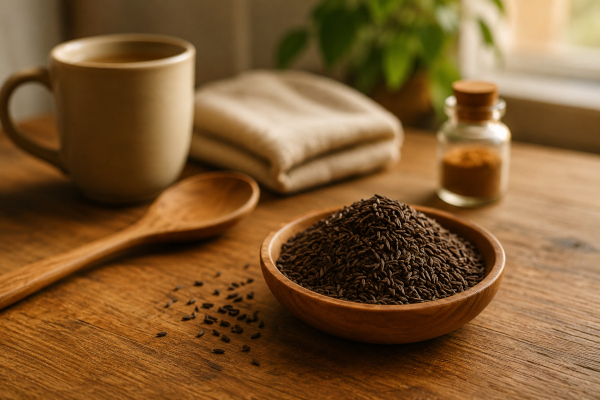
Jiraka holds a respected place in Ayurveda as one of the finest kitchen medicines for digestion, appetite, taste and intestinal balance. The word Jiraka itself is traditionally connected with the idea of supporting digestion. In classical food and medicine, two important forms are used: Krishna Jiraka, commonly described as black cumin, and Shweta Jiraka, commonly known as white cumin or cumin. Both are aromatic, sharp, digestive and deeply connected with Indian cooking, postpartum care, digestive formulations and pathya food.
Names and Identity
Krishna Jiraka
Common name: Black cumin
Botanical reference in the recipe tradition: Carum bulbocastanum
Part used: Fruit / seed-like fruit
Nature: Aromatic, warming and digestive
Shweta Jiraka
Common name: Cumin / white cumin
Botanical name: Cuminum cyminum L.
Part used: Fruit / seed-like fruit
Nature: Light, aromatic, digestive and carminative
In Ayurveda, both forms of Jiraka are valued for their ability to kindle Agni, the digestive fire. They help improve taste, reduce heaviness after food, support proper movement of Vata in the abdomen and assist in the digestion of curd, pulses, heavy foods and rich preparations.
Ayurvedic Nature of Jiraka
Krishna Jiraka and Shweta Jiraka are generally understood as ushna in potency, meaning they carry a warming action. Their taste profile is mainly katu and mildly bitter in effect, helping the body process food more efficiently. They are also linked with deepana and pachana actions.
Deepana means stimulation of digestive fire.
Pachana means supporting the digestion of undigested food material.
Rochana means improving taste and appetite.
Vatanulomana means supporting the proper downward movement of Vata.
Because of these qualities, Jiraka is commonly used when there is low appetite, bloating, abdominal discomfort, sluggish digestion, loose stools due to weak digestion and heaviness after meals.
Krishna Jiraka: The Stronger Aromatic Digestive
Krishna Jiraka is considered sharper and more penetrating in digestive action. It is traditionally used in small quantities to awaken Agni and support intestinal balance. Its warming and aromatic nature makes it useful in preparations where Kapha, Ama and digestive dullness are involved.
In food medicine, Krishna Jiraka is especially useful when curd, buttermilk, pulses or heavy grains are prepared. It adds fragrance, improves digestibility and helps prevent the heaviness that can arise from rich or cold foods.
Shweta Jiraka: The Gentle Everyday Cumin
Shweta Jiraka, or common cumin, is one of the most widely used Ayurvedic kitchen spices. It is milder than Krishna Jiraka and suitable for daily cooking in proper quantity. Ayurveda values it for digestion, appetite, abdominal comfort and post-meal lightness.
Cumin is often used in soups, rice preparations, buttermilk, curd-based dishes, herbal waters and digestive powders. It supports Agni without being overly harsh, making it a trusted spice in household food traditions.
Effect on Doshas
Both Krishna Jiraka and Shweta Jiraka mainly support the balancing of Vata and Kapha, especially when these doshas disturb digestion. Their warming and aromatic qualities reduce coldness, bloating and heaviness. Since they are ushna, people with strong Pitta aggravation, burning sensation, acidity or heat-related discomfort should use them carefully and in moderate quantity.
Classical Recipe Reference: Jiraka Dadhi
A classical preparation called Jiraka Dadhi, meaning cumin-flavoured curd, is described in the Ayurvedic food-medicine tradition. It is referenced in Siddha Bheshaja Manimala, Atisara Chikitsa, 4/17. The preparation belongs to the category Lidha, meaning lickable preparations.
In this recipe, dadhi or curd is taken in a bowl. Krishna Jiraka, Shweta Jiraka, Maricha and Chitraka are finely powdered and added to the curd. The mixture is blended well and consumed as a digestive preparation. The ingredients include curd as the main base, Krishna Jiraka as black cumin, Shweta Jiraka as cumin, Maricha or black pepper and Chitraka root.
This formulation shows the logic of Ayurvedic food design. Curd can be heavy and sour, so it is combined with warming digestive spices. Krishna Jiraka and Shweta Jiraka support digestion, Maricha adds sharpness and Chitraka strongly kindles Agni. Together, they transform curd into a therapeutic food preparation suitable for digestive weakness.
Properties Mentioned in the Recipe Tradition
Jiraka Dadhi is described as ushna, meaning hot in potency. It is deepana, stimulating digestive fire, and pachana, supporting digestion. It is also described as tikta, katu and ruksha, meaning bitter, pungent and dry in quality. These properties make the preparation useful when digestion is weak, the abdomen feels heavy and the bowels require digestive correction.
Benefit in Atisara
The recipe tradition mentions Jiraka Dadhi as beneficial in Atisara, which refers to diarrhoea or excessive loose motions. In Ayurvedic understanding, Atisara often involves disturbed Agni and improper digestion. The combination of curd with Jiraka, Maricha and Chitraka helps support digestive fire and intestinal stability. Since the preparation is warming and digestive, it is especially suited to conditions where loose stools arise from weak digestion, coldness or Kapha-Vata imbalance.
Important Precaution
Jiraka Dadhi is advised to be avoided at night. Ayurveda generally treats curd as heavy and channel-blocking when taken at night, especially without proper spices or suitable preparation. Even though Jiraka Dadhi contains digestive spices, the classical instruction advises daytime use. People with acidity, burning sensation, high Pitta symptoms or inflammatory digestive conditions should take such preparations only with proper guidance.
Manuscript and Textual Importance
Siddha Bheshaja Manimala is an important Ayurvedic text known for practical formulations used in disease-specific contexts. The reference to Jiraka Dadhi in the Atisara Chikitsa section shows how Ayurveda treated food itself as a therapeutic tool. The formulation is simple, but its design is precise: curd provides nourishment and bowel support, while Krishna Jiraka, Shweta Jiraka, Maricha and Chitraka kindle Agni and correct digestive weakness. Such recipes preserve the Indian tradition of combining kitchen ingredients with clinical wisdom.
Household Uses of Jiraka
In daily life, Jiraka can be used in warm water, buttermilk, soups, rice dishes and vegetable preparations. Roasted cumin powder is commonly added to takra, or spiced buttermilk, for digestion and lightness. Krishna Jiraka is generally used in smaller quantity because of its sharper action, while Shweta Jiraka is suitable for regular culinary use.
Conclusion
Krishna Jiraka and Shweta Jiraka are two powerful examples of Ayurveda’s food-as-medicine approach. Both support Agni, improve taste, reduce heaviness and help maintain intestinal balance. The classical recipe of Jiraka Dadhi shows how cumin, curd and digestive spices were combined with medical precision for conditions like Atisara. These humble seeds remind us that Ayurveda often placed its strongest healing intelligence inside the everyday Indian kitchen.
You may also like
-
Indian MedTech Startup Periwinkle Takes Rapid AI Cervical Cancer Screening to BRICS
-
WHO Chief Praises India’s Gains in Maternal, Child Health and NCD Care
-
Ayurvedic Foods for Liver Health and Digestion
-
Ayurvedic Diet for Joint Health and Stiffness
-
Ayurvedic Breakfasts: What Traditional Ayurveda Suggests for the First Meal of the Day
