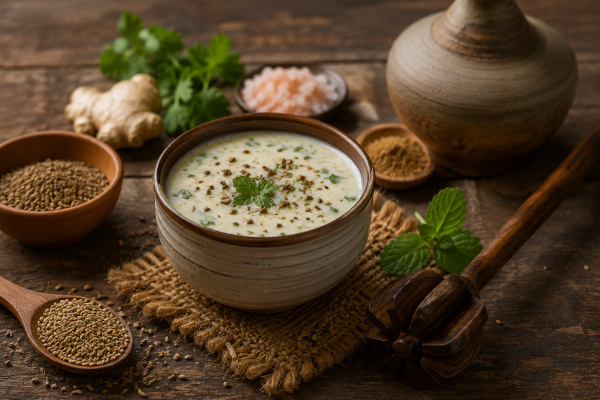
Carom seed, commonly known as Ajwain, is one of the most trusted spices in the Indian kitchen and one of the most respected digestive herbs in Ayurveda. In Sanskrit, it is known as Yavani, Dipya, Yamanika and Yavanika. Its botanical name is Trachyspermum ammi, and its tiny grey-brown seeds carry a sharp aroma, warm energy and a deeply familiar taste that immediately reminds one of traditional Indian home remedies.
In Ayurveda, carom seed is valued as a powerful Deepana-Pachana dravya, meaning it helps kindle digestive fire and supports the proper digestion of food. It is especially loved for its role in reducing gas, heaviness, abdominal discomfort and sluggish appetite. This is why ajwain finds a place in everyday foods such as parathas, pakoras, digestive drinks, spice blends, post-meal powders and medicinal buttermilk preparations.
Ayurvedic Identity of Carom Seed
Common name: Carom seed, Ajwain
Sanskrit name: Yavani
Botanical name: Trachyspermum ammi
Family: Apiaceae / Umbelliferae
Hindi: Ajwain
Malayalam: Omam
Tamil: Omam
Telugu: Vamu
Gujarati: Ajma / Ajmo
Ajwain has a pungent, thyme-like aroma because of its volatile oils. The most famous active aromatic compound associated with it is thymol, which gives carom seed its sharp fragrance and strong digestive character. In the Indian kitchen, this intense aroma is its signature. In Ayurveda, the same intensity is seen as a sign of its ability to awaken digestion, clear heaviness and move trapped Vata.
Ayurvedic Properties
Carom seed is described as a warm, sharp and light digestive herb.
Rasa — Taste: Katu, Tikta — pungent and bitter
Guna — Qualities: Laghu, Ruksha, Tikshna — light, dry and sharp
Virya — Potency: Ushna — heating
Vipaka — Post-digestive effect: Katu — pungent
Karma — Main actions: Deepana, Pachana, Anulomana, Shulahara, Ruchya, Krimighna
In simple terms, ajwain supports appetite, helps digestion, promotes the downward movement of Vata, reduces colicky discomfort, improves taste and helps clear digestive sluggishness. Because of its heating and sharp quality, it is especially useful when food feels heavy, the stomach feels bloated, appetite is low, or Kapha and Vata create dullness in the digestive tract.
Ajwain and Agni: The Digestive Fire Connection
Ayurveda gives great importance to Agni, the digestive fire. When Agni is balanced, food is digested properly, energy remains steady, the tongue feels clean, appetite comes naturally and the body feels light. When Agni becomes weak, food may remain heavy in the stomach, gas may build up, appetite may reduce and the body may feel dull.
Ajwain is one of the classic kitchen herbs used to support Agni. Its sharp, warm and aromatic nature helps wake up digestion. A pinch of roasted ajwain after a heavy meal, ajwain water, or ajwain added to buttermilk are traditional ways in which Indian households have used this seed for generations.
Benefits of Carom Seeds in Ayurveda
Carom seed is most famous for digestive wellness. It is traditionally used to ease bloating, belching, flatulence and abdominal heaviness. Its Vata-moving action helps reduce the feeling of trapped wind, while its Deepana quality helps improve appetite. This makes it especially valuable after oily foods, fried dishes, lentil-heavy meals and cold, heavy preparations.
Ajwain is also respected for its Ruchya action, meaning it helps restore taste and interest in food. During periods of low appetite, a small amount of ajwain with rock salt and warm water is a common traditional approach. Its Pachana action supports the digestion of Ama, the sticky metabolic residue described in Ayurveda as a result of weak digestion.
Carom seed is also used in many homes during seasonal cough, cold and congestion, especially when Kapha feels heavy. Its warmth, aroma and sharpness make it a useful spice in winter foods, herbal steam traditions and warm digestive drinks. In food, it brings both flavour and function.
Carom Seed as Food Medicine
Ajwain is a perfect example of Ayurveda’s food-as-medicine wisdom. It is a seed that can sit quietly in the kitchen but become useful in many forms. It can be roasted and powdered, added to dough, boiled in water, mixed with buttermilk, combined with cumin and rock salt, or used in small quantities in spice blends.
The key is moderation. Ajwain is potent. A small pinch can change digestion, flavour and aroma. Its strength lies in its concentrated nature. This is why traditional recipes use it carefully, often with balancing ingredients such as buttermilk, cumin, rock salt, ginger or honey.
Classical Recipe: Yavanyadi Takra — Carom Buttermilk
The Yavanyadi Takra, also called Carom Buttermilk, is having a classical reference in Charaka Chikitsasthana 13/103. This is an important traditional preparation because it combines the digestive power of ajwain with the light, churning-based nourishment of takra, or buttermilk.
In the classical idea, Takra is valued as a digestive drink, especially when prepared thin, light and properly churned. When carom seed is added to it, the preparation becomes more warming, aromatic and Kapha-Vata balancing. The result is a practical Ayurvedic digestive drink that can be used after meals in suitable individuals.
Yavanyadi Takra: Home-Style Preparation
Ingredients
1 cup thin buttermilk
¼ teaspoon roasted ajwain powder
A pinch of roasted cumin powder
A pinch of dry ginger powder
A pinch of black pepper or long pepper powder
A pinch of rock salt
½ teaspoon honey, added only when the drink is lukewarm
Method
Take fresh, thin buttermilk and churn it well. Lightly roast ajwain and cumin, then powder them. Add the ajwain powder, cumin powder, dry ginger, black pepper or long pepper and rock salt to the buttermilk. Mix well until the spices blend into the drink. Honey may be added when the preparation is lukewarm. Serve in a small quantity after lunch or after a heavy meal.
This preparation is especially useful as a digestive support when there is heaviness, gas, sluggish appetite or Kapha-type dullness after food. The buttermilk provides a light base, ajwain wakes up Agni, cumin supports digestion, dry ginger adds warmth, pepper sharpens the formula and rock salt improves taste and digestive movement.
Why This Recipe Works in Ayurvedic Logic
Yavanyadi Takra is a beautiful example of Ayurvedic formulation. It uses a light liquid medium and adds spices that are warming, aromatic and digestive. Takra carries the spices into the gut, while ajwain and the supporting ingredients work on Agni and Vata movement.
Ajwain and dry ginger bring heat. Cumin gives digestive balance. Rock salt supports taste and movement. Pepper or long pepper gives sharpness. Honey, when used properly in a lukewarm preparation, adds scraping and Kapha-balancing value. Together, this makes the drink suitable for situations where digestion feels slow, heavy and clouded.
Everyday Ways to Use Carom Seed
A simple ajwain water can be made by boiling ½ teaspoon ajwain in two cups of water until the flavour is released. This can be sipped warm after meals. Roasted ajwain with a little rock salt can also be taken in a small pinch after heavy food. Ajwain may be added to roti dough, paratha dough, lentil dishes, buttermilk, rasam-style drinks and herbal digestive mixtures.
In many Indian homes, ajwain is added to foods that are heavy to digest. This is why it is used in dishes made with besan, lentils, tubers and deep-fried snacks. It makes the food tastier and easier on the stomach.
Best Time to Use
Carom seed works best after meals, especially after lunch or dinner when food feels heavy. Ajwain water is usually taken warm. Yavanyadi Takra is best used after lunch, as buttermilk is traditionally more suitable during the day. A small quantity is enough.
Who Should Use It Carefully
Ajwain is heating and sharp, so people with strong acidity, burning sensation, active ulcers, bleeding tendencies or high Pitta symptoms should use it carefully. Pregnant women should take it only with proper guidance. People on regular medication, those with chronic digestive disease, and those using ajwain as a medicinal routine should seek advice from a qualified Ayurveda physician.
Conclusion
Carom seed is small, but its place in Ayurveda is large. As Yavani, it represents the wisdom of using kitchen spices as daily health allies. It strengthens Agni, supports digestion, reduces gas, improves appetite and brings warmth to the stomach. Its presence in the classical Yavanyadi Takra recipe shows how carefully Ayurveda combines food, spice and medicine into one practical preparation.
From a pinch in paratha to a cup of spiced buttermilk, ajwain continues to serve Indian households with quiet power. It is one of the finest examples of how Ayurveda turns everyday food into intelligent wellness.
You may also like
-
Ayurveda and Sleep: Understanding Nidra as a Pillar of Health
-
Government Says Social Security Coverage Now Reaches More Than 100 Crore Indians
-
Large 24-Week Trial Finds Standardised Ashwagandha Root Extract Well Tolerated Without Liver or Kidney Injury
-
Ayurveda and Walking: The Simplest Daily Health Practice
-
Indian Pharmaceutical Market Grows 12.96% in August as Chronic Therapies Drive Expansion
