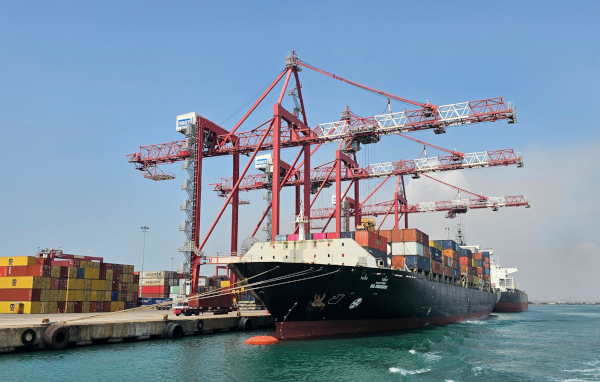
V.O. Chidambaranar Port Authority has emerged as one of India’s strongest examples of sustainable maritime transformation, combining clean energy, green hydrogen, digital innovation, education and academic collaboration into a single future-ready growth model. Union Minister of Ports, Shipping and Waterways Sarbananda Sonowal highlighted the port’s progress while dedicating a series of initiatives aimed at strengthening both operational sustainability and social infrastructure.
The biggest highlight of the event was the release of VOC Port’s first Sustainability Report, which recorded major progress in the port’s decarbonisation journey. Renewable energy now offsets nearly 94% of the port’s energy-consumption equivalent, while net carbon emissions have been reduced by around 45%. The report also noted that carbon intensity per tonne of cargo has nearly halved over the past four years, positioning VOC Port as a leading institution in India’s green maritime transition.
The achievement is significant because ports are among the most energy-intensive nodes in the logistics chain. Cargo handling, lighting, warehousing, marine services, equipment movement and administrative operations require steady energy use. By shifting towards renewable energy and cleaner operations, VOC Port is showing how major infrastructure assets can reduce environmental impact while continuing to support trade, logistics and industrial growth.
Sarbananda Sonowal said VOC Port’s progress reflects the larger national vision of building modern, sustainable and future-ready infrastructure. He described the 45% reduction in net carbon emissions as an important milestone in India’s journey towards responsible maritime development. The port’s model brings together sustainability, innovation and community welfare, creating a template that can guide other maritime assets across the country.
Another important development was the recognition of VOC Port as a Scope-2 Emission Free Port. This reflects the port’s successful transition towards clean energy for electricity-related operations and strengthens its environmental credentials. The recognition adds further weight to VOC Port’s image as one of India’s leading green ports and supports the country’s wider ambition of making its port sector more climate-conscious.
Green hydrogen was another major theme of the event. The Union Minister released the IIM Calcutta case study titled “The Hydrogen Pivot: Orchestrating the Green Transition at V.O. Chidambaranar Port Authority.” The study documents how VOC Port is moving from a conventional cargo-handling centre towards a green energy and sustainable maritime hub. It also highlights the port’s pioneering role in renewable energy, electrification and green hydrogen development, including India’s first green hydrogen pilot project commissioned at a major port.
This green hydrogen transition is important for the future of Indian ports. Hydrogen-based clean energy solutions can support low-carbon industrial activity, cleaner port operations and future bunkering possibilities. As shipping and logistics sectors across the world move towards cleaner fuels, early initiatives at ports such as VOC can help India prepare for the next generation of maritime energy systems.
The event also had a strong education and community-development component. Academic activities at Kendriya Vidyalaya, VOC Port, have commenced for the 2026–27 academic session. Established with the approval of Kendriya Vidyalaya Sangathan, the school will initially function from the Port School campus. It will provide CBSE education to children of port employees, Central government personnel and the local community.
The opening of Kendriya Vidyalaya at VOC Port adds a social dimension to the port’s development story. Large infrastructure centres require strong community ecosystems around them. Access to quality education helps families, supports employees and contributes to long-term local development. By linking port-led growth with education, VOC Port is investing in people along with infrastructure.
VOC Port Authority also signed a Memorandum of Understanding with Gati Shakti Vishwavidyalaya, Vadodara, to promote collaboration in research, innovation, logistics education, skill development and sustainable port operations. The partnership is expected to encourage industry-academia engagement and support the creation of a Centre of Excellence in Maritime Logistics and Port Management.
This collaboration can help address one of the most important needs of the Indian maritime sector: skilled human capital. As ports become more automated, digitised and sustainability-driven, the sector will need trained professionals in logistics planning, port management, green operations, cargo systems, supply-chain analytics and maritime technology. The MoU with Gati Shakti Vishwavidyalaya can become an important step in building this talent pipeline.
Digital transformation also formed a key part of the announcements. The launch of the PortGPT mobile application makes VOC Port the first major port in India to extend an enterprise-grade generative artificial intelligence platform through a dedicated mobile application. The platform is expected to support operational efficiency, knowledge management and data-driven decision-making.
PortGPT can help modernise how port officials access information, process internal knowledge and improve decision workflows. In a complex maritime environment, where cargo, equipment, shipping schedules, documentation and compliance functions must work together, AI-enabled tools can improve coordination and reduce delays. The mobile application gives VOC Port another layer of digital capability as it moves towards smarter port management.
Taken together, the initiatives show VOC Port’s transformation across four major pillars: green energy, climate responsibility, digital innovation and community development. The port is reducing emissions, expanding renewable-energy adoption, testing green hydrogen, building educational infrastructure, collaborating with academic institutions and adopting generative AI for operational improvement.
For India’s maritime sector, VOC Port’s progress offers a practical model. Green ports are not only about reducing emissions; they are about building efficient, resilient and technology-enabled maritime ecosystems. VOC Port’s journey shows how sustainability can be integrated with productivity, community welfare and long-term competitiveness.
As India expands its port capacity, maritime trade and blue-economy ambitions, the VOC Port model can guide future infrastructure planning. Its 45% reduction in net carbon emissions, 94% renewable-energy offset, Scope-2 Emission Free recognition, green hydrogen work, Kendriya Vidyalaya launch, academic collaboration and PortGPT platform together mark a major step towards cleaner, smarter and more inclusive maritime growth.
You may also like
-
India’s Economic Warfare Challenge: Strategic Autonomy, Energy Security and the Rise of a Global Power
-
India-US Trade Deal Stalemate: Why Washington’s Tariff Pressure Has Failed to Secure an Agreement
-
US Double Standards in Foreign Policy: 16 Recent Cases Involving India, Russia, China and Global Trade
-
India’s Arctic Energy Ambitions: Russian Oil, LNG and a New Sea Route to Indian Ports
-
India and Russia Explore Joint Icebreaker Construction as Maritime Industrial Cooperation Expands
