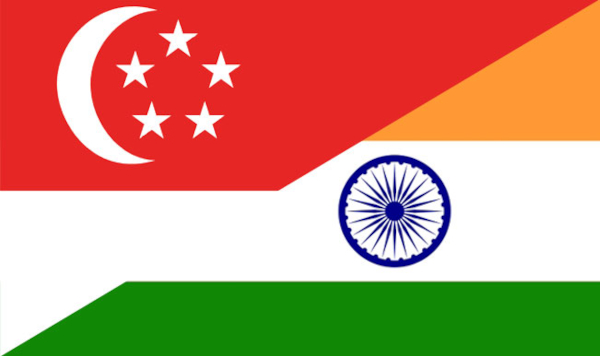
Singapore has acted firmly against online content that allegedly targeted the Indian community and sought to disturb the country’s multicultural balance. The government ordered major social media platforms to block access to a group of posts believed to have originated from overseas. The decision reflects Singapore’s seriousness in protecting racial harmony, public trust and national cohesion from foreign-influenced digital narratives.
The issue carries importance because Singapore is built on a carefully maintained multicultural model. Chinese, Malay, Indian and other communities live within a civic framework that gives high value to social stability. Any online campaign that attempts to create suspicion between communities can affect the emotional fabric of the country. The government’s response shows that digital content is now treated as a serious public-order matter when it targets ethnic groups or tries to shape social divisions.
The posts were reportedly aimed at the Indian community and appeared to promote narratives that could weaken confidence in Singapore’s model of coexistence. Authorities directed YouTube, Facebook and X to take reasonable steps to stop users in Singapore from accessing the content. This action shows how governments are increasingly using platform-level enforcement to prevent harmful content from spreading inside national digital spaces.
The Singapore case also highlights a wider global concern: foreign actors can use social media to influence domestic opinion, amplify ethnic tensions and create distrust among communities. Such campaigns do not require soldiers, weapons or physical entry. A set of posts, videos, edited claims or coordinated narratives can travel quickly across platforms and affect public mood. This makes digital vigilance an essential part of modern internal security.
Singapore’s response is rooted in the principle that racial harmony is a strategic national asset. A society with many communities must protect trust with the same seriousness with which it protects borders, economy and institutions. Once ethnic suspicion enters public life, it can affect politics, policing, business confidence, education and neighbourhood relations. Blocking harmful content at an early stage helps prevent a digital spark from becoming a social fire.
The action also sends a message to social media companies. Platforms are no longer treated as passive carriers of information when harmful narratives spread through them. Governments expect them to respond quickly when content threatens public order, racial peace or national security. The direction to YouTube, Facebook and X shows that technology firms have responsibilities in the countries where they operate.
For the Indian community in Singapore, the move has a protective meaning. It signals that the state will act when any community is singled out through hostile online material. This matters in a multicultural society because equal protection builds confidence among citizens and residents. When communities feel secure, social harmony becomes stronger and public trust deepens.
The episode also holds lessons for other countries, including India. Digital influence operations increasingly target identity, religion, ethnicity, language and migration-related emotions. Nations with diverse populations must develop early-warning systems, legal tools, platform cooperation and public awareness to detect such campaigns. The fight against online manipulation requires law, technology, media literacy and social responsibility working together.
Singapore’s action shows that the defence of national unity now extends into the digital sphere. A post on a platform can become a tool of division when it is designed to provoke distrust. A coordinated online narrative can become a form of psychological pressure when it targets a community. Governments that value stability must respond with speed, clarity and fairness.
The blocking of these posts is therefore more than a content-moderation decision. It is a statement of national principle. Singapore has made it clear that its multicultural society will be protected from foreign attempts to disturb racial harmony. In an age where digital platforms can be used to shape minds and divide communities, the defence of social cohesion has become a core part of national security.
You may also like
-
India and US Bring Advanced Counter-Drone Warfare Into Yudh Abhyas 2026
-
India and Brazil Expand Strategic Partnership Across Defence, Energy, Agriculture, Space and Trade
-
India Opens 18th BRICS Summit as Chinese President Xi Jinping Returns for First India Visit in Seven Years
-
SBER Showcases Digital Finance, Photonic Computing and Smart-City Technologies at INNOPROM India
-
Modi and UN Chief Guterres Call for UN Security Council Reform and Stronger Multipolar Institutions
