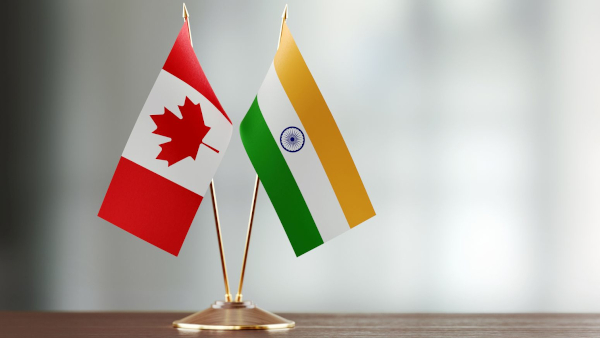
Union Commerce and Industry Minister Piyush Goyal’s three-day visit to Canada has given fresh momentum to India-Canada economic relations, with both sides placing trade, investment, energy, technology and the proposed Comprehensive Economic Partnership Agreement at the centre of renewed engagement. The visit, held from 25 to 27 May 2026, came at a significant moment in bilateral ties, as New Delhi and Ottawa work to rebuild commercial confidence and move toward a more structured economic partnership.
The visit carried strong business weight. Goyal led the largest-ever Indian business delegation to Canada, comprising industry leaders from more than 100 Indian companies. The delegation represented sectors such as metals and mining, energy, automotive and capital goods, aerospace, tourism, leather, textiles, agriculture, telecom and pharmaceuticals. This broad sectoral mix showed that India’s engagement with Canada is moving beyond narrow trade discussions and entering a larger industrial, investment and technology framework.
A central focus of the visit was the India-Canada Comprehensive Economic Partnership Agreement. CEPA is expected to provide a wider framework for trade, investment, services, market access and regulatory cooperation. Both countries have committed to fast-tracking negotiations and have set an ambitious goal of increasing bilateral trade to 50 billion dollars by 2030. For India, this agreement can open new opportunities for exporters, manufacturers, service providers and technology firms. For Canada, it offers access to one of the world’s fastest-growing major economies.
The current bilateral trade level shows the scale of the opportunity. In FY2025-26, trade between India and Canada stood at around 8 billion dollars, with India’s exports at 4.67 billion dollars and imports from Canada at 3.28 billion dollars. The 50-billion-dollar target therefore requires a major expansion across goods, services, investments and supply-chain cooperation. CEPA is the instrument through which both sides hope to convert ambition into measurable commercial growth.
The visit also underlined Canada’s importance as a long-term investment partner. Goyal interacted with Canadian pension funds, sovereign and institutional investors, and leading business groups. These discussions focused on India’s macroeconomic outlook, infrastructure growth, financial sector reforms, ease of doing business, Production Linked Incentive schemes, regulatory improvements, STEM talent and the expansion of Global Capability Centres. For large Canadian funds seeking stable long-term opportunities, India’s infrastructure, digital economy, clean energy and manufacturing sectors present a compelling investment story.
Energy cooperation remains one of the strongest natural bridges between the two countries. Canada has a vast energy and natural resource base, while India has rising energy demand and a major transition agenda. This creates space for cooperation in conventional energy, clean energy, critical minerals, rare earths, advanced materials and civil nuclear cooperation. India’s energy security and Canada’s resource strength can support a partnership that is both commercial and strategic.
Technology cooperation adds another future-facing dimension. India and Canada have scope to work together in artificial intelligence, innovation ecosystems, digital infrastructure, fintech, advanced manufacturing, research partnerships and standards. Goyal’s meetings with Canadian business leaders highlighted opportunities in banking, fintech, digital payments, insurance, healthcare financing, food processing and critical minerals processing. These are areas where investment, technology and market scale can combine effectively.
The visit also gave prominence to the Indian diaspora in Canada. With a large Indian-origin community, Canada has one of the strongest people-to-people bridges with India. The diaspora plays an important role in business networks, cultural exchange, education, professional mobility and community engagement. Goyal’s outreach to the Indian community in Canada highlighted this human connection as a key pillar of the economic corridor.
Another important aspect of the visit was the wider political reset between the two countries. India and Canada have resumed structured engagement through strategic and security channels, alongside the revival of economic dialogue. The visit showed that both governments are trying to place commerce, investment and practical cooperation at the centre of the relationship. This approach gives the partnership a constructive platform for moving forward.
The proposed CEPA can become the anchor of this reset. A well-designed agreement can reduce trade barriers, improve market access, support investment flows, strengthen services trade and create predictable rules for businesses. It can also help Indian and Canadian companies build supply-chain partnerships in sectors such as agriculture, food processing, clean energy, minerals, pharmaceuticals, technology, education and advanced manufacturing.
For India, the visit fits into a broader global economic strategy. New Delhi is building deeper trade and investment relationships with major economies while positioning itself as a manufacturing, services and innovation hub. Canada’s financial strength, resources, technology base and diaspora links make it a valuable partner in this strategy. For Canada, India offers scale, growth, talent and a long-term market that can support diversification beyond traditional trade partners.
Piyush Goyal’s Canada visit therefore marks more than a routine trade mission. It represents an attempt to turn renewed political engagement into commercial delivery. The combination of CEPA talks, a record Indian business delegation, investor outreach, diaspora engagement and sector-specific discussions gives the visit strategic depth. If both countries carry this momentum forward, India-Canada economic ties can move into a more confident phase built on trade, investment, technology and shared growth.
You may also like
-
INS Sahyadri and INS Kulish Reach Philippines for ADMM-Plus Maritime Cooperation
-
India–Mongolia Joint Military Exercise Nomadic Elephant 2026 Begins in Pithoragarh
-
India–Thailand Trade Nears $14 Billion in Seven Months as Economic Ties Broaden
-
Japanese Parliamentary Delegation Visits BEL and Reviews Advanced Defence Systems
-
India and Thailand Move Toward UPI–PromptPay Link and Rupee–Baht Settlement to Deepen Economic Integration
