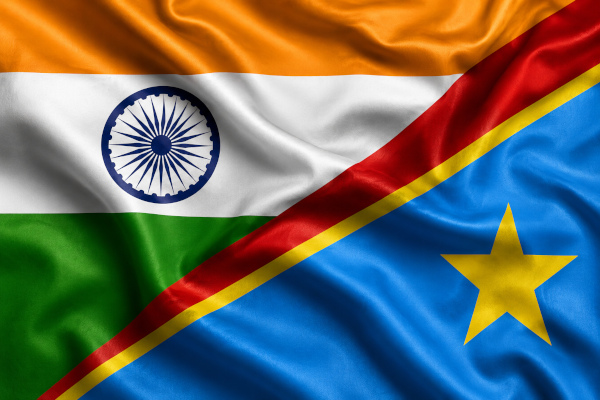
India’s latest emergency pharmaceutical assistance to Africa has become a significant health-diplomacy gesture at a time when the Democratic Republic of Congo is facing a serious Ebola outbreak caused by the Bundibugyo virus. The Africa Centres for Disease Control and Prevention welcomed the arrival of emergency medical supplies donated by the Government and people of India, saying the support would strengthen the ongoing response to the outbreak in DR Congo. The consignment was received in Uganda by Africa CDC’s Eastern Africa Regional Coordinating Centre.
The Indian assistance includes essential diagnostics, therapeutics, infection-prevention and control materials, and case-management support. These supplies are intended for deployment in affected communities in eastern DR Congo, where health workers are dealing with a difficult mix of disease transmission, movement challenges, local insecurity and the urgent need for protective equipment.
The outbreak has drawn international attention because it involves the Bundibugyo strain of Ebola, one of the known Ebola virus species. WHO has stated that there is currently no licensed vaccine or specific therapeutic approved for Bundibugyo virus disease, making early detection, isolation, supportive care, contact tracing, infection-prevention measures and community engagement central to containment.
The scale of the challenge is serious. WHO reported that, as of 21 May 2026, DR Congo had recorded 746 suspected cases and 176 deaths among suspected cases. Across DR Congo and Uganda, 85 confirmed cases had been reported, including two in Uganda, with ten deaths among confirmed cases. Transmission in DR Congo was concentrated in Ituri, North Kivu and South Kivu provinces, with contact follow-up and referral systems under pressure.
The outbreak was declared by DR Congo’s health authorities on 15 May 2026 after laboratory confirmation of Bundibugyo virus disease. Uganda also confirmed imported cases linked to movement from DR Congo. On 17 May 2026, the WHO Director-General determined that the outbreak in DR Congo and Uganda constituted a Public Health Emergency of International Concern. India later issued a travel advisory asking citizens to avoid non-essential travel to DR Congo, Uganda and South Sudan until further notice.
India’s support comes at a moment when logistics can directly shape the outcome of a public-health emergency. Ebola containment depends heavily on field-level readiness: diagnostic kits must reach outbreak zones, health workers need protective material, isolation centres require steady supplies, and case-management teams need tools to treat patients safely. A single weak link in this chain can expose health workers, families and border communities to greater risk.
This is where India’s pharmaceutical strength becomes strategically important. India has built a reputation as a reliable supplier of medicines, vaccines, diagnostics and public-health goods to many parts of the Global South. In the DR Congo Ebola response, the assistance is not merely a shipment of medical material; it is a practical expression of India’s wider approach to health security, where humanitarian outreach, African partnership and pharmaceutical capacity come together.
The gesture also strengthens India-Africa cooperation at a time when health emergencies are increasingly linked with diplomacy, logistics and regional stability. Outbreaks in conflict-affected and highly mobile regions can rapidly become cross-border challenges. By supporting Africa CDC’s regional response architecture, India is contributing to a continent-led mechanism rather than simply sending aid from a distance.
The Ebola crisis in eastern DR Congo also shows why global health security must be built before emergencies peak. Surveillance systems, laboratory networks, trained health workers, safe burial teams, community trust and cross-border coordination all matter as much as medicines. WHO has highlighted the need for strengthened surveillance, laboratory confirmation, infection-prevention assessments, safe treatment centres and community engagement as part of the response.
India’s aid therefore carries both immediate and symbolic value. Immediately, it supports frontline containment in affected communities. Symbolically, it presents India as a partner that responds to health emergencies with speed, supplies and solidarity. In a world where disease outbreaks can cross borders quickly, such cooperation becomes an important pillar of international responsibility.
Reference: News on Air
You may also like
-
INS Sahyadri and INS Kulish Reach Philippines for ADMM-Plus Maritime Cooperation
-
FUJIFILM India Dedicates First Serial-Numbered Made-in-India Endoscopy System Through AIIMS New Delhi
-
Ritucharya: How Ayurveda Adapts Lifestyle to the Six Seasons
-
India–Mongolia Joint Military Exercise Nomadic Elephant 2026 Begins in Pithoragarh
-
India Backs Ceramat to Commercialise 3D-Printed Patient-Specific Bone Grafts
