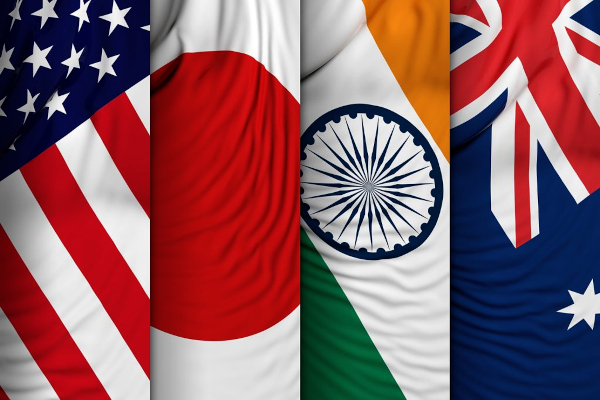
India and Japan have once again placed their Special Strategic and Global Partnership at the centre of Indo-Pacific diplomacy, with External Affairs Minister Dr. S. Jaishankar saying that the relationship carries “larger implications, importance and impact” beyond the bilateral sphere. His remarks came during talks with Japanese Foreign Minister Toshimitsu Motegi in New Delhi, a day before India hosts the Quad Foreign Ministers’ Meeting with Australia, Japan and the United States.
The timing gives the meeting added diplomatic weight. India is hosting the Quad Foreign Ministers’ Meeting on 26 May 2026, with Jaishankar chairing discussions involving Australia’s Penny Wong, Japan’s Toshimitsu Motegi and US Secretary of State Marco Rubio. The agenda is expected to focus on advancing a free and open Indo-Pacific, reviewing Quad cooperation and discussing regional and global developments.
Jaishankar’s emphasis on the India-Japan partnership reflects the way the relationship has evolved over the past decade. In September 2014, Prime Minister Narendra Modi and then Japanese Prime Minister Shinzo Abe elevated bilateral ties to a Special Strategic and Global Partnership, signalling that India and Japan saw each other not merely as economic partners, but as long-term strategic collaborators in Asia and the wider world.
This partnership now rests on several pillars: maritime security, trade, technology, infrastructure, defence cooperation, clean energy, economic security and regional stability. Both countries are major energy-importing economies with deep dependence on secure sea lanes. This makes developments in West Asia, the Middle East and key maritime chokepoints such as the Strait of Hormuz highly relevant to both New Delhi and Tokyo. Jaishankar specifically linked the current global situation to the shared interests of India and Japan as large trading nations with major maritime stakes.
The strategic logic is clear. Japan sits at the eastern edge of the Indo-Pacific’s industrial and maritime architecture, while India anchors the Indian Ocean. Together, they connect the Pacific and Indian Ocean theatres through diplomacy, trade, technology and security cooperation. A stable sea-based order matters for Japanese energy supplies, Indian trade flows, regional supply chains and the broader economic health of Asia.
The Quad context makes the India-Japan conversation even more important. The Quad is not a formal military alliance, but it has become one of the most visible platforms for like-minded democracies to coordinate on maritime domain awareness, resilient supply chains, critical technologies, disaster response, infrastructure and regional capacity building. For India and Japan, the Quad gives their bilateral partnership a wider operating platform.
Economic security has also moved to the centre of the conversation. In today’s world, supply chains, semiconductors, critical minerals, energy flows, ports, digital networks and trusted technology ecosystems are all part of national security. Jaishankar’s reference to economic security shows that India and Japan are looking beyond traditional diplomacy and defence to the deeper foundations of national resilience.
The broader India-Japan roadmap already points in this direction. In August 2025, the two countries released a Joint Vision for the Next Decade, identifying eight directions to steer the partnership across the economy, security, technology, people-to-people ties and regional cooperation. The vision described India and Japan as two countries committed to a free, open, peaceful, prosperous and coercion-free Indo-Pacific based on the rule of law.
Investment is another major pillar. During Prime Minister Modi’s 2025 visit to Japan, both sides set a new target of JPY 10 trillion in Japanese private investment into India over the next decade. They also announced an action plan to promote two-way exchange of 500,000 people, including 50,000 skilled and semi-skilled Indian personnel to Japan in five years.
This gives the partnership a practical economic base. Japan brings advanced manufacturing, precision engineering, high-speed rail experience, infrastructure financing, robotics, electronics and industrial discipline. India brings scale, young talent, digital capacity, market depth, cost competitiveness and a growing manufacturing ecosystem. The combination is powerful because it connects Japanese technology with Indian demographic and economic momentum.
Defence and maritime cooperation have also become increasingly important. India and Japan share concern for freedom of navigation, lawful commerce, regional stability and peaceful resolution of disputes. Their earlier strategic documents already highlighted maritime security, cyber domains, defence exchanges and cooperation with like-minded partners as key areas of convergence.
The New Delhi meeting therefore comes at a moment when India-Japan ties are no longer confined to ceremonial friendship or limited economic cooperation. The relationship now touches the hardest questions of the age: how to secure sea lanes, build resilient supply chains, manage energy risks, protect digital infrastructure, strengthen technology partnerships and preserve balance in the Indo-Pacific.
For India, Japan is a trusted partner in infrastructure, industrial modernisation, connectivity and strategic coordination. For Japan, India is a democratic Asian power with geographic weight, market scale and a central role in the Indian Ocean. Their partnership gives both countries more strategic depth at a time when global politics is becoming more competitive and supply chains are being restructured.
Jaishankar’s remarks capture this larger reality. The India-Japan relationship is bilateral in form, but regional and global in consequence. As the Quad ministers meet in New Delhi, the India-Japan partnership will remain one of the key foundations beneath the wider Indo-Pacific conversation — a relationship built on trust, maritime logic, economic complementarity and a shared interest in a stable Asian order.
You may also like
-
India and Uruguay Agree Trade and Connectivity Roadmap as Montevideo Ratifies International Solar Alliance
-
Ramaphosa Calls for New Era in India–South Africa Economic Ties, Targets Green Energy, Minerals and Infrastructure
-
India and Brazil Push for Deeper Strategic Partnership as Trade Target Rises to $30 Billion
-
Modi–Xi Talks at BRICS Put Border Peace, Trade Imbalance and Market Access at Centre of India–China Ties
-
PM Modi Meets PM Abiy Ahmed at BRICS Summit as India and Ethiopia Deepen Strategic Partnership
