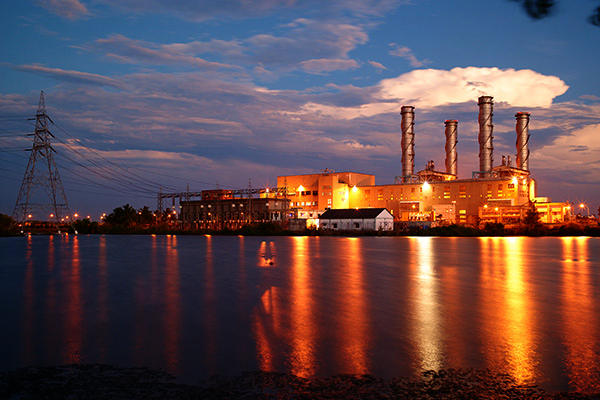
NTPC Group has crossed the 90 GW installed electricity generation capacity milestone, marking a major moment for India’s power sector at a time when the country’s electricity demand is rising rapidly across homes, industries, data centres, transport systems and new manufacturing clusters. The milestone strengthens NTPC’s position as India’s largest integrated power utility and reflects the scale at which the country is expanding its generation base to support long-term economic growth.
The latest addition came after the successful trial operation of Unit 2 of Patratu Vidyut Utpadan Nigam Ltd, an NTPC group arm. With this, the group now operates more than 90 GW of installed capacity across India, while also maintaining a large pipeline of projects under construction. NTPC has stated that it has around 32 GW of capacity under construction, showing that the company’s expansion is not a one-time jump but part of a long-term buildout of national power infrastructure.
The achievement is important because India’s power demand is no longer driven only by household electrification or traditional industrial consumption. The next phase of demand will come from electric mobility, green hydrogen, semiconductor manufacturing, metro rail expansion, cold chains, ports, airports, defence production, digital infrastructure and the rapid growth of urban services. A larger and more reliable generation base will therefore be central to India’s ambition of becoming a high-income, manufacturing-led economy.
NTPC’s role in this transition is significant because the company is not only adding capacity but also reshaping its energy portfolio. The group has set a target of reaching 149 GW of total installed capacity by 2032, including 60 GW from renewable energy sources. This shows the dual nature of India’s energy transition: the country must continue to ensure round-the-clock power reliability while also increasing the share of cleaner energy in the national grid.
Renewable energy is becoming a larger part of NTPC’s growth strategy. The company added 5,488 MW of renewable capacity in FY26 across solar, wind and pumped storage projects. This is especially important because renewable expansion alone cannot solve grid reliability unless it is supported by storage, balancing capacity, transmission strength and flexible generation. NTPC’s focus on pumped storage therefore fits into India’s wider need for a stable clean-energy architecture.
The crossing of the 90 GW mark also reflects the changing character of India’s public sector energy companies. Earlier, large power utilities were mainly seen as builders and operators of coal-based capacity. Today, they are being pushed to become integrated energy institutions with interests in solar, wind, hydro, storage, green hydrogen, nuclear partnerships and emerging low-carbon technologies. NTPC’s expansion captures that wider shift in India’s energy policy.
At the same time, the milestone underlines a practical truth about India’s development path. The country cannot afford energy shortages while trying to expand factories, logistics networks, digital services and urban infrastructure. Reliable power is not just an economic input; it is the invisible foundation beneath every new industrial corridor, railway line, hospital, school, data centre and defence production facility. NTPC’s larger capacity base therefore has a direct link with India’s growth story.
The 90 GW achievement also comes at a time when energy security has become a strategic issue. Global fuel markets remain vulnerable to geopolitical tensions, supply disruptions and price volatility. For a large import-dependent economy like India, building domestic generation capacity across multiple sources is essential. A diversified power portfolio gives the country greater resilience and reduces the risk of overdependence on any single fuel, technology or supply chain.
NTPC’s next challenge will be to balance scale with sustainability. As India’s largest power producer, the company will remain central to baseload power supply, but its future reputation will increasingly depend on how successfully it expands renewables, improves efficiency, deploys storage, reduces emissions intensity and supports India’s net-zero commitments. The 90 GW milestone is therefore not just a capacity number. It is a signal that India’s power transition is entering a larger, more complex and more strategic phase.
You may also like
-
India Advances Trade Diplomacy at G20 Ministerial in Milwaukee
-
Kokasa Launches to Build Indigenous Mission-Critical Systems for Su-30MKI, MiG-29 and T-72
-
Tata Projects and MDS Aero Partner to Build Advanced Aero-Engine Test Infrastructure in India
-
Flying Wedge Defence Partners With Portugal’s Keydef to Manufacture Kaal Bhairava and YAMA Drones in Europe
-
Armenia Conducts Live-Fire Exercise With Indo-French TRAJAN 155 mm Howitzers Manufactured in India
