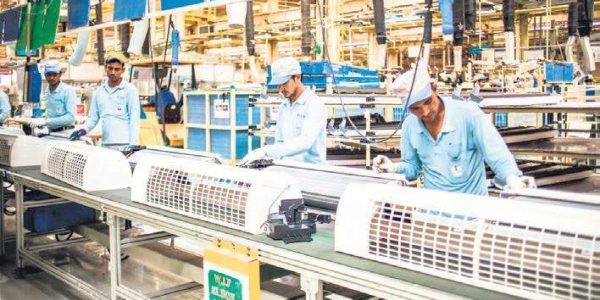
The Centre has fully operationalised India’s four labour codes after a wait of more than five years, completing one of the most significant reforms in the country’s labour regulation framework. The move brings into effect a consolidated system covering wages, industrial relations, social security, and occupational safety and working conditions, replacing a complex web of older labour laws with a more unified structure.
The four codes are the Code on Wages, 2019, the Industrial Relations Code, 2020, the Code on Social Security, 2020, and the Occupational Safety, Health and Working Conditions Code, 2020. The government had already made the four codes effective from November 21, 2025, rationalising 29 existing central labour laws into a simplified framework. The latest publication of rules now completes the operational framework needed for implementation.
The labour codes are aimed at balancing two major objectives: expanding worker welfare and simplifying compliance for businesses. For workers, the reforms promise wider access to minimum wages, timely payment of wages, social security coverage, appointment letters, health safeguards, and stronger protections for gig, platform, migrant and unorganised workers. For industry, the codes reduce procedural overlap by moving towards single registration, a pan-India single licence and simplified returns.
One of the biggest changes comes through the Code on Wages. Earlier, minimum wage protection applied mainly to scheduled industries and employments, leaving large sections of workers outside the formal protection net. Under the new framework, all workers are to receive a statutory right to minimum wage payment. This is expected to create a more uniform wage floor and reduce disparities across sectors and regions.
The new rules also pave the way for the fixing of statutory floor wages in India. According to reports, these floor wages will be periodically revised to account for changes in the cost of living. This is important because a floor wage gives the labour market a national benchmark below which wages should not fall, while states can set their own minimum wages above that level depending on local conditions.
The Code on Social Security is another major pillar of the reform. The government says social security coverage will now extend to all workers, including gig and platform workers. This is a major policy shift because India’s labour market has seen rapid growth in app-based work, delivery services, ride-hailing, digital freelancing and other non-traditional employment models that were often outside older labour protections.
The Occupational Safety, Health and Working Conditions Code strengthens workplace safety provisions and brings several categories of workers under a common safety framework. The government has highlighted provisions such as free annual health check-ups for workers above 40 years of age, mandatory safety standards, protection in hazardous industries and improved facilities such as drinking water, rest areas and canteens in covered establishments.
The Industrial Relations Code seeks to modernise dispute resolution and workplace governance. The notification of final rules for the Industrial Relations Code also enables the setting up of a reskilling fund for workers, along with appointment of conciliation officers, certifying officers and appellate authorities. These mechanisms are expected to support faster dispute handling and smoother industrial relations.
For businesses, the reforms are designed to reduce the compliance burden created by multiple registrations, licences and returns under different labour laws. The government has said the new framework moves toward single registration, a pan-India single licence and a single return system. This could especially help companies operating in multiple states, although implementation will also depend on how closely state-level rules align with the central framework.
Working-hour rules have also attracted attention. Reuters reported that businesses can employ workers for 8 to 12 hours a day, but the total must not exceed 48 hours a week. Overtime will be paid at double the normal wage rate. This gives employers more flexibility in shift design while retaining the weekly cap and higher compensation for extra work.
Women workers are expected to gain greater flexibility under the new system. The codes support equal pay for equal work and allow women to work in all establishments, including night shifts and hazardous sectors, subject to safety measures. The government has also highlighted that women can work in underground mining, heavy machinery and hazardous jobs where safety requirements are met, expanding formal employment opportunities for women.
The reforms also bring fixed-term employees closer to permanent workers in terms of benefits. According to the government, fixed-term employees will be eligible for benefits equal to permanent workers, including leave, medical support and social security. Gratuity eligibility for fixed-term employees has been reduced to one year instead of the earlier five-year requirement, which could make short-duration formal employment more secure.
In a related enforcement push, the Finance Ministry has linked labour-code compliance with government procurement eligibility. Firms bidding for government contracts can face stricter action, including debarment, if they fail to pay wages on time or default on statutory social security contributions. This gives the reforms a direct compliance mechanism in public procurement, especially for contractual and outsourced workers engaged by central ministries, departments, autonomous bodies and CPSEs.
The broader significance of the labour codes lies in India’s attempt to modernise an old and fragmented labour-law system. Many of the earlier laws were framed in the pre-Independence and early post-Independence period, when India’s economy was very different. Today’s labour market includes manufacturing units, services firms, logistics platforms, gig workers, migrant workers, digital media professionals, contract labour, women in night shifts and technology-driven workplaces. A consolidated labour framework is meant to respond to this changed reality.
However, the real test will lie in implementation. India’s labour regulation is shared between the Centre and the states, and companies operating across multiple states will closely watch how state rules align with the central framework. Worker unions, employers, gig platforms, contractors and compliance teams will also need clarity on wage calculation, social security contributions, working hours, safety requirements and dispute-resolution procedures.
The full operationalisation of the four labour codes is therefore more than a technical notification. It marks a structural shift in India’s labour market architecture. If implemented effectively, the new framework could improve worker protection, reduce compliance complexity, formalise employment, expand social security and create a more predictable environment for industry. For a country seeking to become a global manufacturing and services hub, the success of these reforms will depend on whether they can protect workers while making it easier for businesses to grow and hire.
Sources:
https://zeenews.india.com/economy/centre-fully-operationalises-four-labour-codes-after-over-5-years-3045886.html
https://m.economictimes.com/news/economy/policy/labour-reforms-govt-fully-operationalises-four-new-codes-by-publishing-rules/articleshow/130971906.cms
https://www.pib.gov.in/PressReleseDetailm.aspx?PRID=2192463
https://m.economictimes.com/news/economy/policy/labour-ministry-notifies-final-rules-for-the-wage-code-industrial-relations-code/articleshow/130964972.cms
https://m.economictimes.com/news/economy/policy/finance-ministry-links-government-procurement-with-labour-law-compliance/articleshow/130973199.cms
https://www.reuters.com/business/world-at-work/indias-new-labour-codes-what-they-mean-workers-businesses-2025-11-21/
You may also like
-
India Introduces New CBG Pricing Framework to Strengthen Bioenergy Producers While Shielding Gas Consumers
-
Tata Power Renewables Commissions 72.5 MW Solar Project in Rajasthan to Support Tata Steel’s Decarbonisation
-
NTPC Targets 244 GW by 2037 With ₹16.86-Lakh-Crore Expansion Across India’s Energy Sector
-
UPI Completes a Decade as Transaction Value Surges More Than 4,000-Fold
-
AGNIT Semiconductors: Building India’s Gallium-Nitride Chip Capability for Radar, Communications and Power Electronics
