
A team led by researchers from the Aryabhatta Research Institute of Observational Sciences, working with collaborators from IIT Delhi and Spain’s Institute of Astrofísica de Canarias, has developed a new way to estimate the hidden physical properties of solar filaments by analysing two kinds of oscillations occurring in the same structure at once. The advance, highlighted by the Ministry of Science and Technology on April 17, 2026, could sharpen scientific understanding of the Sun’s magnetic architecture and improve space-weather modelling.
Solar filaments are vast ribbons of relatively cool, dense plasma suspended in the Sun’s hotter atmosphere by magnetic fields. Because direct measurements of their internal conditions remain extremely difficult, solar physicists often rely on “prominence seismology,” a method that infers physical properties from the way these structures oscillate. In this study, the researchers focused on the rare cases where a filament shows both longitudinal and transverse oscillations simultaneously, giving them a stronger handle on the underlying magnetic conditions.
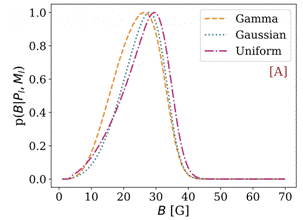
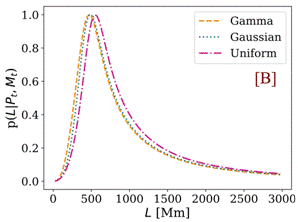
The team used Bayesian inference to combine observations with theory and estimate three key parameters: magnetic field strength, the length of the magnetic flux tube holding the filament, and the amount of twist in that tube. According to the study, the method first uses longitudinal oscillations and a pendulum model to infer the likely magnetic field, then folds that result into the transverse-oscillation analysis to estimate the supporting flux tube’s length and structure more accurately.
Their results suggest that the magnetic flux tubes supporting quiescent prominences can be extraordinarily large, roughly 100 to 1000 megametres in length, while the twist in the field lines generally stays below three turns. The study also found that the probable magnetic-field range can be inferred robustly even when plasma-density information is limited, which is important because density is one of the hardest quantities to constrain directly in such solar structures.
The broader significance lies in forecasting solar eruptions and space weather. Solar filaments are closely tied to eruptions that can disturb satellites, communications systems and power infrastructure on Earth, so better estimates of their internal magnetic geometry could feed into more reliable models of solar activity. The paper, titled Inferring physical parameters of solar filaments from simultaneous longitudinal and transverse oscillations, was posted on arXiv in January 2026.
Publication link: https://arxiv.org/abs/2601.01730
Reference:
https://www.pib.gov.in/PressReleasePage.aspx?PRID=2253011®=3&lang=1
https://arxiv.org/abs/2601.01730
https://arxiv.org/pdf/2601.01730
You may also like
-
IIT Guwahati Develops Affordable Technology to Remove Arsenic and Fluoride From Drinking Water
-
BITS Pilani Goa Develops Pharmaceutical Bioink for 3D-Printed Skin Scaffolds and Customised Medicines
-
New Smart Technology can Make Diagnosis of Alzheimer’s disease (AD) More Accessible
-
Study Identifies Uniqueness of South Asian Gut Microbiome, Critical for Lifestyle Disease Treatment
-
GENESIS EIR 3.0 Offers Up to ₹10 Lakh to Turn Young Indian Innovators Into DeepTech Entrepreneurs
