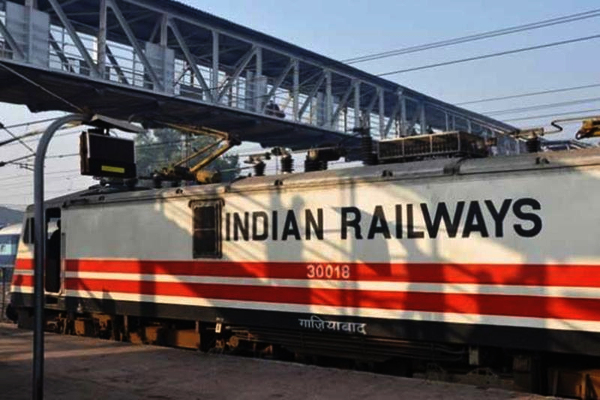
In a major sustainability milestone for Indian Railways, the Kankaria Coaching Depot in Ahmedabad has become the country’s first water-neutral railway coaching depot, sharply cutting its dependence on freshwater by treating and reusing wastewater generated during routine coach washing and maintenance. According to the Ministry of Railways, the depot is now saving nearly 1.60 lakh litres of water every day, which adds up to roughly 5.84 crore litres annually. The project turns a traditionally water-intensive maintenance operation into a model of circular resource use at a time when Indian cities and infrastructure systems are under rising pressure to conserve freshwater.
What makes the Kankaria project especially significant is the treatment method it uses. The depot’s system is built around phytoremediation, an eco-friendly process in which plants and associated biological activity help remove or reduce contaminants from water. At Kankaria, this natural treatment is combined with a multi-stage purification chain that includes wetland-based cleansing, followed by carbon filtration, sand filtration, and ultraviolet disinfection before the water is reused for operational purposes. That mix of natural and engineered treatment gives the depot both environmental and practical value, cutting discharge, lowering freshwater demand, and reducing operating costs.
The achievement also fits into a larger policy shift already visible across the railway network. Indian Railways’ Water Policy calls for effluents from stations and depots to be routed to treatment plants and for treated water to be recycled for non-potable uses. The policy also urges zonal railways to reduce freshwater demand through water audits, recycling plants, and rainwater harvesting. Earlier, Central Railway had said it was already using more than 1 crore litres of recycled water daily for coach and platform cleaning through 32 water treatment plants, indicating that wastewater reuse has been gaining institutional momentum across the system. Kankaria, however, stands out because it pushes that philosophy to a new benchmark by moving from water conservation to water neutrality at the depot level.
Beyond the headline number, the Kankaria model matters because railway depots are large, repetitive users of water, and even moderate efficiency gains can translate into enormous annual savings. By proving that wastewater from maintenance operations can be safely cleaned and reused in-house, the Ahmedabad facility offers a replicable template for other depots in water-stressed regions. In policy terms, it is a small infrastructure story with larger significance: Indian Railways is increasingly treating sustainability as an operational requirement rather than a side initiative, and Kankaria shows how green technology can be embedded directly into daily transport maintenance.
Reference:
https://www.pib.gov.in/PressReleasePage.aspx?PRID=2253064®=3&lang=1
https://nwr.indianrailways.gov.in/uploads/files/1501587102248-Water%20policy.pdf
https://cr.indianrailways.gov.in/view_detail.jsp?dcd=7577&did=1654423948815AFFDD55531AFD5BA8D066E9C9910702E&id=0%2C4%2C268&lang=0
https://frtr.gov/matrix/Phytoremediation/
You may also like
-
India Introduces New CBG Pricing Framework to Strengthen Bioenergy Producers While Shielding Gas Consumers
-
Tata Power Renewables Commissions 72.5 MW Solar Project in Rajasthan to Support Tata Steel’s Decarbonisation
-
NTPC Targets 244 GW by 2037 With ₹16.86-Lakh-Crore Expansion Across India’s Energy Sector
-
UPI Completes a Decade as Transaction Value Surges More Than 4,000-Fold
-
AGNIT Semiconductors: Building India’s Gallium-Nitride Chip Capability for Radar, Communications and Power Electronics
