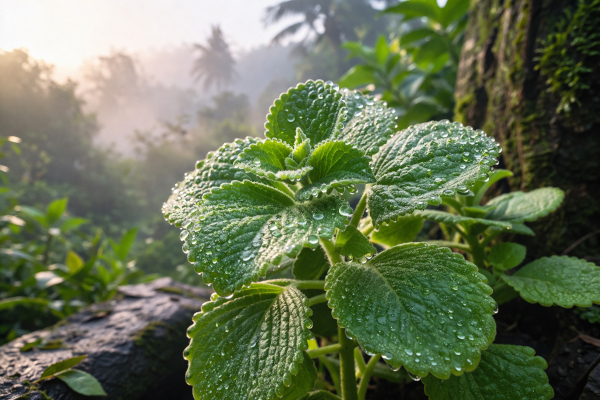
Indian borage, the herb many people in Kerala call panikoorka, is a fleshy, strongly aromatic member of the mint family, Lamiaceae. It is botanically known as Plectranthus amboinicus and is widely cultivated across the tropics. As a household plant, it is valued because it is both medicinal and culinary, with leaves that release a powerful oregano-like smell when crushed. That strong fragrance is one of the easiest first clues for identifying the plant correctly.
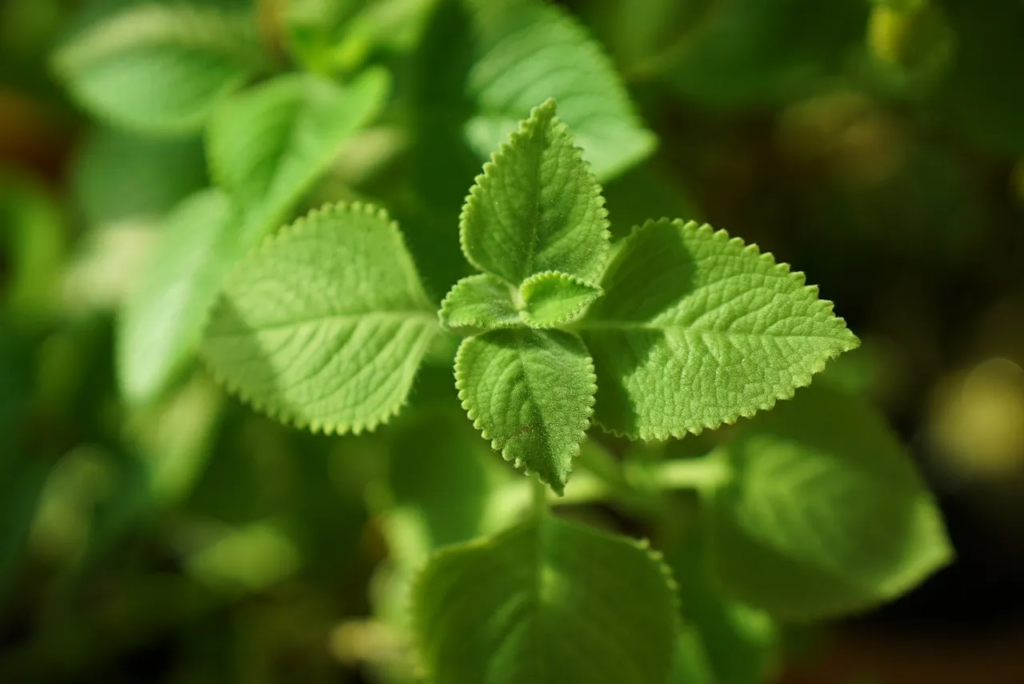
To identify Indian borage, look for a soft, succulent herb with thick, juicy leaves arranged opposite each other on the stem. The leaves are usually broad, ovate to nearly round, light green, slightly hairy, and edged with shallow scallops or crenations. The stems are also soft and somewhat fleshy when young, becoming firmer with age, and the plant may grow in a sub-erect, creeping, or spreading habit depending on conditions. When it flowers, it bears small pale purple to lavender flowers. In short, if the plant has thick velvety leaves, a pungent herbal smell, and a slightly sprawling mint-like growth habit, you are very likely looking at Indian borage.
In Ayurveda and folk practice, the leaf is the main medicinal part used. The Kerala State Medicinal Plants Board describes Indian borage as aromatic, digestive, carminative, stomachic, anthelmintic, and diuretic, and records its traditional use in anorexia, dyspepsia, flatulence, cough, chronic asthma, hiccough, bronchitis, indigestion, and fever-related conditions. Other ethnobotanical references note its traditional use for cough, cold, fever, headache, constipation, skin issues, and inflammation or swelling in different Asian communities. These are traditional uses rather than proof of clinical effectiveness in every case, so it is best viewed as a supportive household herb rather than a replacement for medical care in serious illness.
Its Ayurvedic appeal comes from the kind of work it has long been associated with: easing heaviness in digestion, reducing gas, and supporting the respiratory tract in damp-weather coughs and throat discomfort. Because the leaves are fragrant and rich in volatile compounds, Indian borage has also remained popular in kitchens, where it is used as a flavoring herb and sometimes brewed as a soothing herbal tea. That food-medicine overlap is one of the reasons it has survived so well in domestic tradition: it is easy to keep, easy to use, and familiar to generations of families.
Indian borage is also one of the easiest medicinal herbs to grow in a home garden. It grows well in warm climates, prefers well-drained soil, and does best with several hours of sunlight, though harsh full-day heat can scorch the leaves in some conditions. Good drainage matters a lot because the plant is vulnerable to root rot. It can be grown in pots or directly in the ground, and loamy or sandy soil works well as long as water does not stagnate around the roots.
For home cultivation, stem cuttings are the easiest and most reliable method. Gardening and extension sources describe it as very easy to propagate from cuttings, with fresh cuttings establishing quickly. Regular pruning helps the plant stay bushy and encourages more leaf growth, while also preventing the stems from becoming too long and snapping. Young leaves can be harvested as needed, and the plant responds well to repeated cut-and-come-again harvesting. In practical terms, this is a low-maintenance herb: give it light, drainage, warmth, and occasional trimming, and it usually rewards you with steady leafy growth.
The best way to keep Indian borage at home is in a medium pot near a sunny balcony, veranda, or kitchen garden edge where the soil dries slightly between waterings. Because it is shallow-rooted and fast-growing, it suits containers especially well. A single healthy plant can provide leaves regularly for household use, whether for culinary purposes or traditional herbal preparations. For anyone interested in building a small Ayurvedic home garden, Indian borage is one of the most practical plants to start with: easy to identify, easy to propagate, and deeply rooted in Indian domestic healing culture.
You may also like
-
Kadali — Ayurveda’s Nourishing Banana for Strength, Cooling and Digestive Balance
-
Parijata — Ayurveda’s Night-Blooming Tree of Fever, Inflammation and Healing
-
Palandu (Allium cepa): The Everyday Onion in Ayurveda as Food, Medicine and Strengthening Dravya
-
Jati — Jasminum grandiflorum: Ayurveda’s Fragrant Jasmine for Wound, Skin and Oral Care
-
A smart cancer drug activating primarily in cancer cells, could replace chemotherapy
