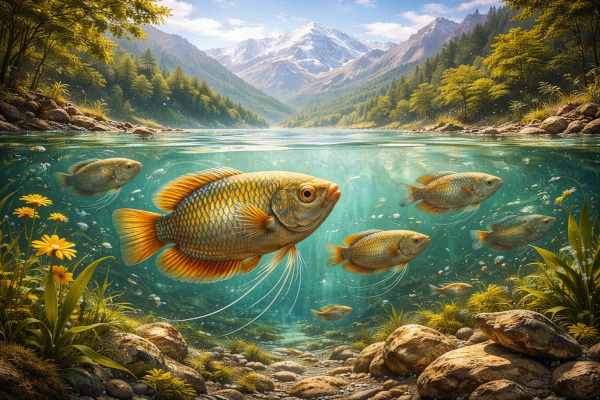
In a remarkable palaeontological discovery from the Siwalik foothills of north India, scientists have identified India’s first fossil record of a gourami fish from the Mohand area in Saharanpur district. The find comes from Upper Siwalik Pliocene deposits and is significant not only because it records gourami in India for the first time, but also because researchers say it is only the second known fossil occurrence of this group in the world.
The discovery is based on fossil otoliths, tiny calcium-carbonate ear structures that help fish with hearing and balance. According to the study, the Mohand assemblage includes otoliths from snakeheads, gobies, and gouramis, giving scientists a rare window into a freshwater ecosystem that existed in the Himalayan foreland during the Pliocene. Researchers say the combination of these fish points to a structured aquatic food web, with smaller fish serving as prey and snakeheads acting as predators.
What makes the find especially important is the setting. The Siwalik Group is already famous for its rich mammalian fossil record, but freshwater fish fossils from this region have remained extremely scarce. This new evidence suggests that parts of the Mohand area, now better known for terrestrial deposits, once supported a calm, stable freshwater body, likely a lake or slow-moving river, surrounded by dense vegetation. In effect, the fossil fish are helping scientists reconstruct a lost landscape in which northern India’s Himalayan foothills supported a far more complex aquatic habitat than previously documented.
The research was published in Palaeobiodiversity and Palaeoenvironments on 31 March 2026. The paper reports the first fossil osphronemid from northwestern India and argues that even a limited otolith sample can provide valuable clues about prehistoric biodiversity and the historical biogeography of freshwater fishes across South and Southeast Asia. The study also helps fill an important gap in the fossil history of the Siwalik deposits, which have long yielded terrestrial remains but far fewer traces of ancient aquatic life.
The larger scientific takeaway is that the Shivalik foothills were once home to a thriving freshwater ecosystem several million years ago. That makes this discovery more than an isolated fossil find. It is a new piece in the puzzle of how environments evolved along the Himalayan margin, how freshwater species were distributed in deep time, and how India’s prehistoric ecological history may still be hiding in sediments once thought to tell mainly a land-animal story.
Reference:
https://doi.org/10.1007/s12549-026-00698-1
https://indianexpress.com/article/india/india-first-gourami-fossil-up-siwalik-foothills-freshwater-ecosystem-10622269/
https://timesofindia.indiatimes.com/city/dehradun/freshwater-gourami-fish-fossils-found-for-1st-time-in-country-in-shivalik-foothills-near-doon-outskirts/articleshow/130046041.cms
https://economictimes.indiatimes.com/news/new-updates/rare-4-5-million-year-old-freshwater-fish-fossils-found-in-dehraduns-shivalik-foothills-a-region-previously-known-only-for-land-animals/articleshow/130059555.cms
https://www.newsbytesapp.com/news/science/scientists-uncover-indias-1st-gourami-fossil-in-shivalik-45-million-year-old/tldr
You may also like
-
IIT Guwahati Develops Affordable Technology to Remove Arsenic and Fluoride From Drinking Water
-
BITS Pilani Goa Develops Pharmaceutical Bioink for 3D-Printed Skin Scaffolds and Customised Medicines
-
New Smart Technology can Make Diagnosis of Alzheimer’s disease (AD) More Accessible
-
Study Identifies Uniqueness of South Asian Gut Microbiome, Critical for Lifestyle Disease Treatment
-
GENESIS EIR 3.0 Offers Up to ₹10 Lakh to Turn Young Indian Innovators Into DeepTech Entrepreneurs
