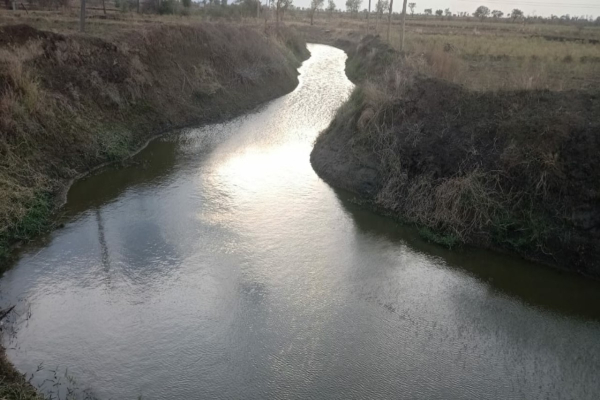
Children are significantly more vulnerable than adults to trace metal contamination in river systems, according to a new study based on water samples collected from the Betwa–Yamuna confluence in Bundelkhand, Uttar Pradesh. The research, carried out by scientists at the Birbal Sahni Institute of Palaeosciences (BSIP), Lucknow, highlights growing concern over heavy metal exposure in river waters used for domestic and agricultural purposes across the Ganga Plain.
The study moves beyond conventional water testing methods that rely on average contamination levels and instead examines how risk varies across populations and exposure conditions. Building on earlier findings that river sediments in the Ganga Plain can trap toxic metals and later release them back into the water column, the researchers focused on dissolved metal concentrations and the direct implications for human health.
To capture seasonal and spatial variation, surface water samples were collected periodically from selected locations around the Betwa–Yamuna confluence in Hamirpur district. The team then applied quantitative risk assessment models using internationally accepted frameworks to evaluate both non-carcinogenic and carcinogenic risks. A key part of the analysis involved Monte Carlo simulation, under which 10,000 virtual exposure scenarios were run to account for differences in drinking water intake, body weight and seasonal pollution levels.
The results, published in Nature Scientific Reports, indicate that children face markedly higher cumulative non-carcinogenic risk than adults. The study found that the hazard index exceeded safety thresholds in roughly 67 percent of simulated scenarios for children, while arsenic exposure emerged as a significant carcinogenic risk under realistic exposure conditions.
Researchers said the contamination pattern points to a mix of natural and human-driven sources, including agricultural runoff, untreated effluents, industrial discharges, thermal power generation and urban sewage. At the confluence, the interaction of two chemically different river systems appears to intensify metal mobilization and exposure risks, making the site particularly vulnerable to chronic pollution pressure.
The study argues that this uncertainty-aware approach offers a stronger framework for river health assessment in developing regions and could support more targeted mitigation and evidence-based water safety policies. It also underscores the need for priority action to control heavy metal contamination at the Betwa–Yamuna confluence before long-term exposure begins to pose a deeper threat to drinking water safety and public health.
Reference: PIB
You may also like
-
Karanja — Ayurveda’s Bitter Oil Tree for Skin, Wounds and Kapha-Vata Balance
-
Bengaluru’s SugarStrings.ai Develops Cheek-Swab DNA Test Screening Thousands of Genetic Disorders
-
Green Pyramid Biotech Turns Sophorolipid Research Into a Natural Food-Safety Platform
-
Ashoka — Saraca asoca: Ayurveda’s Celebrated Tree for Rakta and Women’s Health
-
New Smart Technology can Make Diagnosis of Alzheimer’s disease (AD) More Accessible
