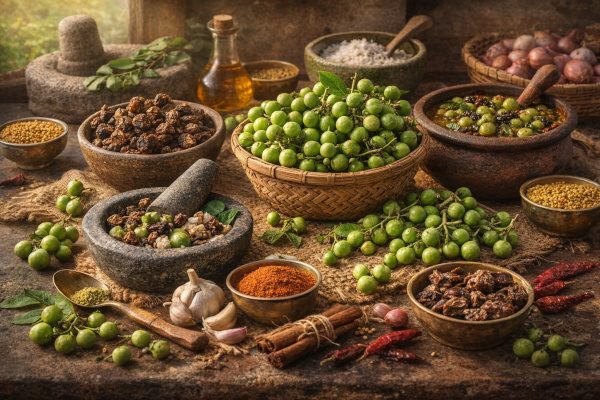
In many homes across Kerala and Tamil Nadu, clusters of small green berries are sun-dried on mats or simmered gently in earthen pots. Known locally as Chundanga and globally as Turkey Berry, scientifically identified as Solanum torvum, this hardy shrub has served as both food and medicine for centuries. Though modest in size and distinctly bitter in taste, Turkey Berry carries remarkable nutritional density and therapeutic potential.
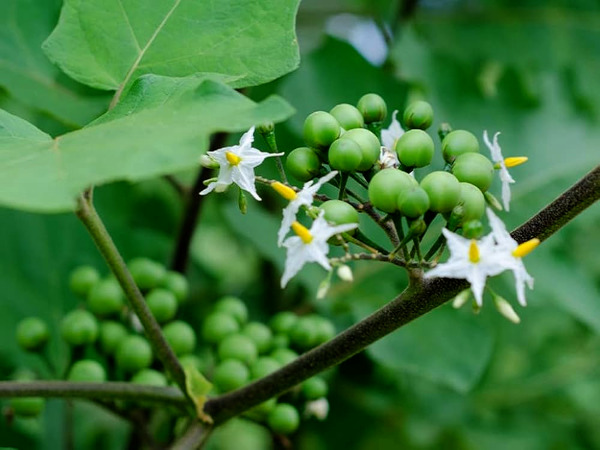
Belonging to the Solanaceae family — the same botanical family as brinjal and tomato — Solanum torvum grows as a thorny perennial shrub in tropical climates. It produces clusters of pea-sized green berries that later turn yellow when mature. Its resilience allows it to flourish even in less fertile soils, making it widely available in rural and semi-urban landscapes.
Nutritional Breakdown (Per 100 grams of Fresh Turkey Berry)
While exact values may vary depending on soil and region, studies and food composition analyses provide approximate values per 100 grams of fresh berries:
- Energy: ~70–80 kcal
- Carbohydrates: 12–14 g
- Protein: 3–4 g
- Fat: <1 g
- Dietary Fiber: 4–6 g
- Iron: 6–9 mg
- Calcium: 200–220 mg
- Phosphorus: 40–50 mg
- Magnesium: 50–60 mg
- Potassium: 400–500 mg
- Vitamin C: 2–5 mg
- Beta-carotene (Vitamin A precursor): Present in moderate amounts
One of its most celebrated nutritional strengths is its iron content. With iron levels significantly higher than many common vegetables, Turkey Berry has long been used traditionally to combat anemia. The presence of vitamin C, even in modest amounts, aids iron absorption when consumed as part of a balanced meal.
The dietary fiber supports digestive health, while potassium contributes to electrolyte balance and cardiovascular function. The plant also contains bioactive compounds such as flavonoids, phenolic acids, steroidal alkaloids (like solasodine), and saponins, which contribute to its medicinal properties.
Ayurvedic Perspective
In classical Ayurvedic understanding, Turkey Berry is associated with the bitter (Tikta) and slightly pungent (Katu) tastes. Bitter substances are believed to detoxify the body, stimulate digestion, and purify the blood. Though Solanum torvum is more prominently used in Siddha medicine in Tamil tradition, its properties align closely with Ayurvedic principles.
From an Ayurvedic viewpoint:
- It helps balance Kapha and Pitta doshas.
- It stimulates Agni (digestive fire), improving appetite and metabolism.
- It acts as Krimighna (anti-parasitic), traditionally used for intestinal worms.
- It is considered Rakta-vardhaka (blood-enriching), supporting hemoglobin levels.
- It supports Yakrit (liver) function and aids detoxification.
Its bitterness is therapeutically significant. In traditional Indian dietary philosophy, bitter foods are often under-consumed in modern diets, yet they play a crucial role in metabolic regulation and detoxification. Turkey Berry embodies this principle — strengthening digestion while cleansing internal systems.
Scientific Evidence and Modern Research
Modern research has begun validating several traditional claims.
Studies published in journals of ethnopharmacology and food science indicate:
- Antidiabetic Potential: Extracts of Solanum torvum have demonstrated hypoglycemic effects in experimental models, suggesting support in regulating blood glucose levels.
- Anti-anemic Activity: Research indicates improvement in hemoglobin concentration in iron-deficient models after administration of Turkey Berry extracts.
- Antimicrobial Properties: Laboratory studies show activity against certain bacterial strains, supporting its traditional use in gut infections.
- Antioxidant Effects: Presence of phenolic compounds contributes to significant free radical scavenging activity.
- Anti-inflammatory Potential: Experimental studies suggest reduction in inflammatory markers.
A notable study published in food and pharmacology journals has highlighted its iron bioavailability and antioxidant capacity, reinforcing its potential role in addressing nutritional anemia and oxidative stress.
However, while promising, researchers emphasize that Turkey Berry should complement medical treatment rather than replace prescribed therapies.
Culinary Applications: Medicine Through Meals
The true strength of Chundanga lies in its integration into daily cuisine.
In Kerala, fresh berries are gently crushed and cooked in coconut-based gravies such as Chundanga Theeyal. The roasted coconut and tamarind temper the bitterness, creating a deeply complex flavor. The berries are also soaked in salted buttermilk and sun-dried to make Unakka Chundanga (dried turkey berry), which is later fried until crisp and served alongside rice and curd.
In Tamil Nadu, Sundakkai Vathal Kuzhambu is a classic dish where dried berries are fried and simmered in a tamarind-spice gravy. The bitterness mellows into an earthy depth that enhances the entire preparation. The berries are also added to sambar, stir-fries, and lentil dishes.
The drying process is not merely preservation — it intensifies flavor and extends usability throughout the year. This traditional technique reflects deep food wisdom and sustainability practices long embedded in Indian culinary culture.
Beyond the Plate
Interestingly, Solanum torvum is also used agriculturally as a disease-resistant rootstock for grafting brinjal plants. Its strong root system enhances crop resilience, making it valuable in sustainable farming systems.
A Bitter Berry with Profound Impact
In an era dominated by imported “superfoods,” Chundanga stands quietly as a local nutritional powerhouse. It strengthens blood, improves digestion, supports metabolic balance, and provides antioxidant defense — all through everyday culinary inclusion.
Its bitterness is not a flaw but a function. It reminds us that true nourishment is not always sweet or fashionable; sometimes it is sharp, grounding, and deeply restorative.
Turkey Berry may be small, but its impact — nutritionally, medicinally, and culturally — is profound.
You may also like
-
Ayurvedic Foods for Better Concentration, Mental Clarity and Sustained Focus
-
Indian Startup Theranautilus Takes Medical Nanorobots Closer to Human Trials
-
Ayurvedic Foods and Medicines for Better Mood: Supporting Sattva, Emotional Balance and Mental Wellbeing
-
India’s Serendipity Space Tests ‘Alchemy’ as It Builds Satellites to Manufacture Medicines in Orbit
-
IIT Madras and CMC Vellore Build AI Toolkit to Detect Kidney Disease Before Major Damage
:%20The%20Bitter%20Green%20Healer%20of%20the%20Tropics)