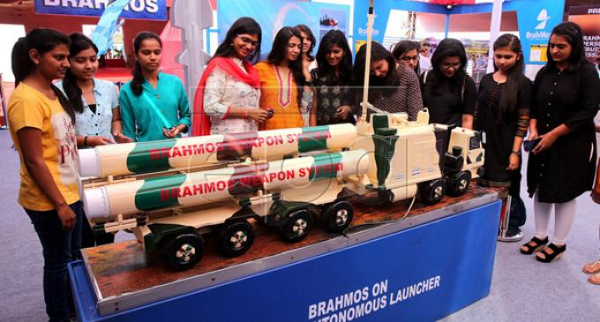
Mumbai: India’s first ever mega science exhibition, Vigyan Samagam, was inaugurated at the Nehru Science Centre, Worli, by defence scientist and member of the NITI Aayog, Dr Vijay Kumar Saraswat on Wednesday. After Mumbai, the exhibition will move to Bengaluru from 7 July, and on to Kolkata and then New Delhi, on a 11-month journey. The exhibition is a joint initiative of the Departments of Atomic Energy (DAE), Science and Technology (DST) and the National Council of Science Museums (NCSM) and will be open only on Saturdays, Sundays and public holidays between 10 am and 6 pm.
“The exhibition will enhance the overall knowledge of those seeking a career in fundamental science and technology,” said Dr. Saraswat. The primary aim of the exhibition is to highlight India’s contribution to global science and technology innovations and research in space science and nuclear technology. Connecting with children is also a key objective. Curious children thronged the venue on the opening day, eager to learn about several science projects. To fire their enthusiasm, various activities are planned – drawing competitions, creative writing and quizzes.
“I am happy to be here, as events like these help me learn in a creative way,” said Raashi Kelkar, an eleventh grade student and science enthusiast. To reach out to a wider audience, the organisers plan to launch a mobile app shortly and hold talk shows and seminars which will be streamed live on social networking platforms. At the venue, interactive electronic kiosks have been set up, along with working models and exhibits. Scientists from different parts of the globe will interact with visitors. Several industrial partners will set up expos at the venue, showcasing their contribution and stage demonstrations.
Source:FPJ
Image Courtesy:KhariNews
You may also like
-
Indian Researchers Study RAD51 DNA-Repair Gene Variant in Prostate Cancer
-
TDB Backs Multi Nano Sense With ₹37.51 Crore to Build Indigenous Multi-Gas Sensor Platform
-
IISER Berhampur and NIT Rourkela Researchers Explore Cotarnine Derivatives for Wound Healing and Biomedical Applications
-
IISER Tirupati Develops pH-Responsive DNA Nanostructures for Controlled Drug Delivery
-
India and France Expand Space Cooperation Into Human Spaceflight, TRISHNA and Start-up Ecosystem
