Research

News on Science, Technology and Research in India

Indian Researchers Take A Step Towards Improving Wave Forecasts

Researchers at the Indian National Centre for Ocean Information Services (INCOIS), Hyderabad have found a method of improving wave forecasts. They have ascertained that certain phases of boreal summer intra seasonal oscillation or BSISO induce high wave activity in the northern Indian Ocean and Arabian Sea.

Astronauts For India’s First Manned Space Mission Complete Training In Russia

Bengaluru:

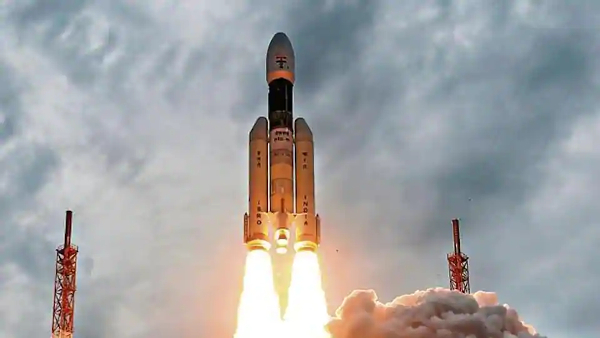
The four astronauts-elect for India’s first manned space mission Gaganyaan have completed training in Russia on crew actions in the event of an abnormal descent module landing, Glavkosmos, a subsidiary of Russian space organisation Roscosmos said on Thursday.

The astronauts were in good health and determined to continue their training, it said.

“To date, Indian cosmonauts have completed training on crew actions in the event of an abnormal descent module landing in wooded and marshy areas in winter (completed in February 2020), on the water surface (completed in June 2020), in the steppe in summer (completed in July 2020),” Glavkosmos said.

In June 2020, they passed training in short-term weightlessness mode aboard the IL-76MDK special laboratory aircraft, and in July, they were trained to lift aboard a helicopter while evacuating from the descent module landing point, it said on its website.

The programme also included training in a centrifuge and in a hyperbaric chamber to prepare their organisms for sustaining spaceflight factors, such as G-force, hypoxia and pressure drops, it said, adding that these trainings are to be held in the near future.

Four Indian Air Force fighter pilots are currently under training in Moscow and are likely to be potential candidates for Gaganyaan, initially planned around 2022.

However, the Indian Space Research Organisation (ISRO) has indicated the mission may be delayed due to the COVID-19 pandemic and the lockdown because of it.

The Indian astronauts are undergoing training at the Gagarin Cosmonaut Training Center (GCTC) following the courses of the general space training programme and of the systems of the Soyuz MS crewed spacecraft.

The completion of their training at GCTC is scheduled for the first quarter of 2021, it said.

The contract for the training of Indian astronauts between Glavkosmos and the Human Spaceflight Center of ISRO was signed on June 27, 2019, and their training in Russia started on February 10 this year.

The entire process of preparation and training takes place in Russia, Glavkosmos said, and it includes a number of courses necessary for prospective Indian cosmonauts.

The regular courses comprise medical and physical training, learning Russian (as one of the main international languages of communication in space), and studying the configuration, structure and systems of the Soyuz crewed spacecraft.

Glavkosmos said the trainees’ health status is monitored on a daily basis, and once every three months, highly professional GCTC doctors conduct their thorough medical examination.

“The GCTC instructors praise the effort and high motivation of the Indian cosmonauts. They also note their extremely serious and very professional attitude to the training process,” it added.

Indian officials had earlier said that after training in Russia, the astronauts will receive module-specific training in India. In that, they will be trained in a crew and service module designed by ISRO, learn to operate it, work around it and do simulations.

Equipment-Free, Simple Paper-Strip Based Naked-Eye Fluoride Ion Detection and Quantification Kit – INST

Scientists from the Institute of Nano Science and Technology (INST), an autonomous institute of the Department of Science and Technology, Government of India, have developed an equipment-free fluoride ion detection and quantification in drinking water with the naked-eye. It can be operated by non-experts for household use to evade Fluorosis-based disorders.

Shadesmart & Radiant Cooling Technologies Promote Energy-Efficient Cooling in Buildings

The Energy and Resources Institute (TERI) in partnership with the Department of Science & Technology, Government of India has developed novel external shading solution for windows in residential and commercial buildings under the project Habitat Model for Efficiency and Comfort.The shading system named as “ShadeSmart” has been developed as an innovative and cost-effective solution for achieving indoor comfort with reduced electricity consumption in air conditioning and lighting.

A Novel Algorithm for Enhanced Crop Productivity From IIT Madras

To quickly ascertain the right combination and to understand how these microbes interact with in a co-culture,researchesr from Indian Institute of Technology (IIT) Madras have developed and demonstrated an effective method. The study applies computer-based modelling to develop novel algorithms to identify metabolic interactions between bacteria. This understanding may help in identify the perfect combination for a co-culture.

IN-SPACe Mandate Creates Flutter in Scientific Community

The decisions of the newly set-up Indian National Space Promotion and Authorisation Centre (IN-SPACe), the single-window nodal agency, on the launch dates of satellites and rockets and use of facilities of the Department of Space’s assets also by private players will be binding on all stakeholders including the Indian Space Research Organisation (Isro).

INST Scientists Develop Simple Economical Nonsurgical Prevention of Cataract

A team of scientists from the Institute of Nano Science & Technology (INST) an autonomous institute under the Department of Science & Technology, Government of India has developed nanorods from the nonsteroidal anti-inflammatory drug (NSAID) Aspirin, a popular medication used to reduce pain, fever, or inflammation and found it to be an effective non–invasive small molecule-based nanotherapeutics against cataract.