Research

News on Science, Technology and Research in India

A Robust Framework for Water-Theft Prevention

The proposed framework is based on a novel concept called time capacity, which calculates the time required to transport a unit quantity of water between two points. The total time needed to supply water is determined by multiplying this amount by the total volumeof water that has to be transported. “Balancing this calculated total time and total available time in the planning period for fulfilling the tanker delivery order, we have made the frame work computationally efficient to generate optimal tanker routing connections between the watersource and the customer,” explains Prof Gudi. The framework also indicates the tanker size to be used for a specific delivery.

Indian Researchers Find Way to Cheaper Solar Energy

Indian Institute of Technology Madras (IIT Madras) researchers have discovered a new material to effectively split water into Hydrogen and Oxygen using solar power. This research is expected to create a renewed interest in Solar fuels’ domain, for its scope of conversion and storage in a single system. The method can significantly reduce the cost per kilowatthour (kWh) of solar energy.

INSPIRE Faculty Fellow Developing Low-cost Biodiesel from Microalgae

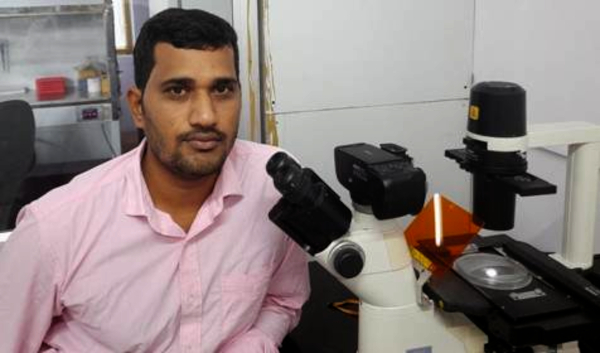
Realizing the rapid depletion of petroleum-based fuels, Dr. T. Mathimani from the National Institute of Technology, Tiruchirappalli, Tamil Nadu, started exploring alternative fuels from renewable and sustainable sources. While different types of biofuels that have been explored recently, the use of microalgae has been strongly considered for the production of biofuels since they present a series of advantages over other biofuel feedstock, and this route to sustainable fuels inspired him.

Oral Nanomedicine may Bring Relief for Kala-Azar & Other Neglected Diseases

Patients affected by Kala- Azar, scientifically called Visceral leishmaniasis (VL), one of the most neglected tropical diseases may soon find relief in an oral nanomedicine from India. The oral therapeutics could help in the control and elimination of VL, around 95 % of which is reported from Bangladesh, Brazil, China, Ethiopia, India, Kenya, Nepal, Somalia, South Sudan, and Sudan.

ARCI Scientists Convert Tamarind Waste & Cotton Waste to Supercapacitor Electrodes

Tamarind seeds and cotton waste may soon be used to make low-cost supercapacitors for energy storage – thanks to the efforts of a group of Indian scientists who have used such waste biomass to develop materials for making cost-effective supercapacitor devices. This can pave the way towards affordable electric vehicles and hybrid vehicles which bank on supercapacitors significantly for their application in braking systems and start-stop cycles.

ARI Comes Up with the First Synthetic Route for Producing Flavonoids Molecules

Scientists from Agharkar Research Institute (ARI), Pune, an autonomous institute of the Department of Science and Technology (DST), Govt. of India, have come up with the first synthetic route for producing flavonoids molecules related to the treatment of tuberculosis and chikungunya. Preliminary indications have been witnessed regarding probable treatment response to COVID 19.

A Tattoo Sensor From CeNSE for Monitoring Vital Health Parameters

Dr. Saurabh Kumar from Centre for Nanoscience and Engineering (CeNSE) at Indian Institute of Science, Bangalore, India, a recipient of the INSPIRE Faculty Fellowship instituted by the Department of Science & Technology, Govt. of India is currently working on wearable sensors that can retract information from human body using its largest organ, the skin.

An Indian was the First to Scientifically Document A Tornado’s Path

Babu ChunderSikur Chatterjee, an Indian scientist employed with the Surveyor General of India during the British colonial era, was likely the first person to scientifically document a tornado’s path in 1865, claims a study from the Indian Institute of Tropical Meteorology (IITM), Pune. By carefully searching and analysing papers about tornados, Saumyendu De and Dr A K Sahai, scientists at IITM Pune, concluded that Chatterjee’s paper is the earliest record of a tornado’s dynamics in the history of meteorology.