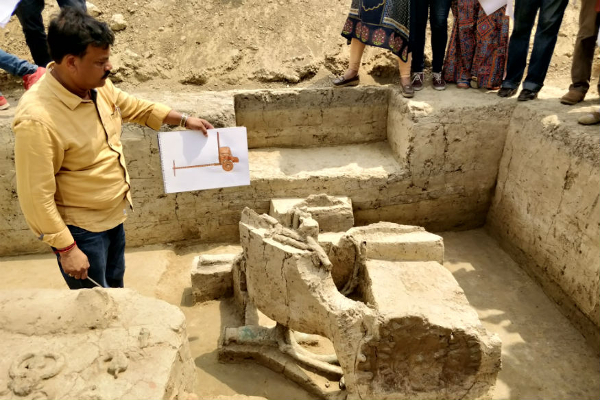
Dating back to 2100-1900 BC – to a culture that was contemporary to the late phase of mature Harappan period – several fascinating artifacts, including two wooden ‘legged coffins with skeletons, have been excavated here at the archaeological site of Sanauli.
A recent excavation by the Archaeological Survey of India (ASI) at Sanauli has unearthed these artifacts belonging to the Copper Hoard Culture and the Ochre Coloured Pottery (OCP) Culture, the ASI Institute of Archaeology Director S.K. Manjul told IANS on Tuesday.
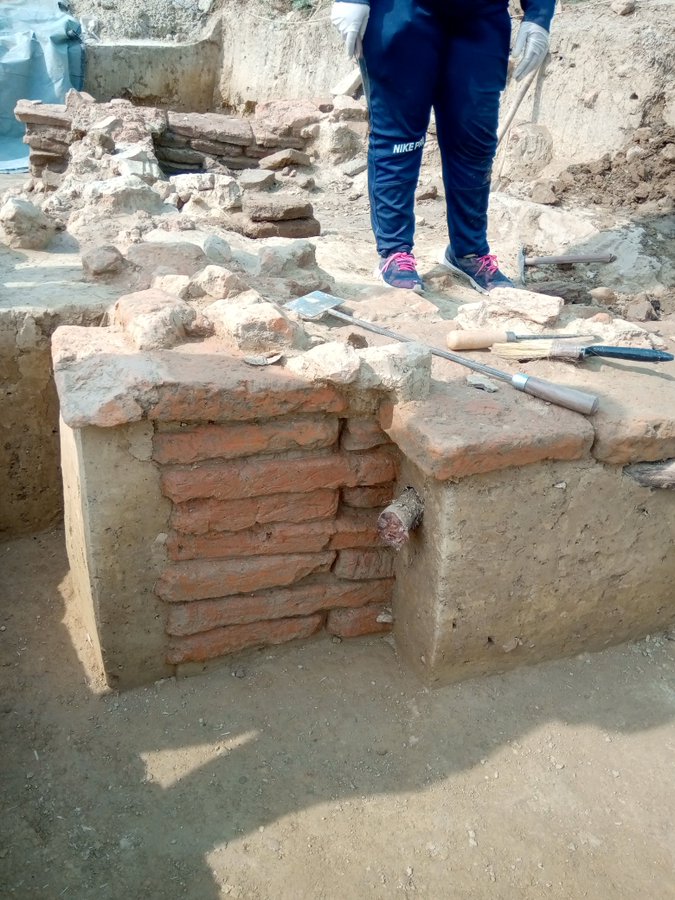
Notice how the bricks of this civilization do not follow Harappan standardization 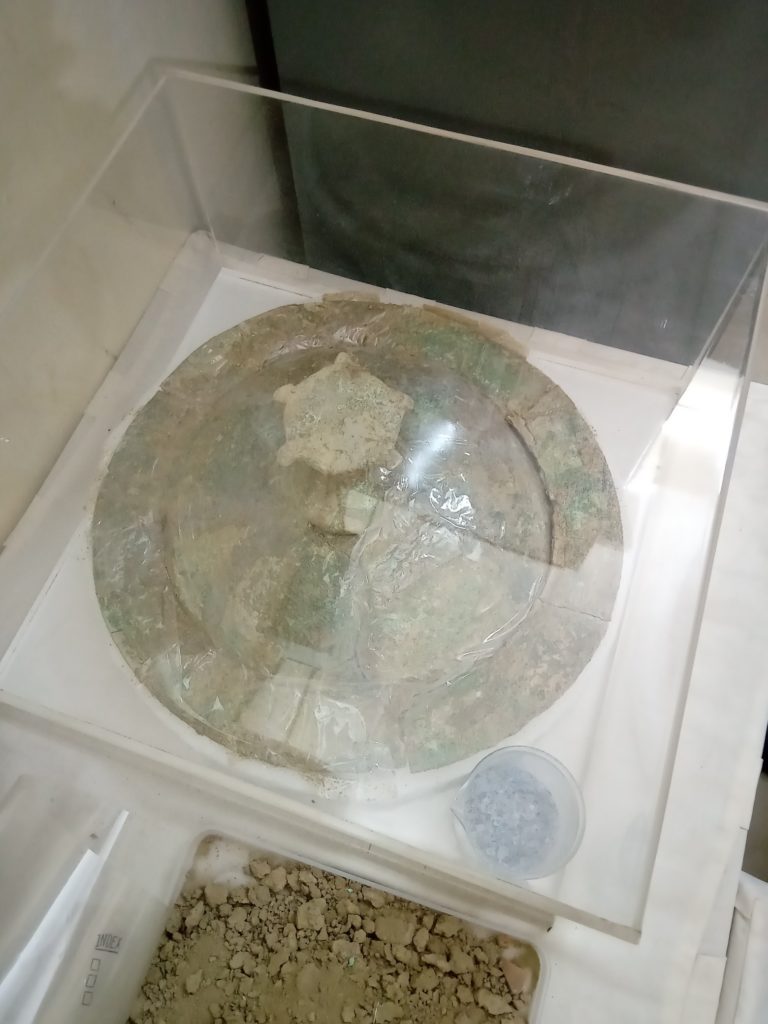
This is a copper chalice for ritual offerings (upside down in photo). A very similar vessel is still used for puja in eastern India (Assamese call it a “bota”). Note that base is a turtle recalling the Santana Dharma myth of a turtle holding up the world 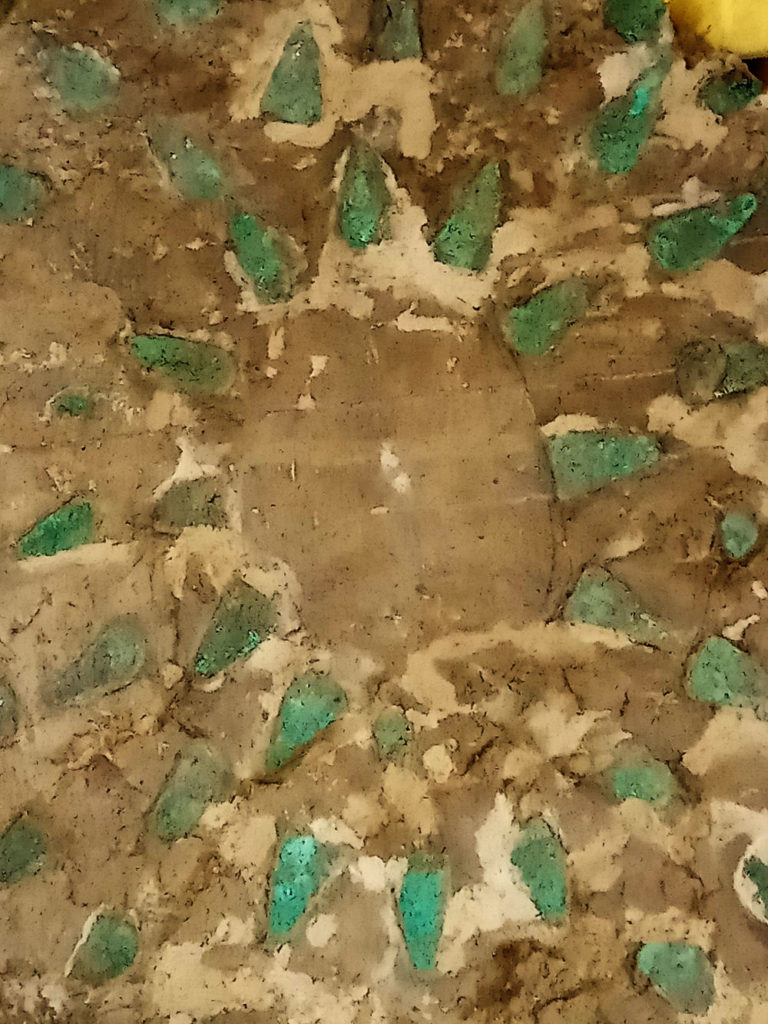
Copper studs placed in the wooden chariot wheel 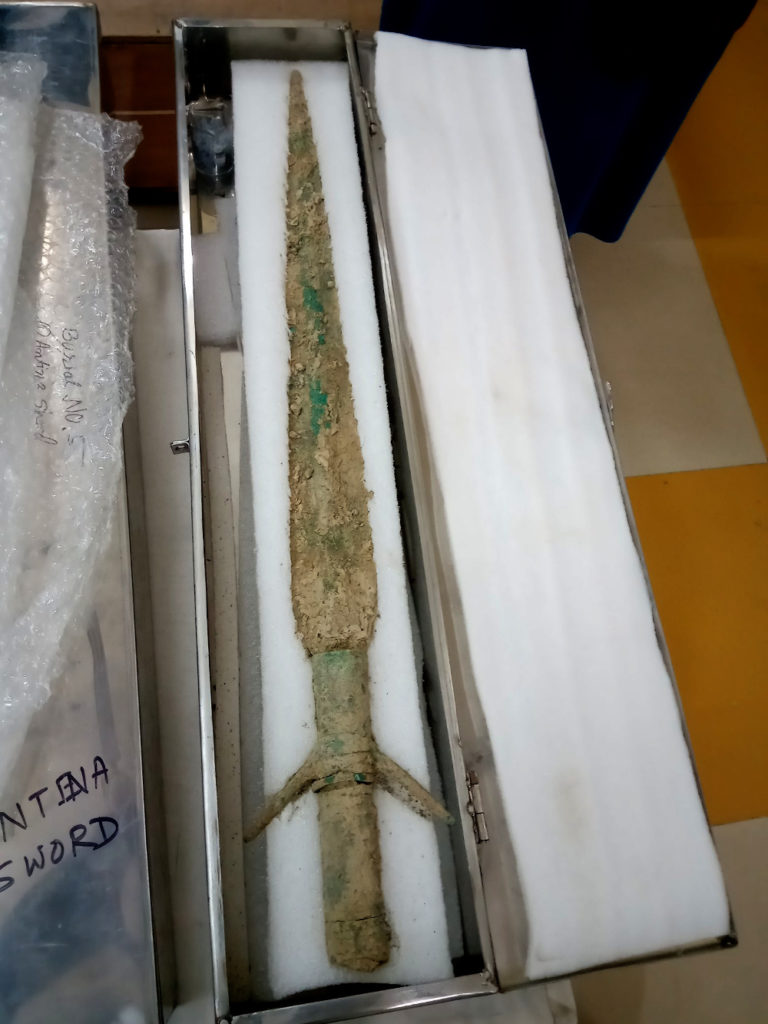
Copper sword found at Sanauli. It is in very good shape and first one with handle intact. The Gangetic civilization was clearly a warrior culture 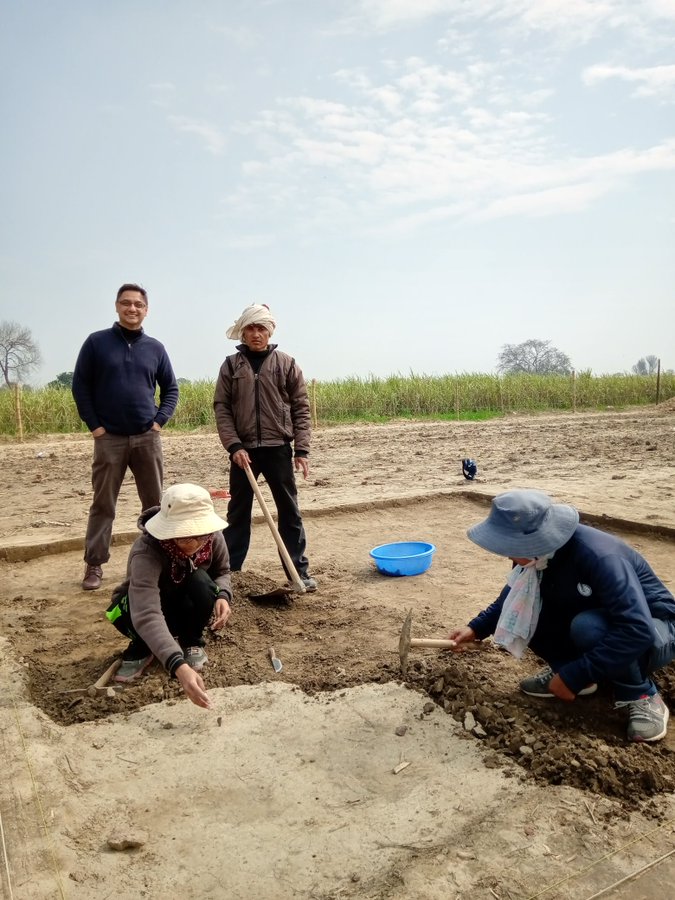
Evidence growing that Gangetic plains has a civilization contemporary to Harappan & just as advanced 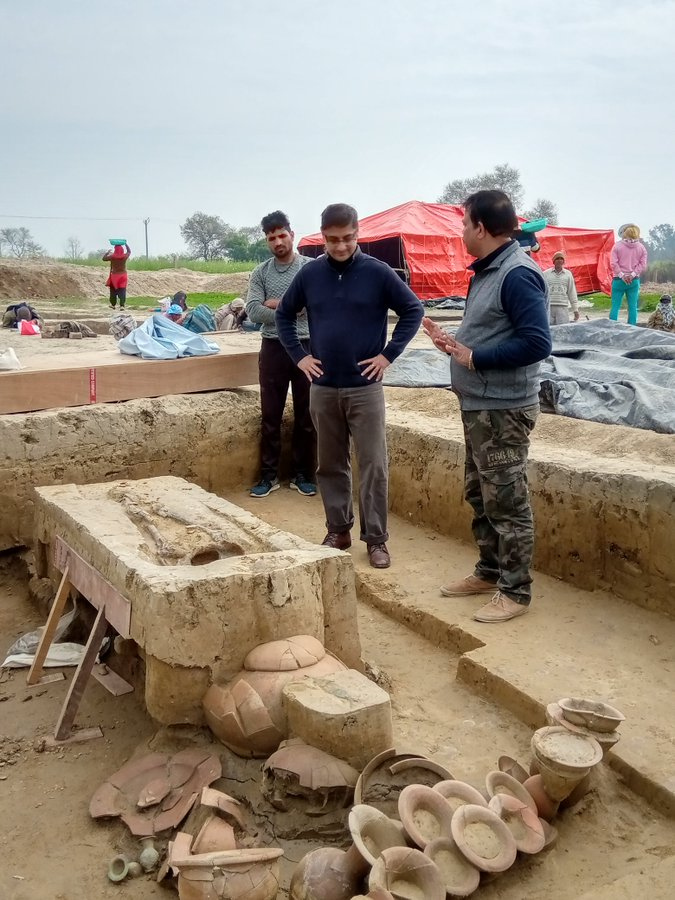
With archaeologist Sanjay Manjul looking at a warrior chief’s coffin. Notice elaborate grave goods. The quality of metal work and other items is distinct from Harappan 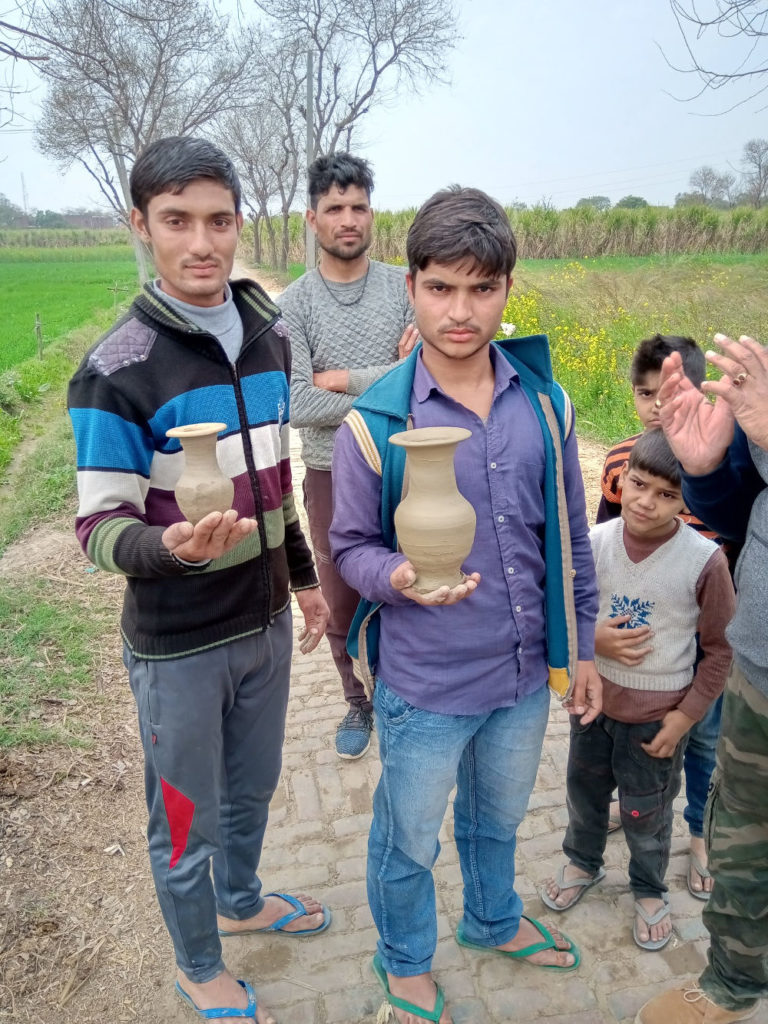
The pottery in the graves and nearby settlement are made in a style very similar to what the local potter can still make. Almost identical techniques. 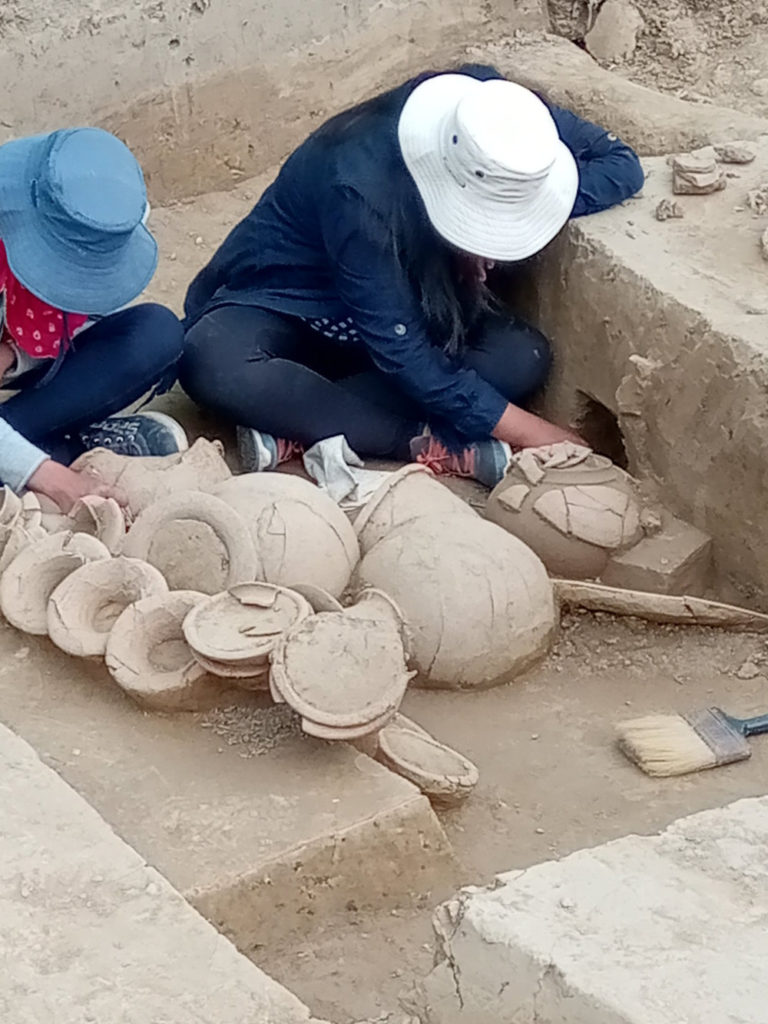
The pottery in the graves and nearby settlement are made in a style very similar to what the local potter can still make. Almost identical techniques. 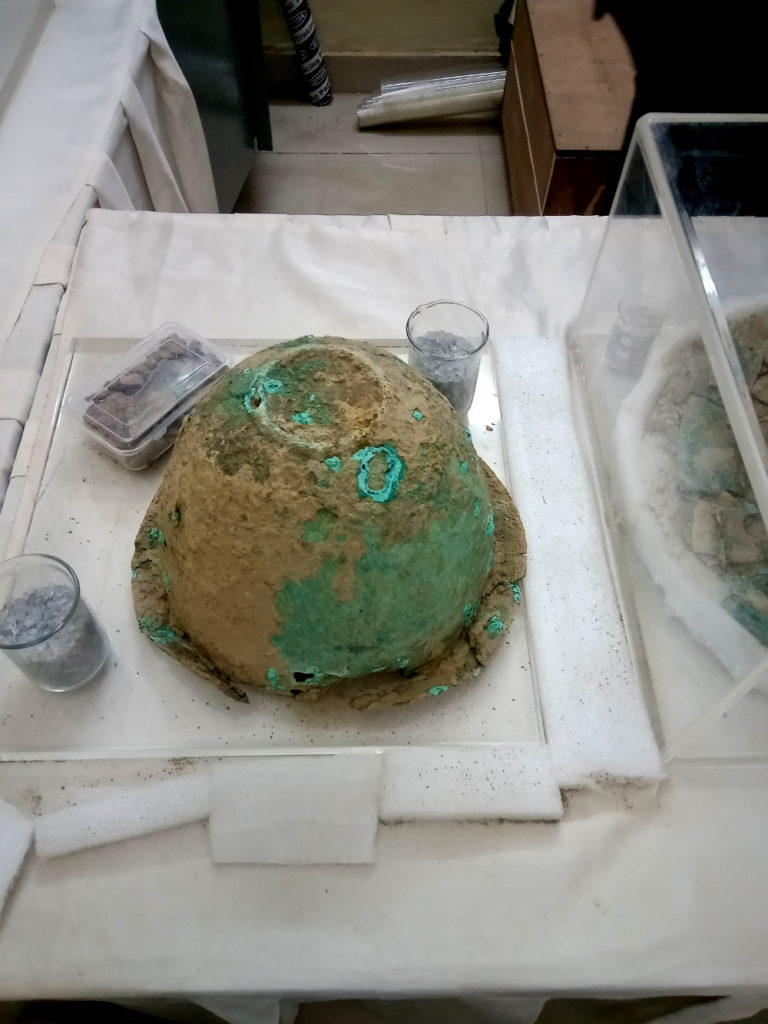
This is a copper helmet. This is the oldest helmet found anywhere in the world (2200 BC) 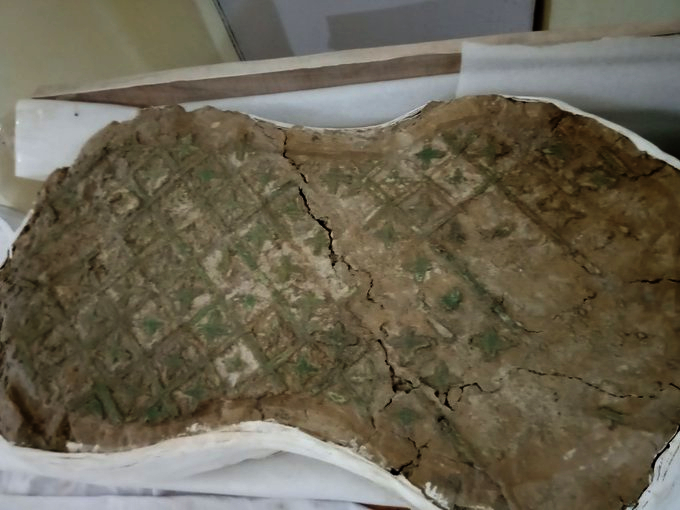
Wooden shield with copper studs,. The wood has disintegrated but the copper has survived
The fresh excavations, being undertaken till January this year, explored two sites — one which was inhabited, and another where the people buried their dead.
Sanauli is located on the left bank of the Yamuna river, 68 km northeast of Delhi.
In the habitation area, a few metres away from the burial site, the excavations unearthed the remains of four furnaces that yielded slags, potsherds, and a few charred bones. Stone weights, stone anvils, animal figurines, and gamesmen were also recovered.
Manjul said that of the four furnaces, three are oval and were possibly used for copper smelting, indicating that the culture had expertise in copper tool making.
He also said that two coffin burials with meticulous decoration around the coffins were recovered from the more extensive burial site.
‘The wood has completely perished, but the geometrical pattern of the steatite inlay decoration is visible.
‘This burial pit contains evidence of decomposed bow, bone points, armlet of semi-precious stones, gold bead and pottery, including vases, jars, bowls and dish on stand’, he added.
Another coffin contains an extended female skeleton in a disturbed condition where the burial goods include copper mirror, hairpin, channel, beads and pottery.
‘Two big pots — a copper and a fiance pot — are placed under the coffin which could have contained food and other organic remains associated with the rituals,’ Manjul said.
To the north of the two coffin burials is a sacred chamber of burnt bricks. ‘This could have been used for making preparations for the soul before the burial was made,’ the ASI official said.
The Copper Hoard and OCP Cultures were urban cultures found around the second millenium BC, and these excavations reveal a great deal about their ways of living and burying the dead.
Manjul also said that these cultures are different from the Harappan or Indus Valley Civilisation since they have different making techniques for pottery and beads, as well as distinct burial practices.
‘Legged coffins with decorations, and an antenna sword also differentiate this culture,’ Manjul said.
The excavations at the site, which began in 2018, are still in progress.
Source: BS
Image Courtesy: Sanjeev Sanyal Twitter/News18
You may also like
-
Matsya in the Mahabharata: The Kingdom of Virata Across Alwar, Jaipur and Bharatpur
-
Surasena in the Mahabharata: The Yadava Kingdom of Mathura and Braj in Western Uttar Pradesh
-
Vatsa in the Mahabharata: The Ancient Kingdom of Kaushambi and the Prayagraj Region
-
Tibetans in Dharamshala Mark India’s 80th Independence Day, Link Freedom Struggle With Tibetan Aspirations
-
Why the British Feared Vande Mataram — and Why the National Song Still Provokes Political Unease
