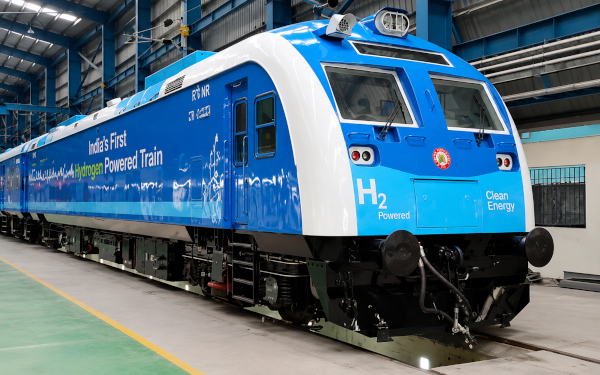
Indian Railways is preparing to introduce India’s first hydrogen fuel-cell passenger train, marking an important step towards cleaner and more sustainable railway transport.
The ten-coach train has been designed to carry around 2,600 passengers and will initially operate on the 89-kilometre Jind–Sonipat railway section in Haryana. It will connect Jind Junction, Gohana Junction and Sonipat while serving several intermediate stations and halts along the route.
The train will operate at a maximum service speed of 75 kilometres per hour on the Jind–Sonipat section, while its design allows it to reach speeds of up to 110 kilometres per hour.
How the Hydrogen Train Works
A hydrogen train produces electricity onboard instead of drawing power from overhead electric lines.
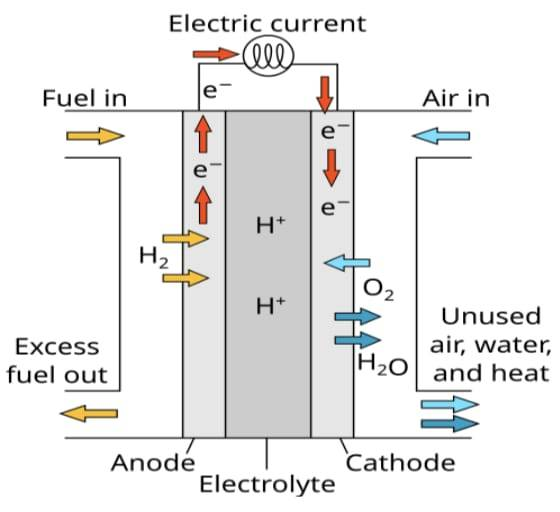
Hydrogen stored in cylinders combines with oxygen from the surrounding air inside a Proton Exchange Membrane fuel cell. This electrochemical reaction generates electricity, which powers the train’s traction motors.
The process produces water vapour and heat as its direct by-products. Since the fuel cell generates electricity without burning hydrogen, the train releases no smoke or direct carbon emissions during operation.
The train therefore carries its own source of electricity, similar to older steam and diesel trains, while using a cleaner method of power generation.
Ten-Coach Train with Two Power Cars
The hydrogen train consists of two Hydrogen Driving Power Cars and eight passenger trailer coaches. One power car is placed at each end of the train.
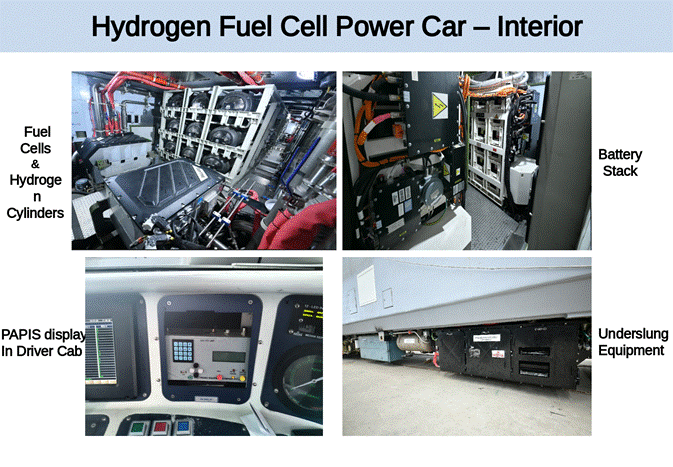
Each power car contains hydrogen fuel cells, lithium iron phosphate batteries and hydrogen storage cylinders. The fuel cells generate electricity, while the batteries help manage variations in power demand during acceleration, braking and regular operation.
Each power car can generate around 1,200 kilowatts, or approximately 1,600 horsepower. Together, the two units provide sufficient power to operate the full ten-coach train.
Most hydrogen passenger trains operating or undergoing trials in other countries consist of two to four coaches and are generally used for smaller regional services. India’s ten-coach configuration is intended to demonstrate that hydrogen technology can also support high-capacity passenger operations.
Hydrogen Production and Refuelling Facility at Jind
Indian Railways has established a dedicated hydrogen production and refuelling facility at Jind to support the train.
Hydrogen will be produced at the site through electrolysis, a process in which electricity is used to separate water into hydrogen and oxygen. The hydrogen will then be stored, compressed and transferred to the train.
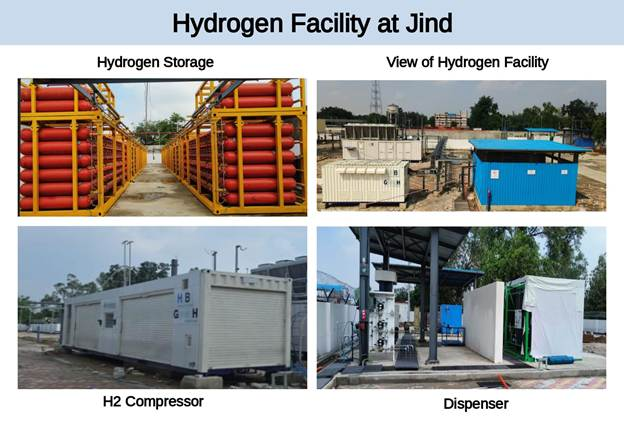
The facility compresses hydrogen to around 500 bar for storage. It is supplied to the train through two independent dispensers at a regulated pressure of 350 bar.
The two dispensers will allow both power cars to be refuelled simultaneously, reducing the time needed to prepare the train for its next journey.
The Jind facility can store nearly 3,000 kilograms of hydrogen and has been designed to support regular train operations. Its storage and dispensing systems have received approval from the Petroleum and Explosives Safety Organisation.
The project creates an integrated hydrogen railway system covering hydrogen production, compression, storage, dispensing and train operation.
Multiple Safety Systems Installed
Hydrogen is highly flammable and requires careful storage and handling. Indian Railways has therefore installed multiple layers of safety protection in both the train and the Jind refuelling facility.
The train contains sensors that continuously monitor for hydrogen leaks, flames, smoke and unusual increases in temperature. Ventilation systems maintain the movement of air and help prevent hydrogen from accumulating in enclosed areas.
Automatic shutdown mechanisms can stop the hydrogen supply when an abnormal condition is detected. This allows the system to respond immediately without depending entirely on manual intervention.
The driver’s cabin has also been designed with dedicated protection systems. The driver can monitor the condition of the hydrogen equipment through a display showing the health of the train’s main systems.
An emergency operating mode allows the train to be moved to a safer location when required.
The hydrogen plant at Jind is equipped with leak and flame detectors, fire alarms, automatic shutdown systems and water-spray arrangements for emergency response.
The complete hydrogen system has been designed according to recognised international safety standards, including NFPA-2 and the ISO 19880 series. It has also undergone an independent safety assessment by German technical inspection organisation TÜV SÜD.
Train Underwent Extensive Testing
Before being approved for passenger operations, the hydrogen train underwent several technical and safety trials.
Load-box testing examined whether the electrical and propulsion systems could perform reliably under operating loads. Radio-frequency trials checked whether the train’s electronic systems could interfere with railway communication or signalling equipment.
Oscillation trials assessed stability and passenger comfort while the train was moving at speed. Emergency braking trials measured the distance required to bring the train to a safe stop.
The project also underwent statutory inspections and third-party safety assessments before being considered ready for deployment.
Developed with Indigenous Technology
The hydrogen train has been designed, engineered and integrated in India.
The Research Designs and Standards Organisation prepared the technical specifications and led the design approval process. Hyderabad-based Medha Servo Drives integrated the trainset, while the Integral Coach Factory contributed to its theme and exterior design.
The project reflects India’s growing capability in fuel-cell systems, battery integration, railway propulsion, hydrogen storage and advanced train engineering.
The Jind–Sonipat route will serve as a demonstration corridor for evaluating the train’s reliability, safety, maintenance requirements and operational performance under regular passenger conditions.
Part of Indian Railways’ Clean-Energy Transition
Indian Railways has electrified more than 99 per cent of India’s broad-gauge railway network, significantly reducing its dependence on diesel locomotives.
Hydrogen-powered trains could provide an additional clean-energy option, particularly on railway sections where complete electrification may be difficult, expensive or unsuitable.
The technology may also be considered for selected heritage and mountain railway routes. Indian Railways is exploring its possible use on the Kalka–Shimla railway based on experience gained from the Jind–Sonipat project.
Hydrogen railway technology is still at an early stage globally. Germany became the first country to operate commercial hydrogen passenger trains, while countries including France, Italy, China and Japan have undertaken trials and limited deployments.
India’s project stands out because of the train’s ten-coach capacity and the development of a complete hydrogen production and refuelling ecosystem.
The hydrogen train programme supports the National Green Hydrogen Mission and Indian Railways’ wider effort to reduce emissions. Its performance on the Jind–Sonipat route will help determine how hydrogen-powered trains can contribute to the future of sustainable rail mobility in India.
Source: PIB
You may also like
-
India’s EV Transition Gains Ground as New Mobility Index Links Electrification to Energy Security
-
India’s Total Trade Reaches $506.9 Billion in Q1 FY27 as Export Markets Diversify
-
The Factory Must Keep Running: How Expanding BRICS Trade Could Reduce Dependence on the American Market
-
Overcoming Tariffs and the Weaponisation of Markets: How India’s FTA Network Is Building Trade Resilience
-
Where China Built on Coal, India Is Building on Sun: How Green Power Support India’s Next Industrial Expansion
