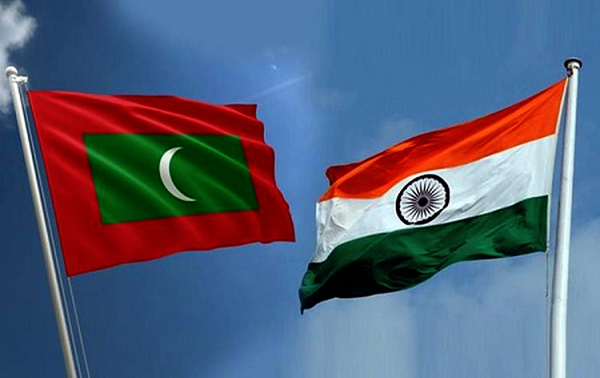
India and the Maldives have successfully completed the first round of negotiations for a proposed Free Trade Agreement, marking an important step towards expanding trade, investment and economic cooperation between the two neighbouring countries.
The discussions were conducted virtually between June 29 and July 7, 2026. India’s delegation was led by Ujjwal Kumar Ghosh, Joint Secretary in the Department of Commerce and the country’s chief negotiator for the agreement. The Maldivian team was headed by Chief Negotiator Yusuf Riza.
Negotiators from both countries participated in eight technical sessions covering an equal number of policy areas. The talks involved detailed text-based discussions on the provisions expected to form part of the proposed agreement.
According to the government, the two sides achieved substantive progress across the negotiating tracks and developed broad convergence on several issues during the opening round. The outcome has created a strong foundation for subsequent discussions aimed at preparing a balanced and comprehensive trade framework.
Ministers Review Progress of Economic Initiatives
The negotiations were followed by a meeting between Union Commerce and Industry Minister Piyush Goyal and Maldives Minister of Economic Development, Transport and Trade Mohamed Saeed on July 8.
The ministers reviewed progress on major bilateral economic initiatives, including the proposed Free Trade Agreement and the India–Maldives Bilateral Investment Treaty.
As the two countries mark 60 years of diplomatic relations, both ministers reaffirmed their commitment to accelerating negotiations for the two agreements. The proposed investment treaty is expected to provide greater clarity and confidence to businesses exploring opportunities in either country.
India and the Maldives also agreed to deepen cooperation in tourism, start-ups, digital payments, micro, small and medium enterprises and bilateral trade. These sectors offer opportunities for business partnerships, technology sharing, employment generation and stronger commercial connectivity.
Bilateral Trade Crosses USD 771 Million
India currently ranks as the Maldives’ second-largest trading partner. Bilateral trade reached USD 771.76 million during 2025–26, rising from USD 679.70 million in the previous financial year.
The increase represents annual growth of 13.54 per cent and reflects the expanding economic relationship between the two countries.
India supplies the Maldives with a range of essential commodities, construction materials, engineering products, food items, medicines and other goods required by its economy. The Maldives also represents an important market for Indian businesses because of its geographical proximity, tourism-driven economy and demand for infrastructure and services.
A formal trade agreement could provide exporters with more predictable market conditions, simplified procedures and improved access to commercial opportunities.
Opportunities in Tourism and Digital Payments
Tourism is expected to remain a major area of cooperation under the broader economic partnership. Indian travellers form an important segment of the Maldives’ tourism market, while stronger transport and business links could create further opportunities for hospitality companies, travel operators and service providers.
Digital payments represent another promising field. Cooperation in financial technology and payment platforms could make transactions easier for travellers, businesses and expatriate communities while strengthening formal economic links.
India’s experience in developing large-scale digital public infrastructure could also support new partnerships in payment connectivity, financial inclusion and technology-enabled public services.
Supporting Start-Ups and Small Enterprises
Closer engagement between start-ups and MSMEs could broaden the economic relationship beyond conventional trade in goods.
Indian technology companies, service providers and small manufacturers could gain access to emerging opportunities in the Maldives. Maldivian enterprises could similarly benefit from India’s larger market, investment ecosystem and technical capabilities.
Cooperation in entrepreneurship, skills, logistics and digital commerce could help smaller businesses participate more effectively in bilateral trade.
Towards a Comprehensive Agreement
The proposed Free Trade Agreement is expected to improve market access, facilitate investment and promote wider economic cooperation. It could also establish clearer rules for businesses and create a structured framework for resolving trade-related concerns.
Both countries are working towards a broad-based agreement founded on fairness, reciprocity and mutual benefit. Future negotiating rounds are expected to build upon the progress achieved during the first eight technical sessions.
For India, the agreement forms part of a wider effort to strengthen commercial partnerships across the Indian Ocean region. For the Maldives, it could expand access to one of the world’s largest and fastest-growing major economies while supporting investment, connectivity and sustainable development.
The successful conclusion of the first round signals renewed momentum in India–Maldives economic relations and reflects a shared commitment to transforming long-standing diplomatic ties into a deeper trade and investment partnership.
Source: PIB
You may also like
-
CarbonCraft Design Turns Industrial Carbon and Construction Waste Into Building Materials
-
India and MERCOSUR Move Toward Paperless Trade With Electronic Certificates of Origin
-
Inbound Aerospace Turns to Australia to Test India’s Recoverable Re-Entry Spacecraft
-
BRICS Looks Beneath the Oceans as Bloc Moves Toward High-Speed Submarine Cable Network
-
India Proposes BRICS Gateway to Help 100 Startups Expand Across Member Markets Every Year
