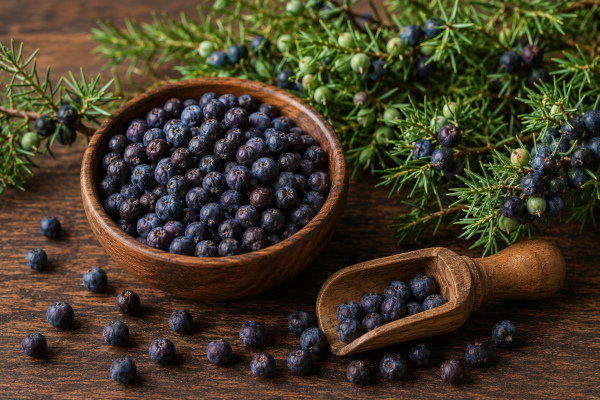
Juniper, known in Ayurveda as Hapusha, is a distinctive aromatic herb valued for its sharp, warming and channel-clearing qualities. In modern botanical identification, Hapusha is commonly associated with Juniperus communis, the common juniper. It is a hardy evergreen conifer known for its needle-like leaves, bluish berry-like cones and strong resinous fragrance. In Ayurveda, this fragrance is not merely a sensory quality; it reflects the plant’s active, penetrating and stimulating nature.
Hapusha occupies an interesting place in Ayurvedic medicine because it is connected with digestion, Vata-Kapha balance, abdominal disorders, urinary function and the clearing of stagnation from the body’s channels. It is not a sweet nourishing herb like Shatavari or Yashtimadhu. It belongs to the category of herbs that awaken sluggish systems, kindle movement and assist the body where heaviness, coldness, obstruction and accumulation dominate.
Sanskrit Name and Identity
The Sanskrit name Hapusha is traditionally used for juniper. It is also written as Hapuṣā in scholarly transliteration. The plant is commonly identified as Juniperus communis Linn., although regional traditions may associate Hapusha with related juniper species depending on availability and materia medica usage.
Common name: Juniper
Sanskrit name: Hapusha / Hapuṣā
Botanical identity commonly used: Juniperus communis Linn.
Family: Cupressaceae
Useful part: Berry-like cones, and in some traditions other aromatic parts of the plant
Ayurvedic category: Aromatic, warming, Vata-Kapha balancing herb
Ayurvedic Properties of Hapusha
According to Ayurvedic dravyaguna understanding, Hapusha carries a sharp and stimulating profile.
Rasa: Katu and Tikta — pungent and bitter
Guna: Guru — heavy
Virya: Ushna — hot potency
Vipaka: Katu — pungent post-digestive effect
Dosha action: Pacifies Vata and Kapha when used properly
This combination explains why Hapusha is traditionally valued in conditions where coldness, sluggish digestion, heaviness, abdominal stagnation and obstructed movement are present. Its pungent and bitter taste helps stimulate digestive and metabolic activity. Its hot potency counters cold and Kapha-type heaviness. Its Vata-Kapha balancing action makes it useful in formulations designed to restore movement and reduce stagnation.
Hapusha and the Ayurvedic View of Digestion
Ayurveda gives great importance to Agni, the digestive and metabolic fire. When Agni becomes weak, food is not properly transformed, channels become heavy, and Ama can accumulate. Herbs like Hapusha are traditionally valued because they support the movement and stimulation needed in such conditions.
Hapusha is therefore understood as an herb that can assist digestive awakening. Its pungent nature supports Deepana, the kindling of digestive fire, while its aromatic quality supports Pachana, the processing of undigested residue. This makes it suitable in classical combinations where digestion, abdominal heaviness and channel obstruction are central concerns.
Hapusha in Abdominal Disorders
One of the most important classical reference comes from Charaka Chikitsasthana, in the chapter on Udara Roga. Udara Roga refers to abdominal enlargement and complex abdominal disorders described in classical Ayurveda. In this context, Charaka gives a series of buttermilk-based preparations for different types of abdominal conditions.
The attached reference highlights Hapushadi Takra, translated as Juniper Buttermilk. This is a significant classical preparation because it shows how Ayurveda used food-based medicine in a precise, disease-specific way. Takra, or buttermilk, is not used here as a casual drink. It is used as a therapeutic vehicle, combined with specific herbs and salts according to the condition of the patient.
Classical Reference: Hapushadi Takra
Hapushadi Takra is associated with the Charaka tradition of medicated buttermilk in Udara Chikitsa. The preparation includes:
Hapusha — Juniper
Yavani — Ajwain
Ajaji — Cumin
Saindhava — Rock salt
Takra — Buttermilk
This combination is traditionally mentioned for Baddhodara, a type of abdominal disorder associated with obstruction and abdominal enlargement. The logic of the recipe is deeply Ayurvedic. Hapusha brings warming and Vata-Kapha balancing action. Yavani supports digestion and helps relieve abdominal gas. Ajaji supports Agni and improves the movement of Vata in the digestive tract. Saindhava helps soften, digest and guide the action of the formulation. Takra acts as the base that carries the medicines into the digestive system.
Why Buttermilk Is Used as the Base
Takra has a special place in Ayurveda. It is light, digestive, channel-supporting and especially valued in disorders of the gut. In classical Ayurvedic practice, properly prepared buttermilk is used for Grahani, Arsha, Atisara and certain abdominal disorders depending on the patient’s strength, dosha condition and disease stage.
In Hapushadi Takra, buttermilk works as both food and medicine. It supports digestion while carrying the powdered herbs into the gut. The combination becomes more than the sum of its parts: the buttermilk provides the digestive base, while Hapusha, Yavani, Ajaji and Saindhava provide warmth, movement and correction of stagnation.
Ayurvedic Logic of Hapushadi Takra
The formulation is built around Vata-Kapha correction. Baddhodara involves obstruction, abdominal distension and disturbed movement. Ayurveda treats such conditions by restoring proper flow, stimulating digestion and reducing heaviness.
Hapusha is warming and aromatic.
Yavani is sharp and digestive.
Ajaji is carminative and Agni-supporting.
Saindhava is softening, digestive and Vata-friendly.
Takra is gut-supportive and channel-clearing.
Together, the formulation reflects a refined Ayurvedic idea: when the abdomen becomes heavy, blocked and disturbed, treatment should combine warmth, digestion, movement and a suitable food vehicle.
Food as Medicine
Hapushadi Takra beautifully illustrates the Ayurvedic principle that food can become medicine when properly selected, processed and combined. Buttermilk is an ordinary food item, but in Charaka’s formulation it becomes a precise therapeutic medium. Juniper, ajwain, cumin and rock salt transform it into a digestive and channel-supporting preparation.
This is one of the strengths of Ayurveda. It does not separate kitchen, pharmacy and clinic completely. Many classical remedies arise from food substances, spices, salts, fats, fermented preparations and herbs used with exact understanding.
Traditional Health Benefits of Hapusha
In Ayurvedic tradition, Hapusha is valued in the following areas:
Digestive stimulation: Its pungent and bitter qualities support Agni and help reduce digestive sluggishness.
Vata-Kapha balance: Its warming nature helps counter coldness, heaviness and obstructed movement.
Abdominal comfort: In classical combinations, it is used where bloating, obstruction and abdominal heaviness are involved.
Channel clearing: Its aromatic and penetrating character supports movement through the body’s subtle channels.
Urinary support: Juniper has also been traditionally associated with urinary and fluid-balance support in different herbal traditions.
Respiratory usefulness: Its aromatic quality makes it relevant in Kapha-type respiratory heaviness when used in suitable formulations.
Hapusha and Vata
Vata governs movement in the body. When Vata becomes blocked by Kapha, Ama or stagnation, symptoms such as gas, distension, irregular digestion and discomfort may arise. Hapusha helps because its heat and pungency support movement. However, because it is warming and sharp, it should be used carefully in people with high Pitta, burning sensations or dryness.
Hapusha and Kapha
Kapha is heavy, cold, slow and moist. Hapusha’s ushna virya and katu-tikta taste make it useful in Kapha-type conditions marked by heaviness, lethargy, cold digestion, mucus or sluggish metabolism. It helps bring lightness and activity when used in the correct dose and combination.
Hapusha and Pitta
Hapusha is not a cooling herb. Its hot potency means it can aggravate Pitta if used excessively or in unsuitable people. Those with acidity, burning urination, mouth ulcers, inflammatory heat, strong internal heat or bleeding tendencies should avoid self-use. In classical practice, such herbs are selected only after assessing the person’s constitution, disease state and digestive strength.
How Hapushadi Takra May Be Understood Today
Hapushadi Takra should be understood as a classical therapeutic recipe, not as a daily wellness drink for everyone. It belongs to a medical context where a physician evaluates abdominal disorder, dosha dominance, strength of patient, stage of disease and suitability of buttermilk.
A simplified educational version of the traditional idea would be:
Fresh thin buttermilk is taken as the base.
Small quantities of powdered Hapusha, Yavani, Ajaji and Saindhava are added.
The preparation is consumed under guidance for specific digestive-abdominal indications.
This should not be used casually in serious abdominal swelling, obstruction, liver disease, intestinal disorder or fluid accumulation. These conditions require proper diagnosis and medical care.
Modern View of Juniper
Modern herbal studies describe juniper as an aromatic plant rich in essential oils and bioactive compounds. Its berries contain volatile oils that contribute to its fragrance and traditional use in digestion and urinary support. The main modern interest in juniper has been around its essential oil, antioxidant potential, digestive stimulation and fluid-balance-related traditional use.
However, modern use must be cautious. Concentrated juniper oil and strong preparations can be irritating. Internal use should be guided by qualified practitioners, especially in people with kidney problems, pregnancy, inflammatory disorders or those taking medication.
Precautions
Hapusha should be used carefully because it is heating and active.
Avoid self-medication with juniper essential oil.
Avoid during pregnancy unless specifically advised by a qualified physician.
Avoid in kidney disease or urinary tract inflammation without medical guidance.
Use carefully in high Pitta conditions.
Avoid excessive use in acidity, burning sensations and inflammatory states.
Classical preparations involving disease conditions such as Udara Roga require physician supervision.
Cultural Importance of Hapusha
Hapusha shows how deeply Ayurveda studied aromatic plants. Juniper is not just a fragrant shrub. In Ayurvedic thought, it is a substance with rasa, guna, virya, vipaka and dosha-specific action. It is understood through taste, potency, digestion, therapeutic effect and formulation context.
Its use in Hapushadi Takra also shows the sophistication of Ayurvedic dietetics. Charaka did not prescribe one type of buttermilk for every abdominal disorder. Different combinations were recommended for different presentations. This precision is the mark of a highly developed clinical system.
Conclusion
Juniper, or Hapusha, is a powerful Ayurvedic herb associated with warmth, digestion, movement and Vata-Kapha balance. Its presence in the classical formulation Hapushadi Takra shows its importance in gut-related and abdominal therapeutic traditions. The combination of Hapusha, Yavani, Ajaji, Saindhava and Takra reflects Ayurveda’s genius in turning simple food substances into carefully designed medicinal preparations.
The attached reference to Hapushadi Takra from Charaka Chikitsasthana reminds us that Ayurveda saw health through a refined lens of food, herbs, digestion, dosha and disease-specific application. Hapusha stands as a strong example of this wisdom: a small aromatic herb with a large role in the classical understanding of digestive balance and channel movement.
You may also like
-
Ayurvedic Foods and Medicines for Better Mood: Supporting Sattva, Emotional Balance and Mental Wellbeing
-
India’s Serendipity Space Tests ‘Alchemy’ as It Builds Satellites to Manufacture Medicines in Orbit
-
IIT Madras and CMC Vellore Build AI Toolkit to Detect Kidney Disease Before Major Damage
-
Ayurvedic Foods for Fatigue: Building Energy, Strength and Better Daily Nourishment
-
Ayurvedic Foods That May Help Ease Gas, Bloating and Indigestion
